
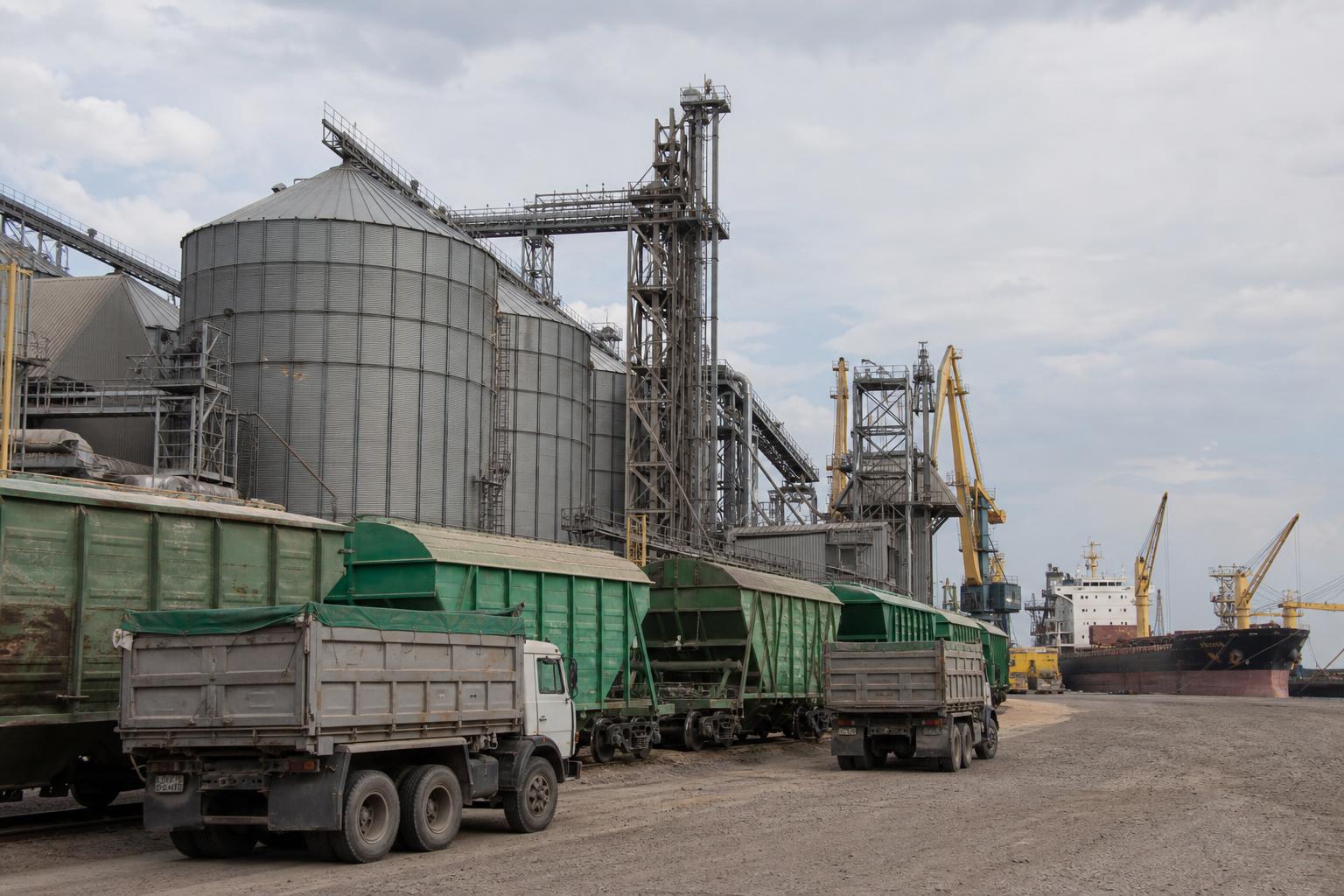
The Ukrainian grain market is once again operating under heightened attention to port logistics. Any disruptions at deep-water ports quickly shift the negotiating positions between sellers, traders, elevators, and carriers.
For agricultural producers, this means that grain prices increasingly depend not only on the quality of the batch and global market conditions but also on route availability, freight costs, transshipment queues, and the buyer’s willingness to assume logistical risks.
Freight Costs Are Again a Key Price Factor
There is ongoing discussion in the market about the idea that having a proprietary trading fleet could partially mitigate the impact of port crises for Ukrainian grain traders. This is not about solving the problem entirely but about gaining greater control over freight and routes.
According to Gennadiy Ivanov, Director of BPG Shipping & Kronos Bulkers, a Supramax vessel can transport approximately 400,000 tons of cargo per year. On a moderate market, such operations could generate around $4 million in revenue, which he compares to freight hedging at roughly $9–10 per ton.
For grain sellers, this is not a call to buy ships but a signal: freight remains a separate component in price formation. If the buyer has better access to vessels or long-term transportation contracts, they can more aggressively compete for batches.
The Danube and Constanța Remain Insurance Routes but Do Not Fully Replace Sea Transit
In case of complications at deep-water ports, some cargoes may be rerouted via the Danube with subsequent access to Constanța. This route provides a backup option for the market but generally requires more complex coordination between the elevator, carrier, port operator, and trader.
For elevators, this means the need to quickly work with various unloading formats. For sellers, it involves clarifying in advance whether the buyer is ready to accept grain on alternative bases and how this will affect the final price.
Owning a Fleet — A Long-Term Strategy, but Its Absence Is Already Impacting the Market
Market comments indicate that only a few large agro-traders in Ukraine are cautiously testing the model of operating their own vessels. There has been no systemic shift towards a fleet as a tool for export resilience.
Reasons include the long payback period, the need for professional technical and commercial management, and investor caution. Shipping requires competencies that differ significantly from managing an elevator or land logistics.
Meanwhile, first-tier international agro-traders have long used their own or long-term chartered fleets as part of their export model. For Ukraine, this issue involves not only investments but also the competitiveness of grain on foreign markets.
Key Takeaways for AgroPost Participants
- Grain sellers should compare offers not only by price but also by delivery basis, timing, and route.
- Elevators need to have ready scenarios for unloading via different logistics channels, including road, rail, and Danube routes.
- Buyers and traders should transparently explain to sellers how freight and port risks influence purchase prices.
- Farmers should not ignore storage costs: waiting for a better price may become pointless if logistics costs rise faster.
What this means for the market: Grain trading in Ukraine is increasingly shifting from a simple “price per ton” formula to a model where route, unloading speed, and logistical risk control are decisive. On AgroPost, this increases the value of listings with clearly indicated storage locations, available volumes, quality indicators, and readiness for specific delivery bases.
Comments
No comments yetNo comments yet - be the first.