
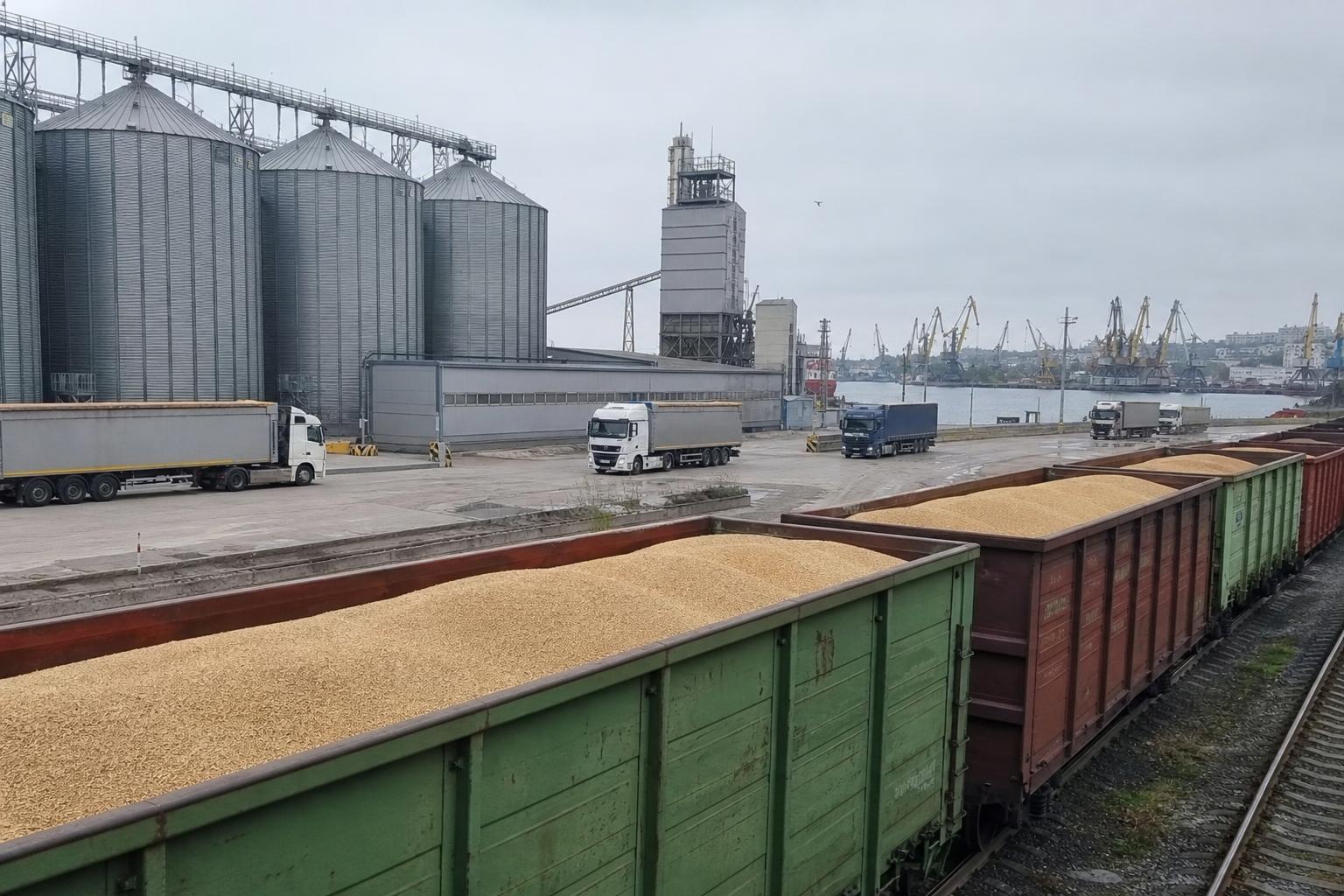
The Ukrainian grain market continues to depend not only on harvest volumes and global quotations but also on the stability of export routes. Port security, shipping, border crossings, and storage facilities directly influence costs, delivery times, and traders’ willingness to take risks.
For AgroPost participants, this means that in grain proposals, not only price per ton and quality matter, but also the delivery basis, access to elevators, the possibility of quick loading, and clear insurance terms.
Black Sea Route: Proposal Exists, but No New Regime
A Turkish group specializing in agricultural diplomacy has proposed a new international mechanism for secure trade of agricultural products in the Black Sea. The idea builds on the experience of the 2022 grain initiative but must consider current security conditions.
Among the proposed elements are agreements on protecting grain terminals, silos, and loading capacities, coordination of civilian shipping, a registry of vessels carrying food cargoes, war risk insurance, and the development of alternative routes via the Danube, rail, and road transport.
For the market, this is not yet a new operational rule but a political-logistical proposal. If supported and detailed, it could reduce uncertainty in freight rates and insurance. Until such a mechanism is officially launched, sellers and buyers should plan deals based on existing routes and realistic rates.
War Risk Insurance Becomes Part of Logistics Cost
An additional factor for agribusiness is the potential creation of an insurance fund for businesses. According to sources close to government discussions, there is an idea to increase VAT by 1% to fund a $1 billion reserve aimed at supporting war risk insurance.
Also under discussion is a model where VAT payers could insure production and storage assets. The proposed parameters include an insurance premium of 2% of the asset’s value and possible compensation for lost property up to $10 million. Meanwhile, goods in circulation and raw materials may not be covered under this scheme.
For elevators, grain traders, and producers, this issue is as important as transportation tariffs. If insurance for storage facilities and production assets becomes more accessible, it could improve the predictability of storage operations. However, until an official decision is made, these parameters should not be embedded as standard contractual terms.
Overland Routes: Borders Also Becoming Risk Zones
Poland has announced concerns about potential attacks by Russia on border crossings with Ukraine. Such risks are viewed as threats to trade routes and the Ukrainian economy. These statements followed strikes on border infrastructure in the directions of Moldova and Romania.
For the grain market, this underscores the importance of diversification in logistics. Black Sea ports, the Danube, railways, road crossings, and transshipment through elevators in various regions should be seen not as interchangeable options but as routes with different costs, risks, and capacities.
Practically, this means buyers need to calculate not only the purchase price of grain but also the total delivered cost. Sellers should clearly specify where the product is available, the loading times, and whether they are ready to work with multiple dispatch options.
Practical Recommendations for AgroPost Deals
- Grain sellers should specify the delivery basis, the nearest elevator or station, possible batch volumes, and loading deadlines.
- Buyers should compare proposals based on the full logistics model: grain price plus transportation, transshipment, downtime, insurance, and risk costs.
- Elevators should communicate available capacities, acceptance speed, the possibility of grain processing, and dispatch options to various destinations.
- In contracts it is advisable to separately specify responsibilities for delays, route changes, downtime risks, and insurance coverage conditions if applicable.
Implications for the Market
What this means for the market: in the near future, grain prices in Ukraine will increasingly depend on route reliability and risk costs. For effective deals on AgroPost, market participants need to update proposals considering logistics, insurance, and actual elevator capacities rather than focusing solely on the overall price per ton.
Comments
No comments yetNo comments yet - be the first.