
The Ukrainian grain market is entering a period where logistics again influence not only the speed of sales but also the cost of storing goods. According to market participants, there is currently no shortage of elevator capacities, but agro-companies are already calculating backup options in case of prolonged transportation restrictions.
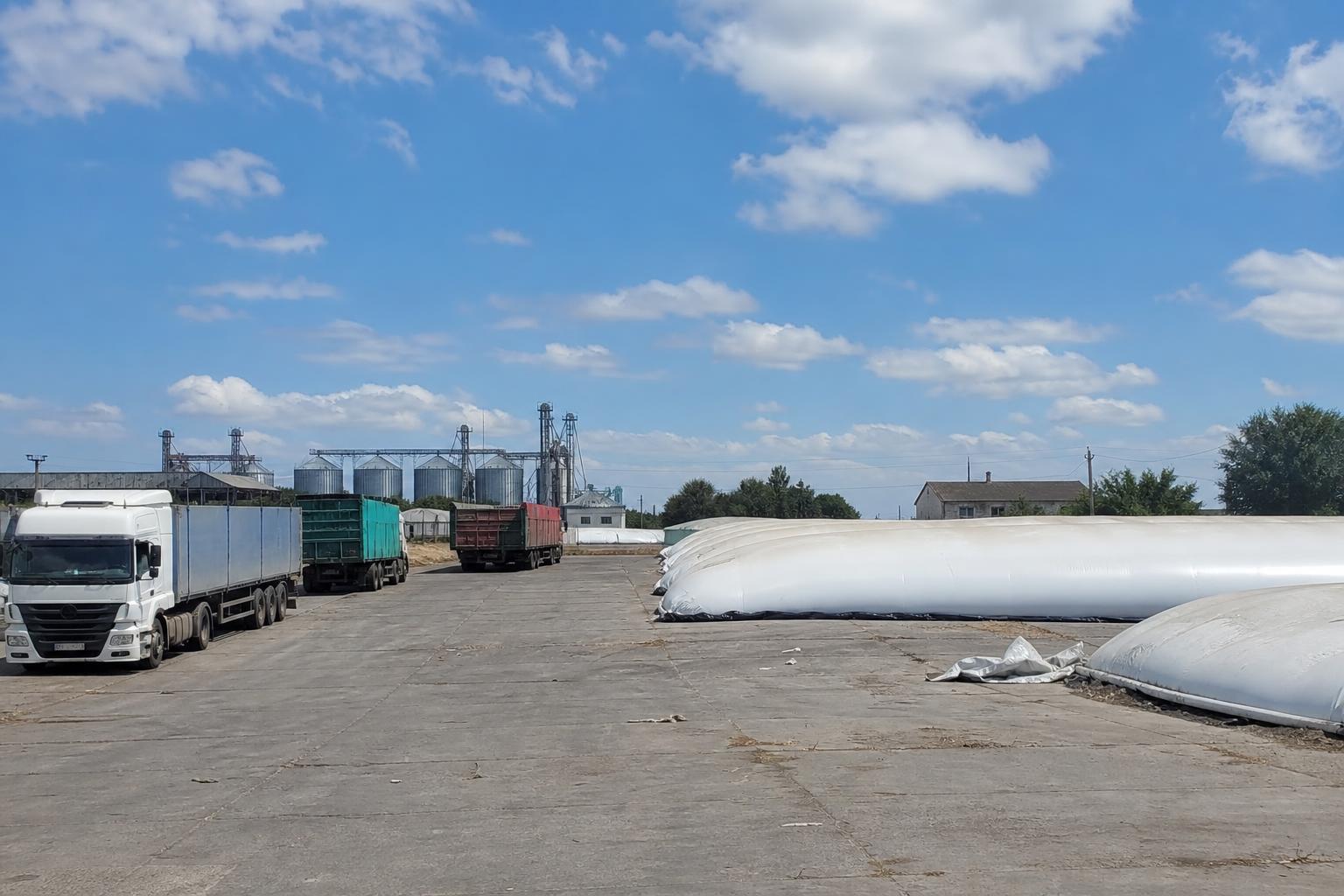
The main practical tool for such reserves is storing grain in polymer tubes. For sellers, this is a way to buy time before shipment; for buyers, it signals the need to carefully monitor quality conditions, shipping deadlines, and responsibility for additional costs.
Polymer tubes become a logistical buffer
At "NOVAAGRO," the cost of storing grain in polymer tubes is estimated at 250–450 UAH/ton. The difference depends on whether the enterprise has its own packaging equipment or uses rented facilities.
The company considers this format as an additional reserve: initially, stationary elevator capacities are planned to be maximally utilized, with excess volumes placed in tubes.
Similar scenarios are being prepared by other major market players. "Kernel" has announced its readiness to mass transfer grain into polymer tubes if depositors do not remove it by September. At the same time, the company emphasizes that this is an emergency measure, as it increases storage costs.
Different approaches by companies: from basic options to extreme measures
For "Agroprosperis," polymer tubes are not just an emergency solution — the company considers them a standard storage option. In case of a prolonged logistical crisis, this format could be expanded at "Agroda-Bar" and "Zhmerynka Elevator."
At "Agrovist," the approach is more cautious: silobags are viewed as a last resort if stationary capacities are insufficient for late crops. Risks include grain damage by rodents and additional costs.
This shows that the market does not have a unified action model. For some companies, tubes are part of regular operational logistics; for others, they serve as insurance against shipment delays.
What sellers and buyers of grain should consider
If a batch is stored longer than planned, key factors are not only price and delivery basis but also the actual storage conditions. Contracts should clearly specify deadlines for removal, quality control procedures, and who bears additional storage costs.
- Sellers should pre-calculate whether the expected price covers the costs of tube storage.
- Buyers need to clarify where exactly the grain is stored and how its quality is confirmed before shipment.
- Elevators should have a backup plan for peak periods, even if there is no current capacity shortage.
- Transporters should anticipate more uneven demand for shipment in case of grain accumulation in temporary storage.
Key conclusions for the market
Currently, market participants do not report a general shortage of elevator capacities in Ukraine. However, preparations for expanding storage in polymer tubes indicate that businesses are not ruling out logistical delays.
The cost of 250–450 UAH/ton makes tubes a flexible but not free solution. This tool will influence negotiations on price, delivery timelines, and quality responsibility.
Implications for the market: grain logistics in Ukraine is shifting towards contingency planning. For AgroPost deals, this means that sellers and buyers should agree not only on price but also on actual shipment schedules, storage formats, and potential costs in case of transportation delays.
Comments
No comments yetNo comments yet - be the first.