
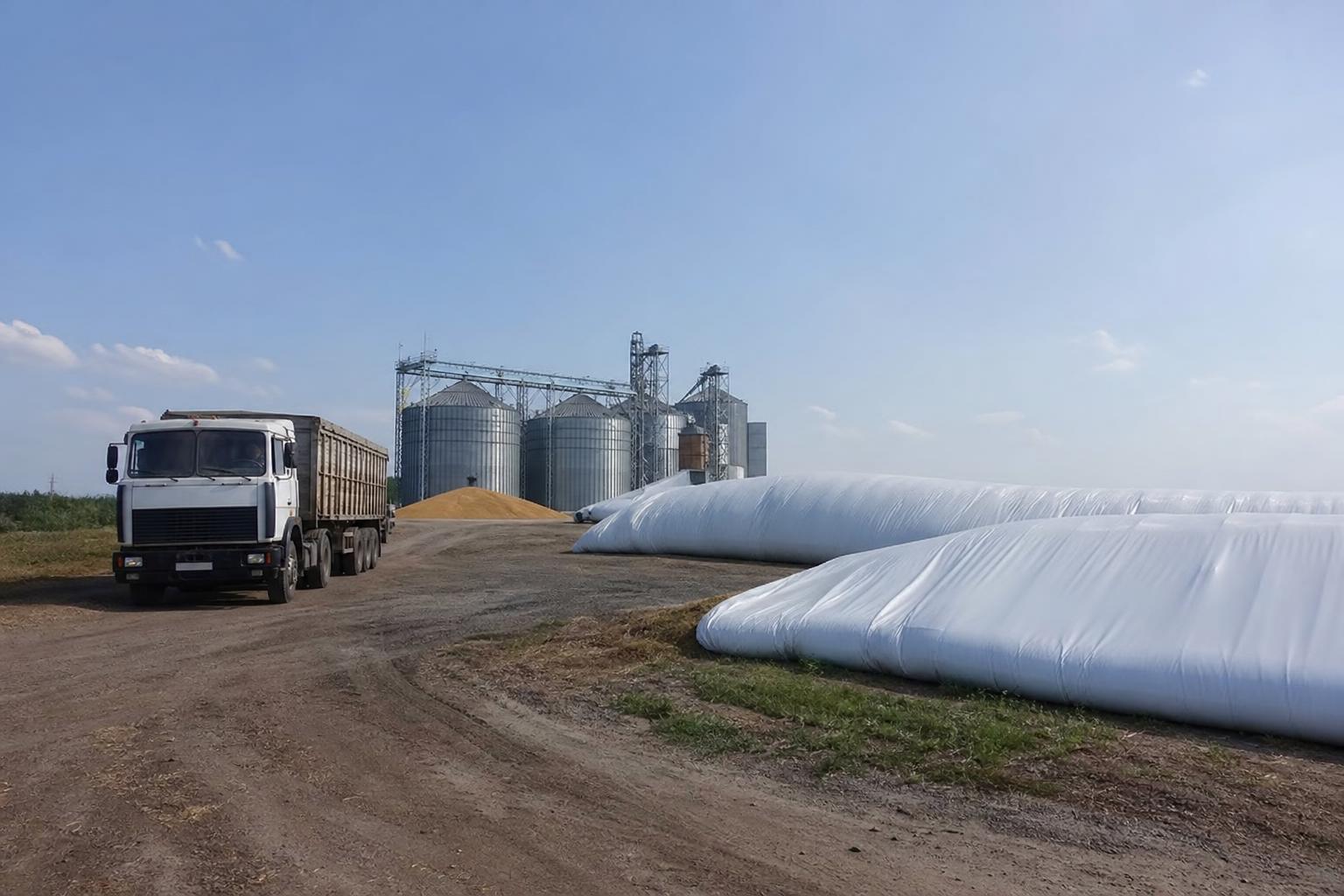
The Ukrainian grain market is entering a period when storage decisions become just as important as the sale price. According to market participants, there is currently no acute shortage of elevator capacities; however, agricultural companies are already preparing alternative options in case of prolonged logistical restrictions.
For grain sellers, this means the need to plan in advance not only the basis and purchase price but also the costs of additional storage. For buyers and elevators — more careful planning of acceptance, shipment schedules, and quality indicators of batches.
Polymer Sleeves Again in the Contingency Plan
One of the main backup tools for the market remains polymer sleeves. At "NOVAAGRO," the cost of such storage is estimated at 250–450 UAH/ton, depending on whether the enterprise has its own packaging equipment or rents it.
With own equipment, costs can be closer to the lower end. If equipment needs to be rented, the cost increases. This is important for farmers who delay selling grain in anticipation of better prices.
Market participants view sleeves differently. For some, it is a forced measure in case of a shortage of stationary storage facilities; for others, it is already a familiar part of the storage system. At the same time, some companies point out risks such as grain damage from rodents, additional quality control, and increased operational costs.
What Grain Sellers Should Consider
If a farm plans to hold grain after harvest, it is advisable to compare three scenarios: selling immediately from the field or elevator, storing in stationary facilities, and temporary placement in polymer sleeves.
- Storage costs. For sleeves, sources cite 250–450 UAH/ton, but the actual amount depends on equipment, logistics, site preparation, and control.
- Shipment timing. If logistics are delayed, even having grain in storage does not guarantee quick sale.
- Batch quality. Buyers will pay attention to moisture, contamination, damage, and stability of indicators during storage.
- Deal flexibility. On the AgroPost marketplace, sellers should immediately specify storage location, available volume, loading conditions, and readiness for self-pickup.
Elevators Need Transparent Communication with Depositors
For elevators, the key issue remains the turnover of capacities. If depositors do not remove grain on time, new batches may require alternative placement.
Therefore, the market needs clear agreements on storage terms, tariffs, quality responsibility, and shipment schedules. For buyers, this is also a signal: before concluding a deal, it is worth clarifying whether the batch is available for quick retrieval and how it is stored.
Autumn Planting Shapes Future Grain Supply
Alongside storage issues, farmers are preparing for the autumn sowing of winter cereals. According to Ukravit, pre-sowing seed treatment with easily digestible amino acids and microelements can increase field germination of winter wheat and barley by 8–10%, and sprouting energy by 5–6%.
For the market, this is not a short-term price signal but a quality factor for starting a new production cycle. Farms should evaluate such technological solutions considering their soils, sowing deadlines, budgets, and consultations with agronomists.
What this means for the market. The Ukrainian grain sector currently does not show a critical shortage of elevator capacities but is preparing backup scenarios. Sellers on AgroPost should specify storage and shipment conditions more precisely, while buyers should verify batch availability and additional costs before signing agreements. In a season where logistics can influence sales pace, transparent grain information becomes a competitive advantage.
Comments
No comments yetNo comments yet - be the first.