
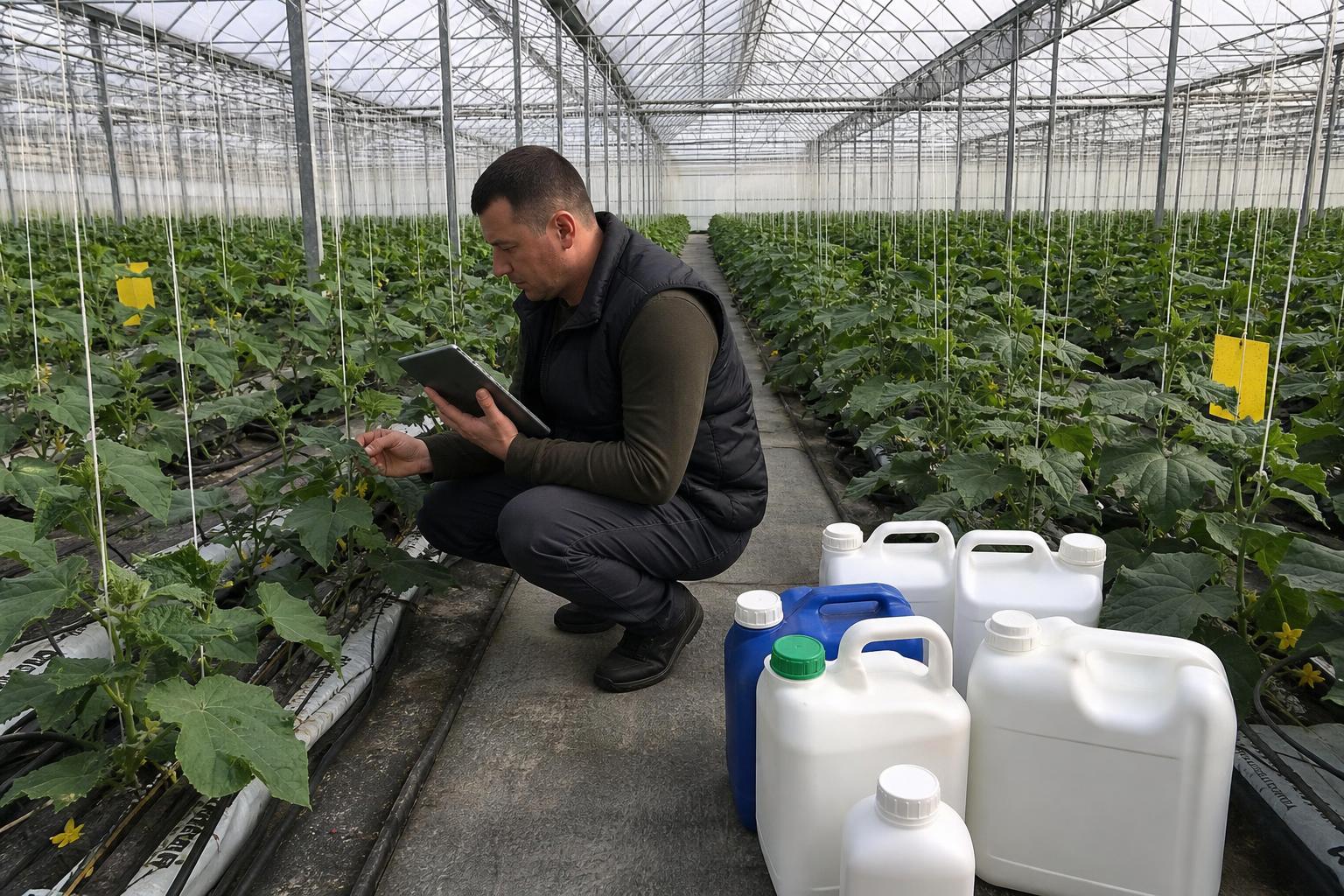
The plant protection market in the greenhouse segment is entering the season with a sharp focus on cost efficiency. According to data presented during a Dutch research presentation on protected ground, energy expenses in Ukrainian greenhouse production have increased to 60-75%.
For suppliers and buyers of plant protection products (PPPs), this is an important signal: decisions regarding herbicides, fungicides, insecticides, bioproducts, and auxiliary materials are increasingly made not in isolation but within the context of the overall cultivation budget.
Energy Replaces Other Expenses in Greenhouse Budgets
In the greenhouse business, costs for electricity and gas already surpass the total expenses for labor, materials, and logistics. It was also noted that gas prices remain 3-4 times higher than pre-war levels, while electricity prices have stabilized at a structurally higher level.
This does not automatically mean a reduction in plant protection costs but prompts a change in procurement approaches. Producers are scrutinizing each item in the technological plan: application rates, number of treatments, shelf life, packaging, and compatibility with existing products.
What Matters for PPP Buyers in the Greenhouse Segment
For closed-ground farms, the key is not only finding the lowest price but also risk management. A procurement mistake can lead to frozen funds in inventory or urgent purchases of products during peak demand.
- Crop-specific planning. It is advisable to align procurement with the actual cultivation scheme rather than maintaining a 'buffer' stock.
- Registration and purpose verification. For greenhouses, it is important to specify the crop, pest target, and permitted application method.
- Packaging by area. Smaller or more precise packaging may be more cost-effective if the farm wants to avoid holding expensive residual stocks.
- Currency factor. Some cultivation materials are purchased in foreign currency, while product sales are conducted domestically in hryvnias.
How PPP Suppliers Can Adapt Their Offerings
Suppliers should emphasize transparent package details. For buyers, it is crucial to quickly understand which product is suitable for which task, in what packaging, with what shelf life, and what documentation is available.
On the AgroPost marketplace, such listings are advantageous if they clearly specify the crop, product type, active ingredient, packaging, availability, shipment region, and delivery conditions. This reduces clarification time and helps buyers compare offers without unnecessary risks.
Key Conclusions for the Plant Protection Market
- Greenhouse farms operate under strong energy cost pressures, leading to more careful control of all technological budget items.
- Demand for PPPs in protected ground depends not only on phytosanitary conditions but also on the producer’s solvency and the currency value of materials.
- Buyers value precise matching of products to crops, pest issues, and seasonal needs over a broad product range.
- Suppliers should enhance listings with details that reduce buyer uncertainty.
Implications for the market: In the greenhouse plant protection segment, success will favor those sellers offering not just PPPs but clear solutions tailored to specific crops and budgets. For buyers, the main goal is to purchase products on time, avoid excess residuals, and verify all technical parameters before payment.
Comments
No comments yetNo comments yet - be the first.