
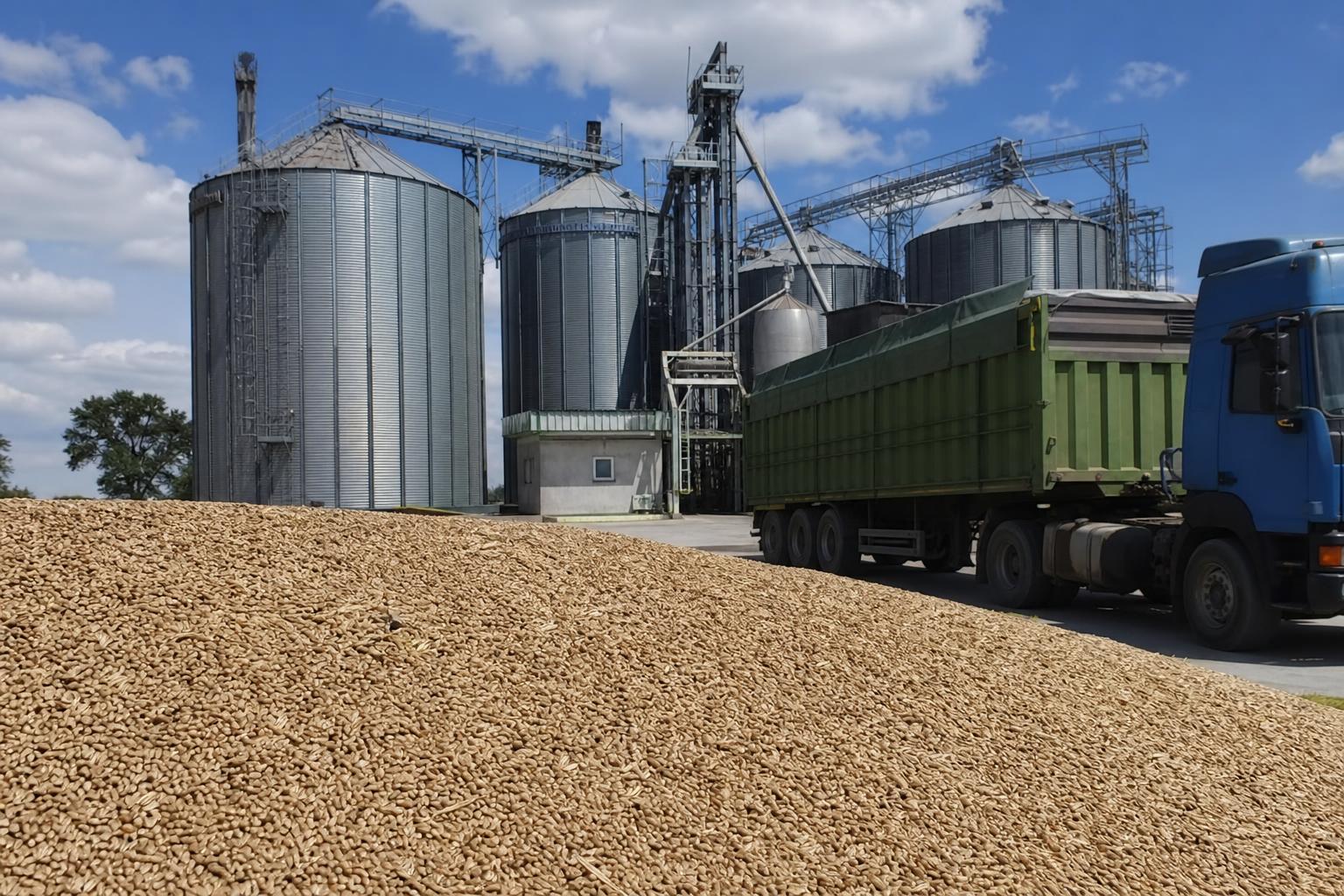
The barley market is forming a new balance: Turkey, which was previously an important buyer of Ukrainian grain, may more actively offer its own barley on international markets. The reason is the harvesting season's progression and the decline in domestic purchase prices in key grain-producing regions of the country.
For Ukrainian sellers, this is not just external news. The Turkish factor is already overlaying internal expectations of the new harvest, weak activity from buyers of old grain, and traders' caution at ports.
Turkish barley is returning to the game, but without a guarantee of a record
In Konya Province, one of Turkey's key grain-producing regions, traders have lowered purchase prices following the start of the harvest campaign. According to market participants, the domestic price of barley has dropped to approximately 9,000 Turkish Lira per ton, or about $193/ton.
The USDA forecast for Turkey for 2026/27 predicts total barley supply at 9.4 million tons. For comparison, in 2024/25, this figure was estimated at 9.1 million tons, with exports reaching a record 1.15 million tons.
Despite increased supply, analysts do not expect an automatic record-breaking export. Some buyers from the MENA region, which previously drove demand for Turkish barley, are counting on better harvests in 2026. Countries such as Iran, Iraq, Morocco, and Syria are among them.
What is changing for Ukrainian barley
The key signal for Ukraine is a reduction in Turkish import demand. According to USDA estimates, Turkey's barley imports in 2026/27 could decrease by 90% — to 150,000 tons.
This is significant for Ukrainian sellers, as Turkey was until recently one of the notable destinations for Ukrainian barley. If the country reduces its purchases and simultaneously resumes exports, competition for buyers in neighboring markets may intensify.
On the Ukrainian domestic market, price pressure is already increasing due to expectations of the new harvest and low trading activity regarding old crop grain. As of June 23, demand prices for Ukrainian feed barley ranged from 8,900 to 10,300 UAH/ton CPT, and in ports — $195–208/ton CPT port.
Guidelines for sellers, buyers, and elevators
- Barley sellers should more carefully update price expectations in their announcements, especially if old crop grain competes with new batches.
- Buyers should monitor not only local offers but also port indicators, as external demand remains a key factor in price formation.
- Elevators should prepare for more selective customer behavior: demand for storage, processing, and rapid dispatch may depend on harvest pace and logistics availability.
- Traders need to verify quality parameters of batches and quickly fix delivery terms, as the market shifts from trading leftovers to working with the new harvest.
Key conclusions
- Turkey has the prerequisites for resuming barley exports, but a new record currently does not appear to be the baseline scenario.
- The forecasted reduction of Turkish imports to 150,000 tons in 2026/27 limits opportunities for Ukrainian barley in this direction.
- Ukrainian prices remain under pressure due to weak demand for old crop and the approaching active supply of new grain.
What this means for the market: Ukrainian traders should incorporate lower activity from Turkey into negotiations, more carefully compare domestic and port prices, and update their offers on the AgroPost marketplace promptly if a batch is ready for sale or shipment.
Comments
No comments yetNo comments yet - be the first.