
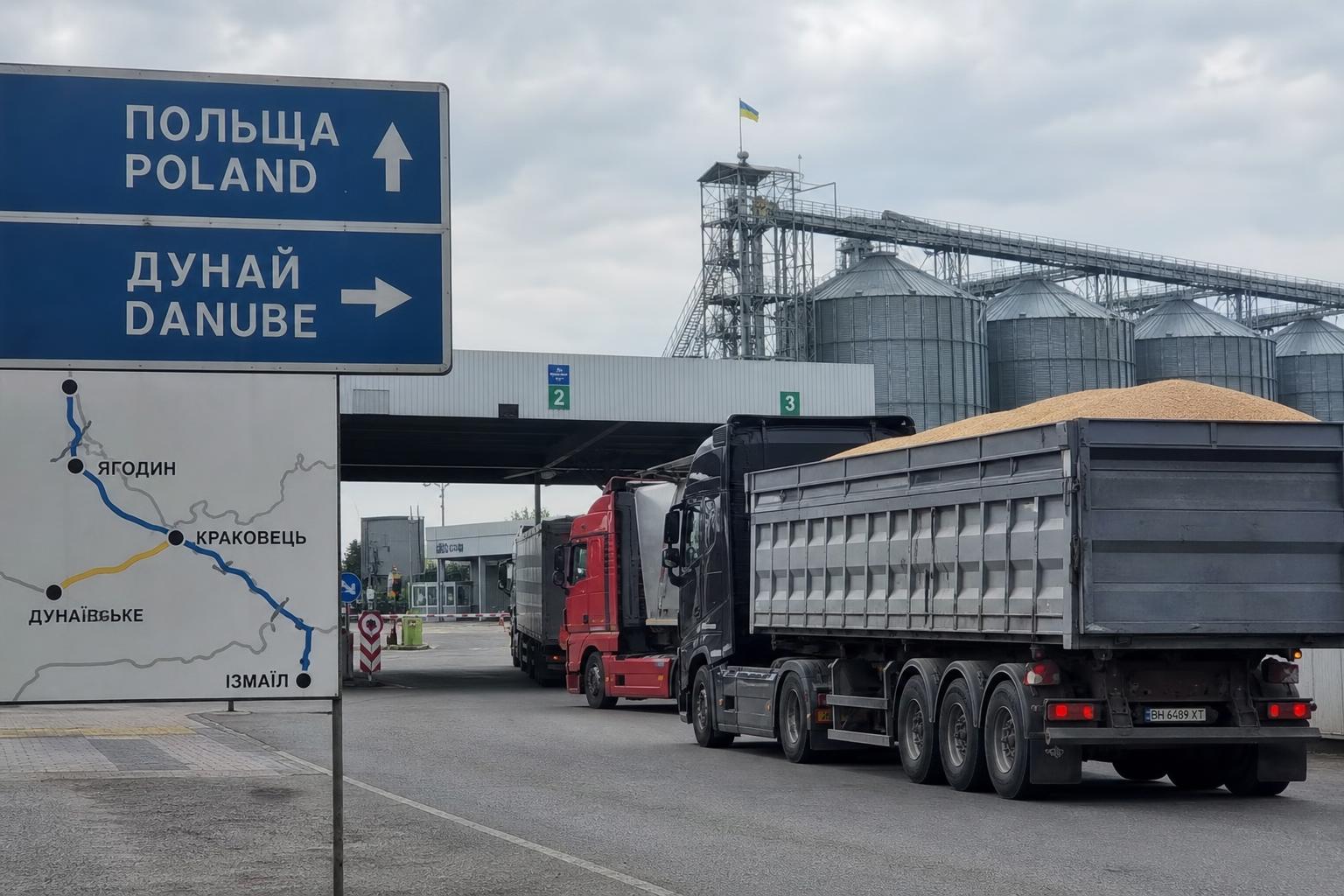
Ukrainian agricultural logistics is once again shifting into a rapid reorientation mode. The maritime route remains risky due to attacks on port infrastructure, while alternative routes through the western border and the Danube are experiencing additional load.
For agricultural producers, traders, and carriers, this is no longer just a matter of delivery. The logistics route increasingly influences forward prices, payment terms, storage needs, and the competitiveness of Ukrainian products on export markets.
Polish transit is considered a backup for agri-export
Ukraine and Poland are discussing ways to increase the transit of Ukrainian agro-products through alternative routes. The focus is on border crossing capacity, railway operations, customs, border, veterinary, and phytosanitary services.
Among the potential directions for Ukrainian cargo are Polish ports Gdansk, Szczecin, Świnoujście, and Gdynia. At the same time, a key issue for exporters is not only the physical accessibility of the route but also its economics: handling costs, transportation expenses, and border crossing time.
An additional risk is the accumulation of products within the country. According to the Ministry of Agrarian Policy, in November, storage capacity shortages could range from 7.5–8 million tons up to 11 million tons. This emphasizes the importance of temporary storage, mobile warehouses, and quickly finding buyers on the domestic market.
The Danube route is limited by low water levels
The record low water levels in the Danube complicate grain deliveries to Constanța, Romania. Barges are forced to carry less cargo, reducing route efficiency and increasing pressure on road and rail transport.
This creates additional costs and delays for exporters. Sources also note that the grain terminal in Constanța could handle approximately 20% more cargo within the framework of the "Solidarity Routes," but low water levels restrict actual delivery volumes via the Danube.
An additional factor is seasonal competition for transport in Romania. Expectations of a high wheat, barley, and rapeseed harvest, along with later corn harvesting, may intensify the struggle for trucks, wagons, and barges between Ukrainian and Romanian shippers.
The western border influences corn prices
On the corn market, land-based export is already becoming a separate price benchmark. According to brokers, forward contracts for delivery in October-December via FCA Chop were concluded at 192–194 €/t, and for January-June at 198–206 €/t.
This signal is important for sellers of the new harvest: buyers increasingly evaluate shipments not only based on quality and basis but also on access to specific logistics routes. If the route through the western border operates more stably than maritime, it may form a separate premium or a minimum reference point for deals.
Meanwhile, the global background remains mixed. Favorable weather in the USA improves harvest expectations, while in Europe, the condition of corn crops is deteriorating. Sources mention an estimate of France's corn production at around 9 million tons, which could support EU import demand.
Key conclusions for AgroPost participants
- Grain sellers should specify not only the crop, volume, and quality but also a realistic shipping basis: elevator, station, border, or FCA route.
- Buyers need to compare prices considering queues, wagon availability, road transport, and handling costs.
- Carriers should prepare for increased demand on the western route and possible delays at border infrastructure.
- Elevators and warehouses should consider the risk of storage shortages in autumn and proactively develop commercial offers for farmers.
What this means for the market: logistics is becoming not just an auxiliary service but one of the main factors influencing the price of agricultural products. In the near future, those sellers and buyers who more quickly calculate the full route cost, have multiple delivery options, and transparently specify logistics conditions in agreements will gain advantages.
Comments
No comments yetNo comments yet - be the first.