
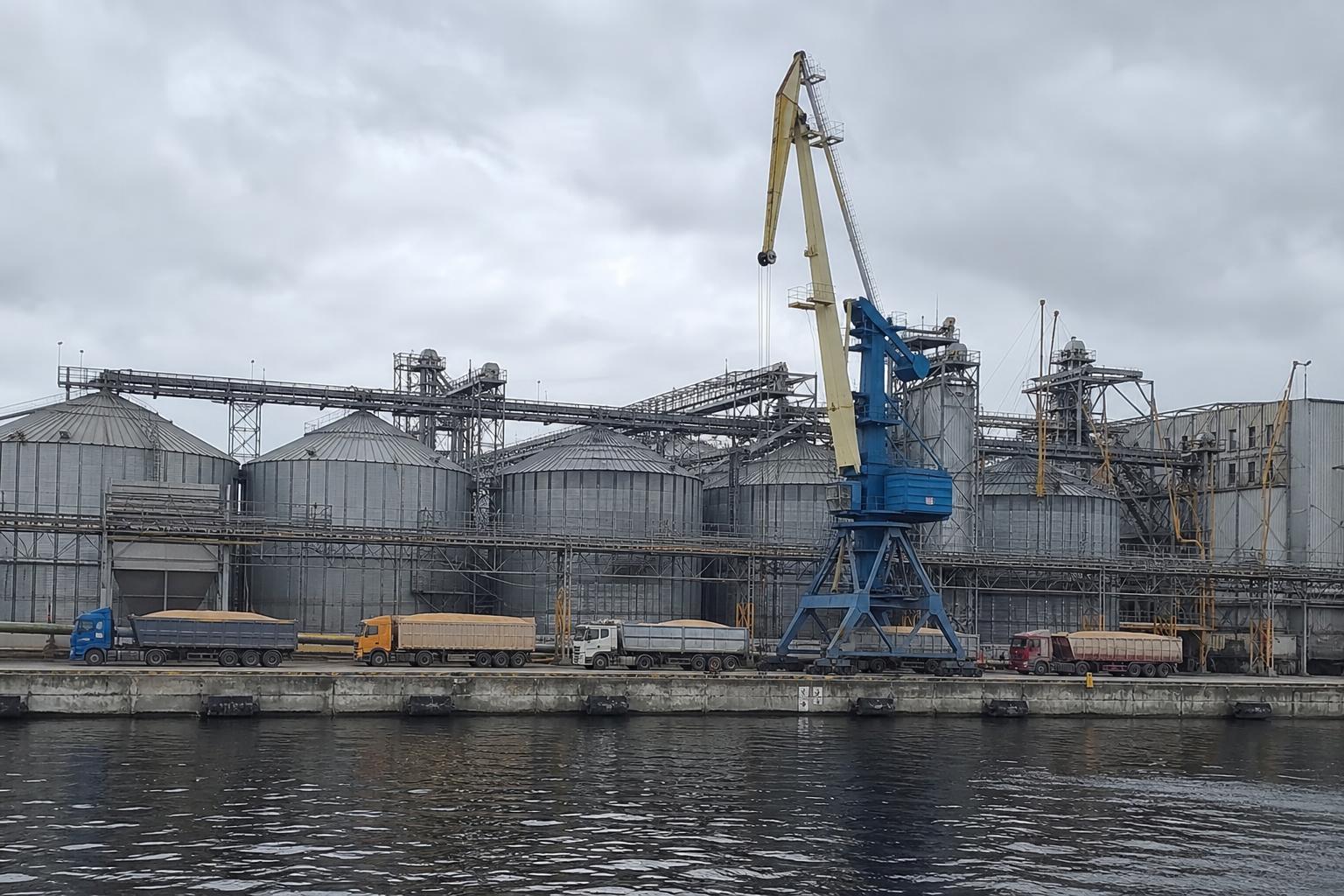
The Ukrainian grain market has received a key logistical signal once again: port infrastructure remains vulnerable, and the rapid restoration of damaged facilities has not yet become a separate budget priority.
For grain sellers, elevators, and traders, this means that in the coming months, prices may depend more not only on the harvest and global market conditions but also on the availability of maritime export options.
What is happening with port logistics
The government acknowledges the issue of damages to port operators following Russian attacks. At the same time, according to Deputy Minister of Economy Taras Vysotsky, current budget resources are primarily focused on preparing the energy system for winter.
Port terminals are not only damaged buildings or storage facilities. For grain exports, specialized equipment is critical, which is difficult to quickly replace or swiftly put back into operation.
According to Denys Marchuk, a representative of the All-Ukrainian Agrarian Council, the total damages to private port terminals have already reached $1.5 billion. Operators have also appealed to the government and international partners to establish a dedicated mechanism for rapid restoration of port infrastructure.
Export risk: a one-third reduction in shipments
According to Taras Vysotsky, an increase in attacks on Ukrainian seaports and vessels could reduce monthly grain shipments by approximately one-third.
Recently, ports in the Odessa region handled about 6 million tons of cargo per month. If the situation worsens, the potential volume could decrease to 4 million tons per month.
Some of the flows can be rerouted to Danube terminals. However, the maximum capacity for such rerouting is around 1 million tons, and logistics via this route remains more expensive.
How this could affect domestic prices
If maritime exports slow down during key seasonal months, competition among sellers for access to logistics may intensify in the domestic market.
For farmers, the main risk is pressure on procurement prices domestically. The situation could be especially sensitive if large transitional stocks are present, as market participants warn.
For elevators, this creates a dual effect. On one hand, demand for storage and accumulation of batches increases. On the other hand, the risk of delays in transportation, rising logistics costs, and the need for flexible planning of dispatch schedules also grow.
Key conclusions for grain sellers and buyers
- Maritime route remains fundamental but risky. Any disruptions at ports quickly impact prices and the availability of logistics slots.
- The Danube cannot fully replace Odessa. The potential for rerouting is limited, and the cost of the route is higher.
- Elevator strategy becomes more important. Grain owners should plan storage, quality, drying, and possible sale timelines in advance.
- Buyers should carefully monitor the basis. Local prices may change unevenly depending on the region's access to ports, railways, or the Danube route.
What this means for the market: Ukraine's grain sector is entering a period where logistics could be as influential on prices as the balance of supply and demand. For AgroPost participants, the practical takeaway is simple: sellers should consider multiple scenarios for grain sales, and buyers should evaluate not only the price of a batch but also the real possibility of timely export.
Comments
No comments yetNo comments yet - be the first.