
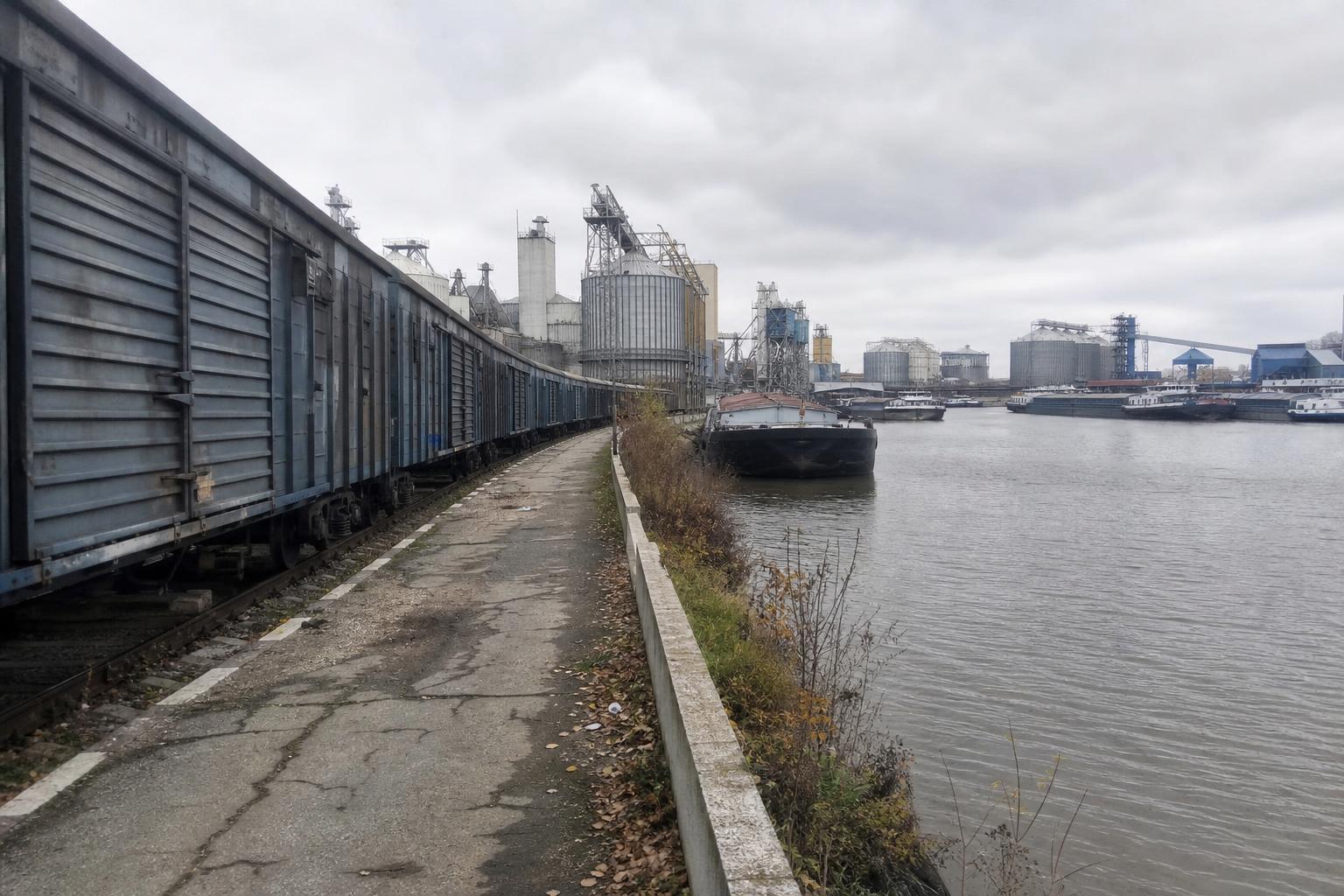
The Romanian route remains one of the key directions for Ukrainian agricultural logistics, especially for cargo passing through the Constanța port and Danube routes. Recent agreements between Ukraine and Romania concern three critical bottlenecks: the railway infrastructure, vessel passage through the Sulina Canal, and the "Porubne – Siret" road border crossing.
For sellers and buyers on AgroPost, this is not just an infrastructural update. The speed of transit along this corridor directly affects contract execution timelines, freight costs, transshipment queues, and the choice between rail, river logistics, and road transport.
Constanța Railway: Goal — More Trains per Day
Ukraine and Romania have agreed to maintain the current daily transfer of six train pairs to the port of Constanța. The next target is to increase capacity to 10 train pairs per day.
To achieve this, the Romanian side must accelerate work on railway and port infrastructure. These segments often determine whether cargo owners can deliver shipments to the port on time and avoid additional costs due to delays.
Practical takeaway: agribusiness producers and traders should not assume increased capacity as a guaranteed option but should monitor actual train acceptance dynamics. It is advisable to separately specify responsibility for delays at border and port infrastructure in supply contracts.
Sulina Canal: Dispatching, Night Passage, and Vessel Queues
The Ukrainian side has expressed the need for at least 10 vessels to pass through the Sulina Canal daily in both directions. Among the agreements is joint vessel dispatching involving the Romanian authorities and the Ukrainian Sea Ports Administration.
Additionally, a mechanism was discussed for situations where a significant number of vessels from Ukrainian ports are waiting to exit. In such cases, partners will allocate a dedicated day for their passage through the canal in an exclusive mode.
An emphasis was also placed on night passages for vessels that entered the canal before dark and meet safety requirements. With shorter daylight hours, this could impact the rhythm of Danube logistics.
Business considerations: delays at Sulina are already affecting freight rates. Industry reports indicate that freight rates for coaster ships from Ukrainian Danube ports increased due to longer waiting times for canal passage.
Danube Reserves: Galați, Brăila, and Road Transport
Ukraine and Romania have initiated discussions on additional capacity utilization at the Galați and Brăila ports. For exporters, this potentially broadens routing options, though currently it remains at the negotiation stage rather than confirmed extra capacity.
On the road transport front, Ukraine expects the completion of additional lanes on the Romanian side of the "Porubne – Siret" border crossing. According to the relevant ministry, four extra lanes have already been constructed on the Ukrainian side.
For cargo shippers, this means that road logistics may gain additional capacity only after synchronized completion of works on both sides of the border. Until then, the risk of queues and uneven cargo processing remains.
Key Conclusions for AgroPost Participants
- Grain and oilseed sellers should verify not only the buyer’s price but also the actual logistics capacity to Constanța or Danube ports.
- Buyers and traders should incorporate the risk of delays at the Sulina Canal into their pricing, especially for shipments with strict deadlines.
- Carriers should prepare proposals with alternative routes: rail, Danube, crossings, and combined schemes.
- Elevators and warehouses need to plan shipment schedules considering potential accumulation of wagons and vessels at export points.
Implications for the Market
The Romanian corridor is gradually being adjusted for higher capacity, but the market has not yet experienced a guaranteed significant reduction in logistics costs. For agribusiness, the main current strategy is to develop multiple delivery scenarios, compare freight rates, and avoid selling products without a clear understanding of the actual routes and timelines for reaching buyers.
Comments
No comments yetNo comments yet - be the first.