
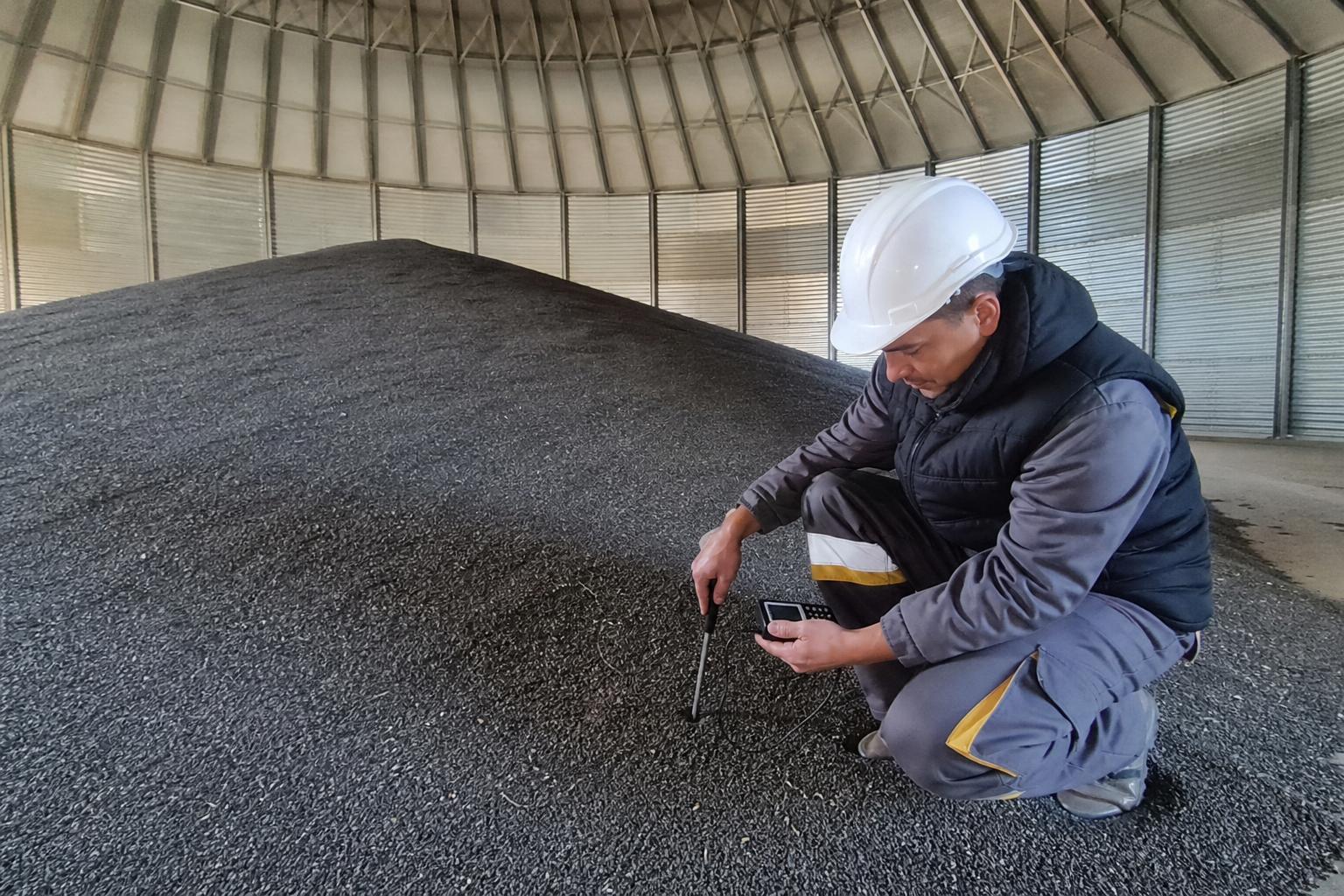
For sunflower sellers and elevators, a lot’s quality depends on more than its condition at intake. During long-term storage, it is important to monitor the temperature and moisture content of the bulk and remove impurities promptly.
A phytosanitary development has also emerged in the regional market: Kazakhstan has announced plans to suspend the processing of documents for imports of Russian sunflower seeds. This does not confirm that restrictions apply to Ukrainian products, but it highlights the importance of a lot’s origin and phytosanitary status.
Storage: the main risks for sunflower
According to a ProPex expert, one of the main risks for sunflower in storage is self-heating. Plant impurities can exacerbate it by retaining moisture and creating conditions that can damage the seeds and cause mold. Under unfavorable conditions, self-heating can also pose a fire risk.
During storage, the quality of the oil in the seeds may deteriorate, including an increase in acid value and the development of a bitter taste. Sellers should therefore agree with the elevator on requirements for cleaning, monitoring the lot’s condition and storage periods.
Moisture and lot preparation
The expert notes that sunflower is dried to below 8% moisture for long-term storage. However, drying can reduce the lot’s weight, so this should be factored into calculations before the crop is placed in storage.
Buyers and sellers should agree in advance on how moisture and impurity levels will be recorded, as well as on procedures for monitoring temperature. Actual storage conditions and quality requirements should be agreed with the specific elevator.
Phytosanitary development in regional trade
According to the source, 23 cases of sunflower phomopsis were detected in Kazakhstan in 2025–2026 in lots arriving from Russia. Kazakhstan has asked Russia’s Federal Service for Veterinary and Phytosanitary Surveillance (Rosselkhoznadzor) to temporarily suspend, from October 23, 2026, the issuance of phytosanitary certificates for seed and food-grade sunflower exported to Kazakhstan.
The measure concerns Russian lots and phytosanitary procedures between Russia and Kazakhstan. The materials provided contain no information about direct changes to export conditions for Ukrainian sunflower.
What this means for the market
For Ukrainian sellers, the practical priority is to preserve sunflower quality and document the lot’s condition when it is transferred to an elevator. Buyers should check moisture and impurity levels, as well as phytosanitary documents, in line with the requirements of the specific destination market. Regional restrictions on products of a particular origin should not automatically be applied to Ukrainian products.
Comments
No comments yetNo comments yet - be the first.