
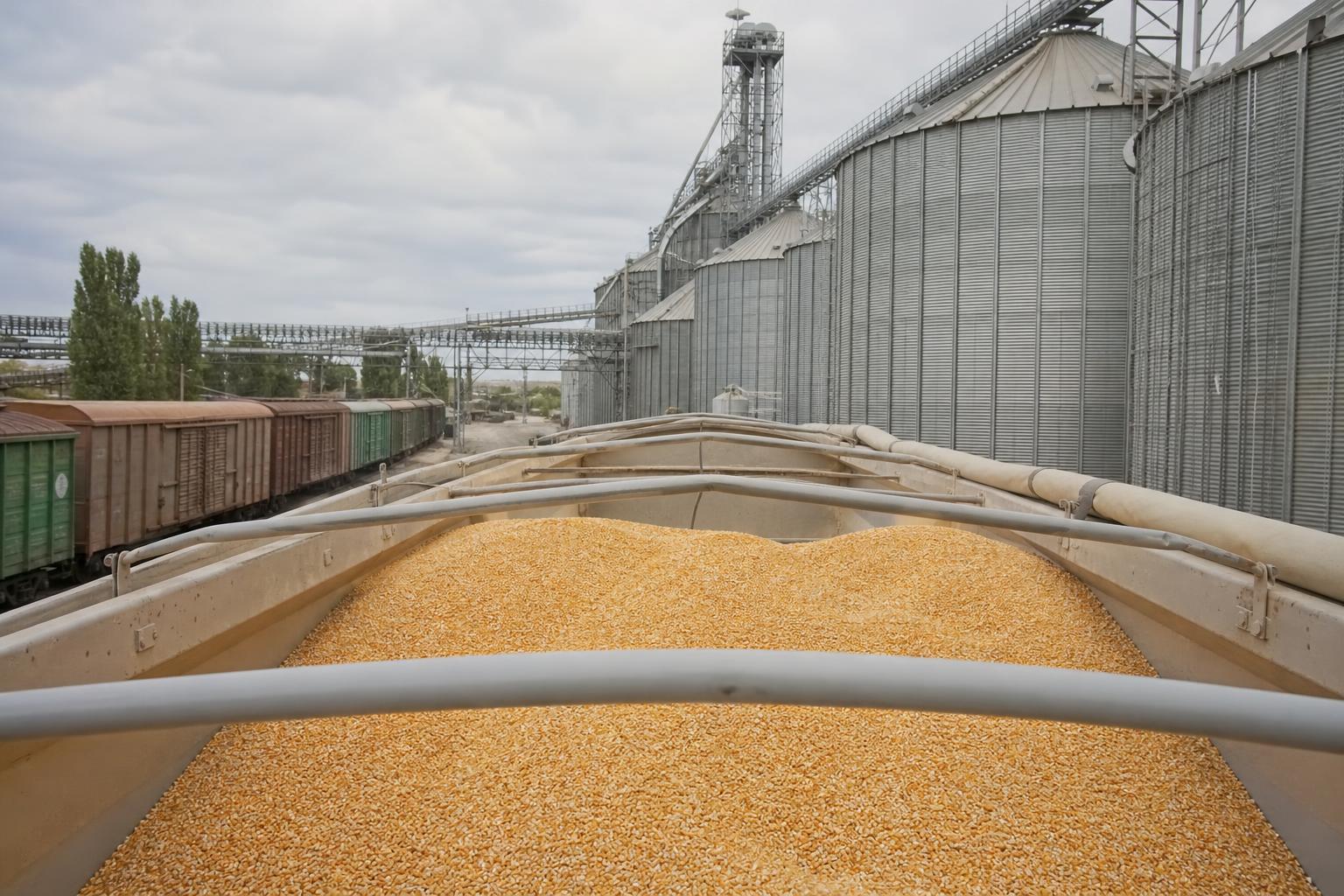
The USDA’s forecast for Ukrainian corn in the 2026/27 marketing year points to a larger expected grain carryover at the end of the season. For sellers, this is a reason to assess storage needs and available sales routes in advance, while buyers should carefully compare offers by volume, quality and delivery terms.
At the same time, state intervention purchases are not seen as a way to buy up the entire surplus: according to the agriculture minister, purchasing 20 million tonnes at UAH 9,000 per tonne would require UAH 180 billion.
USDA estimate: higher stocks, lower exports
In its November report, the USDA kept its forecast for Ukraine’s corn production at 31.8 million tonnes. The export estimate was cut by 2 million tonnes to 20 million tonnes, while the forecast for ending stocks was raised from 5.53 million to 7.53 million tonnes.
These are forecast figures for the 2026/27 marketing year, not actual volumes of stocks already accumulated or shipments already made. For market participants, they are a useful benchmark when planning sales, purchases and storage capacity.
Why state grain purchases are not a simple solution
Agriculture Minister Taras Vysotskyi explained that intervention on a scale large enough to absorb a significant surplus would place a heavy burden on the state budget. By his calculation, purchasing 20 million tonnes at UAH 9,000 per tonne would cost UAH 180 billion.
According to his estimate, carryover stocks could reach 30 million tonnes of grain and up to 5 million tonnes of oilseeds by July 1, 2027. These volumes cover a broader market than the USDA’s forecast for Ukrainian corn stocks, so they should not be compared as figures for a single crop.
Other risks mentioned in the minister’s comments include the subsequent sale of purchased grain and the possibility of surpluses building up again if seaports remain out of operation next year. The government, he said, is preparing other proposals to support the agricultural sector over the next two marketing years.
Practical guidance for sellers and buyers
- Sellers: Compare the expected price with the costs of cleaning, storage and delivery before postponing a sale.
- Buyers: Check the delivery basis, quality specifications, available volume and shipment dates in each offer.
- Elevators and traders: Plan intake and shipments around available capacity and logistics, without treating forecast stocks as a guaranteed volume of supply.
On AgroPost, market participants should compare current grain sale and purchase listings by crop, region, volume and delivery terms: the stocks forecast alone does not determine the price of a specific lot.
What this means for the market
A higher forecast for corn ending stocks and a lower export estimate make commercial decisions at the farm level more important: when to sell, where to store grain and how to deliver it. For buyers, this is a reason to check offer specifications carefully; for sellers, it underscores the need to plan sales in advance rather than rely on the state to buy up surpluses.
Comments
No comments yetNo comments yet - be the first.