
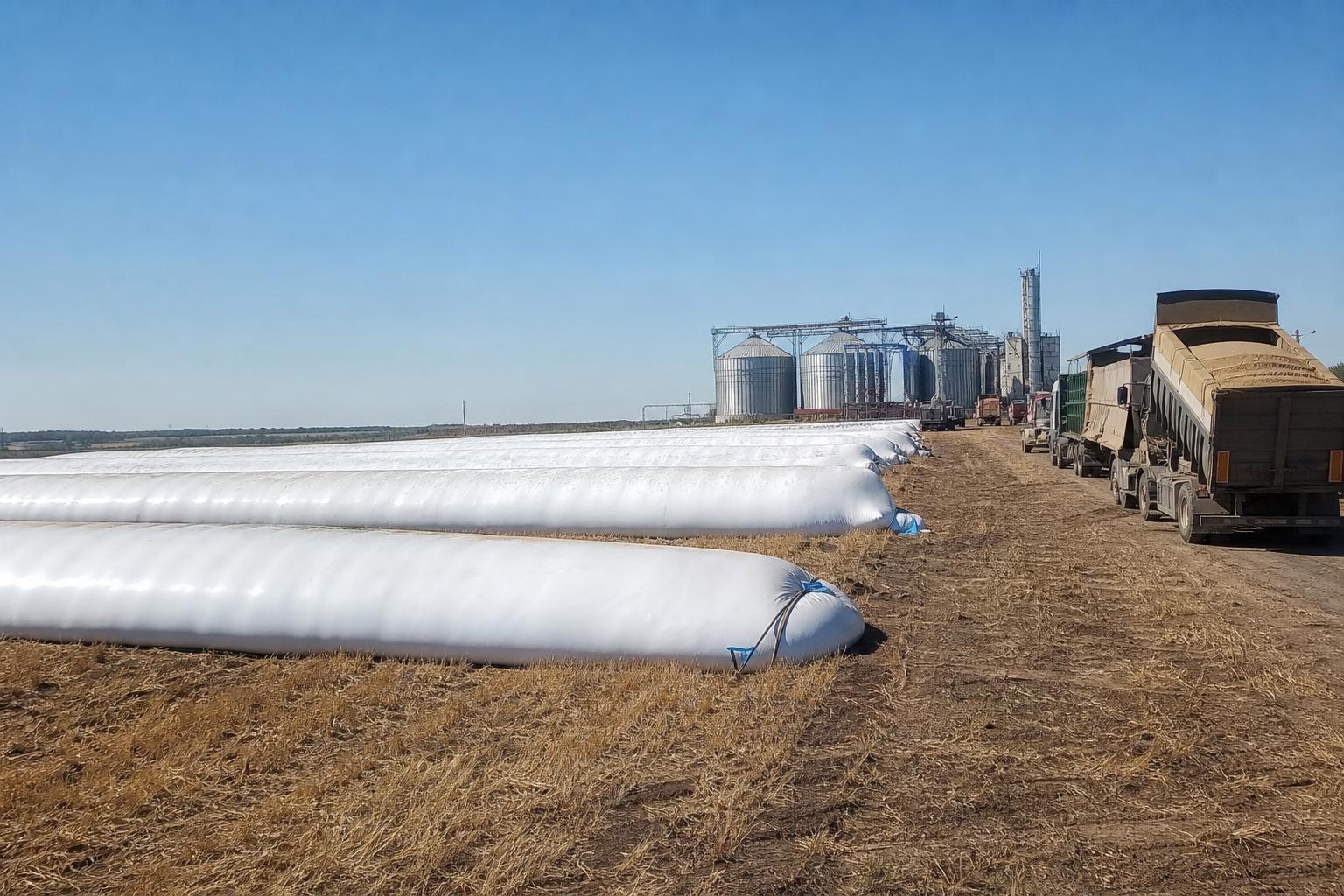
The Ukrainian grain market is entering a period when sale prices increasingly depend not only on yield or export demand but also on the availability of storage space. Due to restrictions in maritime logistics and infrastructure risks, some producers are forced to plan harvest sales considering a shortage of elevator capacities.
Against this backdrop, international partners have confirmed around $10.5 million for the procurement of temporary storage solutions for Ukrainian farmers. Priority is given to small and medium-sized producers, particularly in frontline regions.
Why Storage Issues Have Become a Market Factor Again
The need for additional capacities arose due to systematic strikes on port infrastructure and a slowdown in maritime exports of agricultural products. Estimates suggest a potential storage deficit of 7–11 million tons.
For producers, this means a narrower maneuvering space during sales. If there is nowhere to store the grain, farms more often agree to quick sales, even when market prices do not meet expectations.
For buyers, traders, and elevators, the situation also changes operational rules: flexible acceptance schedules, clear logistics planning, and understanding where excess grain exists without adequate storage conditions become more important.
What the Funds Will Be Used For
The confirmed funding is intended for grain bags and other temporary storage solutions. This format allows for faster creation of additional capacities where stationary elevators are unavailable or overloaded.
Among the confirmed contributions are support from the European Union, FAO, the Buffett/Mercy Corps Fund, the World Food Programme, and the Red Cross. The total confirmed aid is estimated at approximately $10.5 million, considering various currency contributions.
Separately, it is reported that the Ministry of Agrarian Policy is finalizing with the World Bank the possibility of attracting an additional $25 million. If confirmed, this support program could cover a broader range of agricultural producers.
What Grain Sellers Should Consider
- Do not delay storage planning. Temporary solutions can reduce pressure for quick sales but should be integrated into farm logistics before peak loads.
- Evaluate not only the price but also the shipping conditions. For transactions on AgroPost, it is advisable to clearly specify the crop, volume, storage location, and options for self-pickup or delivery.
- Compare sales from the field, elevator, and temporary storage. Different formats can yield different net prices after processing, storage, and transportation costs.
- Monitor support programs. For small and medium-sized producers, especially in frontline regions, access to grain bags can be a factor of financial stability.
A Signal for Elevators and Buyers
The emergence of additional temporary capacities does not eliminate the role of elevators but can partially relieve the market during peak periods. For elevator businesses, this enhances competition for service: speed of acceptance, transparent tariffs, processing, and convenient logistics become key arguments.
Grain buyers should consider that some sellers, with available storage space, may be less eager to sell quickly. This does not guarantee an automatic price increase but makes negotiations more dependent on local stock balances, transportation, and access to export channels.
What this means for the market: temporary storage facilities can reduce forced grain sales in regions with capacity shortages but do not solve all export and logistics issues. For AgroPost participants, accurate descriptions of available grain, storage conditions, and shipment details will influence transaction speed and final prices.
Comments
No comments yetNo comments yet - be the first.