
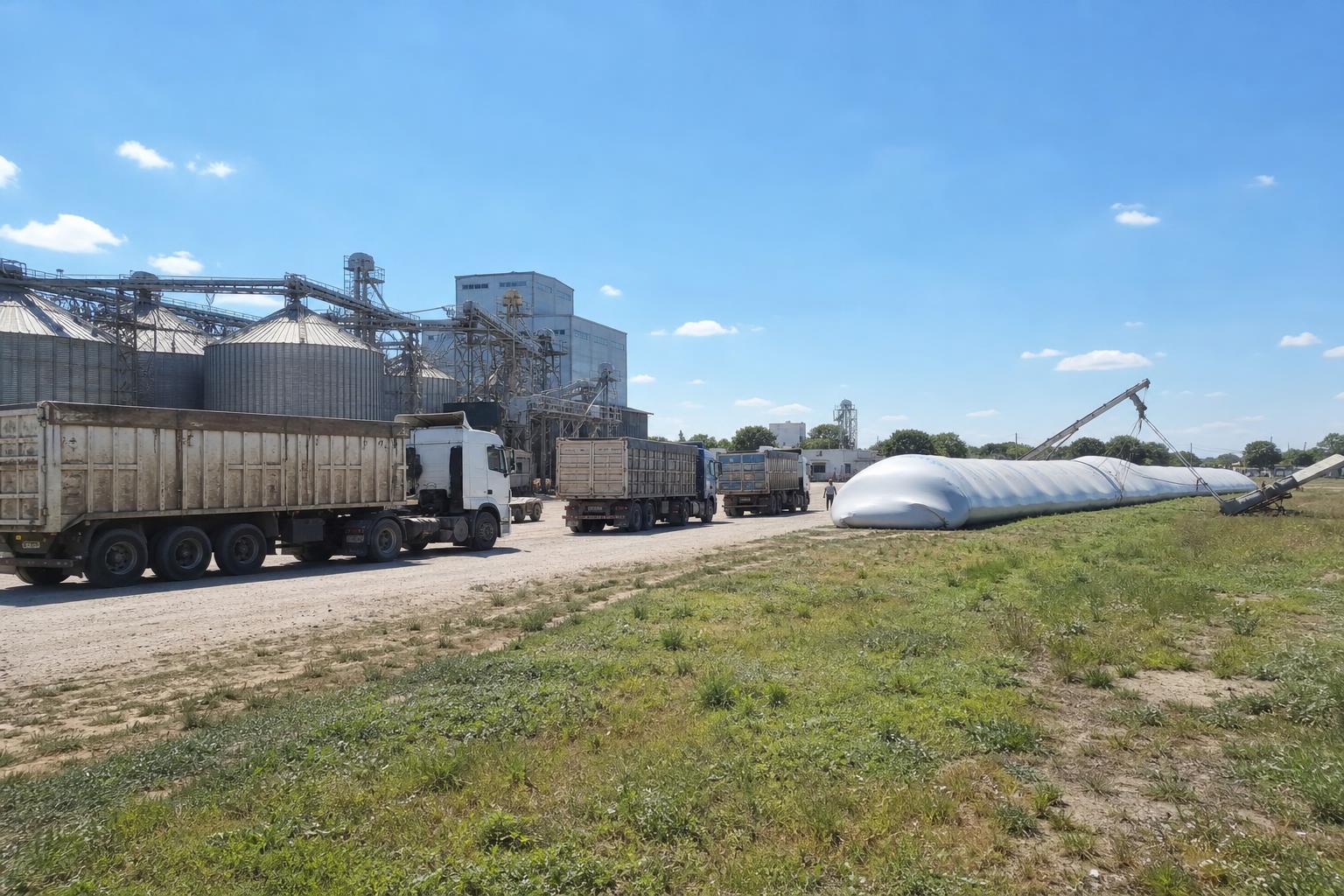
The Ukrainian grain market is entering a period when logistics costs and storage availability remain as crucial as the grain price itself. Against this backdrop, Switzerland announced a funding of 3 million Swiss francs for the temporary storage of Ukrainian grain within the FAO project.
For grain producers and buyers, this is not just humanitarian support. It represents an additional tool that can help some farms avoid rushing to sell their produce due to a lack of storage space at elevators or limited export opportunities.
What exactly does the support entail
The Swiss funding is intended for the temporary storage of grain. According to the relevant ministry, the issue remains urgent due to limited maritime export capabilities: up to 30 million tons of agricultural products could be at risk.
The FAO project also includes vouchers for small farmers to prepare for the next production season. Special emphasis is placed on farms for which grain bags are not always a practical solution due to small production volumes.
Coordination of assistance is planned through the State Agricultural Register. This is important for the market, as it is through the SAR that the demand for grain bags among farmers has already been identified.
Why storage is once again becoming a key price factor
When export logistics operate unevenly, farmers are essentially choosing between quick sales and storage costs. The availability of temporary storage provides more room for negotiations but does not eliminate expenses related to processing, quality control, and transportation.
For grain sellers on AgroPost, this means that listings should clearly specify not only the crop, volume, and delivery basis but also storage conditions. Buyers increasingly evaluate not only the price per ton but also risks related to moisture, contamination, shipment speed, and transportation accessibility.
- Producers should consider the full economics: sale price minus storage, processing, logistics, and working capital financing.
- Elevators should communicate their available capacities, tariffs, and transshipment options in advance.
- Buyers should clarify whether the batch is ready for quick shipment or requires additional processing.
Budget support for farmers
At the same time, discussions are underway regarding state funding for the agricultural sector for 2027. The draft budget for supporting farmers allocates 7.4 billion UAH, which is less than the approved amount for 2026.
According to the Ministry of Agrarian Policy, the difference is largely due to revisions in expected revenues from export duties on soybeans and rapeseed. The 2027 budget draft projects these revenues at 1.6 billion UAH compared to 9.6 billion UAH in the 2026 budget.
For the grain market, this block is important not as a direct price factor but as an overall backdrop for the availability of government and donor support. The general fund, according to announced data, includes 265 million UAH, while contributions from the EU and the World Bank to the special fund remain around 2.5 billion UAH.
What market participants should pay attention to
In the near future, three parameters will remain key for grain deals: where the product is stored, how quickly it can be shipped, and the cost of delivery to the buyer or export destination.
If a farm relies on support for temporary storage, it is advisable to verify the current data in the SAR and prepare information on volumes, crop type, and actual needs. This is especially important for small producers who lack their own infrastructure or work with small batches.
The key takeaway for sellers: grain with confirmed quality, a clear storage location, and predictable logistics has a stronger negotiating position than a batch without transparent shipping conditions.
What this means for the market
Support for temporary storage does not solve all grain logistics problems but can reduce pressure on some producers during peak periods. For the market, this means increased attention to infrastructure, batch quality, and precise sale conditions. On AgroPost, this should be used as a practical advantage: the more transparent the grain offer, the easier it is to find a buyer and agree on a price.
Comments
No comments yetNo comments yet - be the first.