
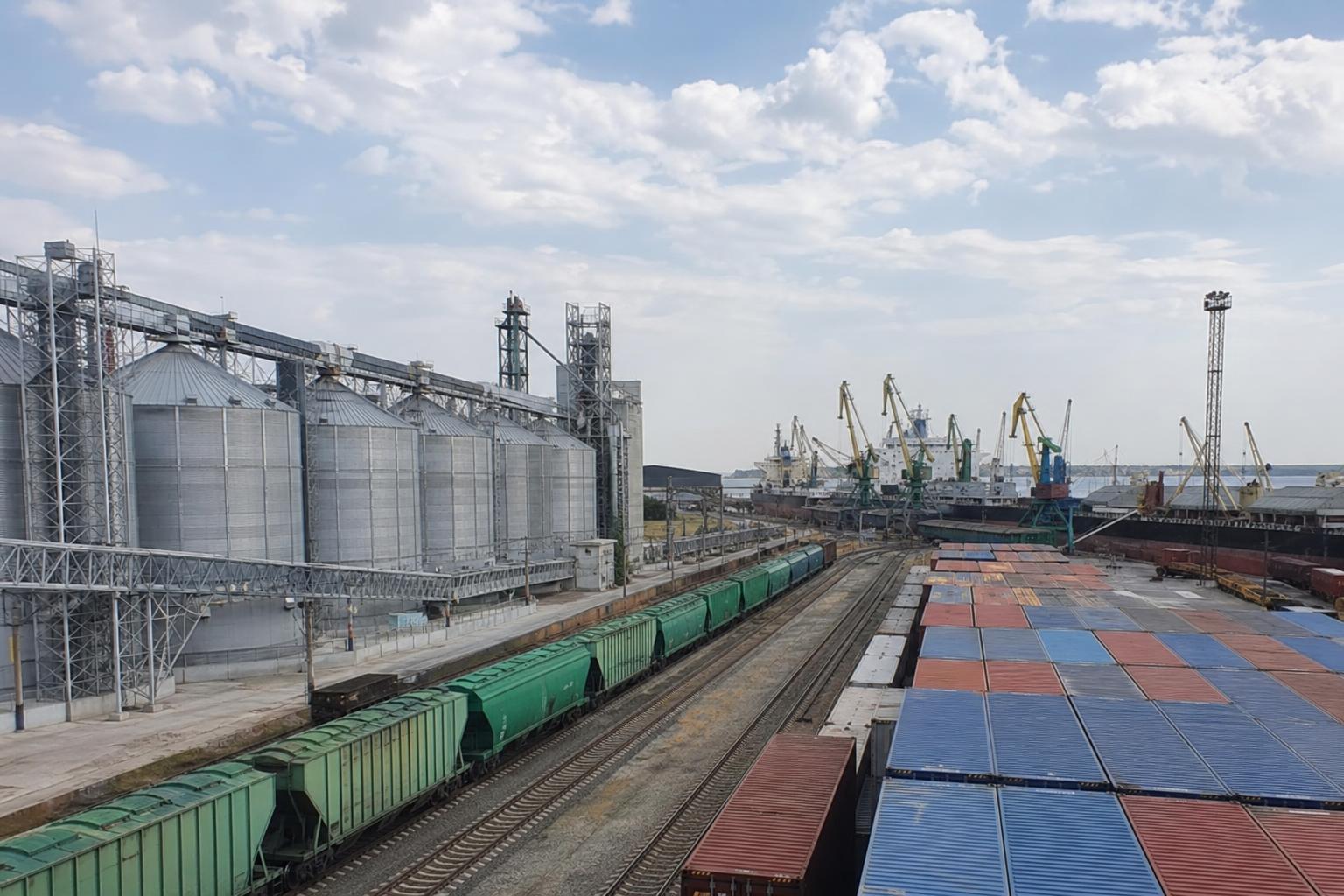
The Ukrainian grain market is entering a period when the deal price increasingly depends not only on the basis and quality of the batch but also on route availability. For elevators, traders, and farmers, it is important to plan logistics in advance, especially if sales are tied to exports.
Recent news from the transportation sector indicate two practical signals for the market: security risks in the Black Sea remain relevant, and container exports through Poland are becoming more expensive for some routes.
Black Sea Route: Shipping Risks Remain High
On the night of September 23, Russia attacked a cargo vessel flying the flag of Antigua and Barbuda in the Black Sea. A fire broke out onboard, the crew was evacuated by the Ukrainian Navy, and the fire was extinguished.
According to the Ukrainian Sea Ports Authority, the attack resulted in the death of the vessel’s captain — a Ukrainian sailor. The agency described the incident as another attack on civilian shipping.
For the grain market, it is important not to draw conclusions about specific cargo without confirmation. At the same time, the very fact of an attack on a civilian vessel signals to export participants: insurance, time buffers, readiness to change routes, and communication with buyers should remain part of the trading strategy.
Container Route to Gdańsk: Maersk Raises Export Tariffs
Starting October 1, 2026, Maersk will update tariffs for rail container shipments between Ukrainian terminals and the Polish Gdańsk DCT terminal. Export rates will increase, while import rates, according to published data, will remain at current levels.
The declared range for 20-foot container export rates will be $1600–2100 depending on the departure terminal. For 40-foot containers, the rates will be $1800–2600.
Specifically, on routes from Kyiv and Ternopil, the rate for a 40-foot container will rise from $1800 in September to $2200, and for a 20-foot container — from $1800 to $2000. From Mostyska, the tariff will increase from $1400 to $1600 for a 20-foot container and from $1500 to $1800 for a 40-foot container.
For Dnipro-Lisnyk, Zaporizhzhia, and Kharkiv, the tariff for a 20-foot container will increase from $1950 to $2100, and for a 40-foot container — from $2300 to $2600.
What Grain Sellers and Elevators Should Consider
- Calculate netback for each route. Even if the buyer’s price looks attractive, changes in logistics tariffs can reduce the seller’s margin.
- Separate bulk and container exports. The tariff increase announced by Maersk directly affects container shipments, so its impact is greatest on batches shipped in containers.
- Fix delivery terms in the contract. For proposals and negotiations on AgroPost, it is advisable to specify the basis, elevator availability, container loading options, and preferred logistics route immediately.
- Include a time reserve. Security incidents at sea and the load on alternative routes can influence shipment schedules.
Market Outlook for AgroPost
For grain sellers, it becomes increasingly important not just to seek the best price but to sell with clearly calculated logistics. Offer cards should specify the crop, volume, quality, loading elevator or station, containerization possibility, and desired delivery basis.
What this means for the market: buyers will pay closer attention not only to the grain price but also to the route, timing, and delivery risks. Sellers who can quickly confirm logistics conditions and offer flexible shipment options will find it easier to compete for quality export deals.
Comments
No comments yetNo comments yet - be the first.