
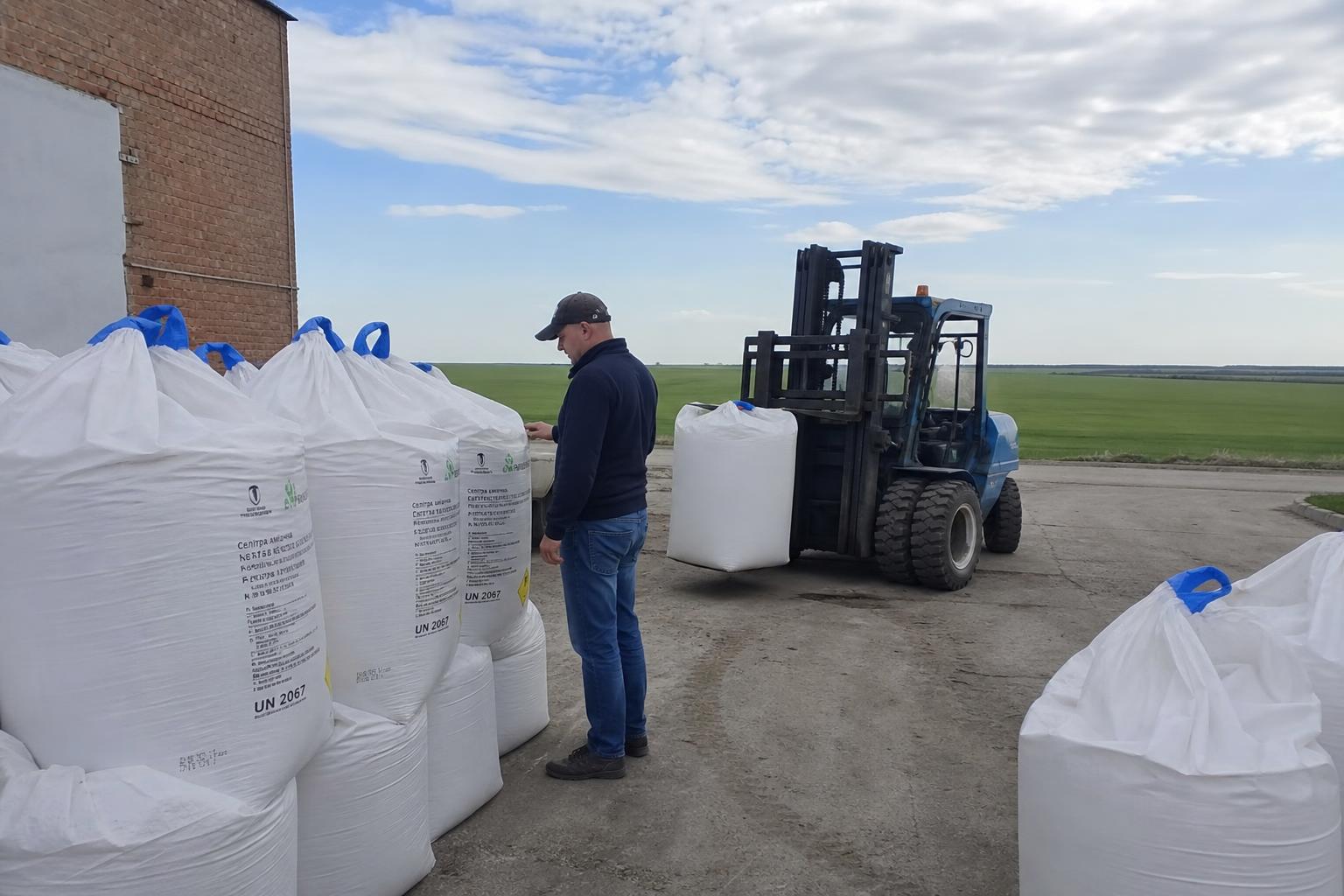
The Ukrainian fertilizer market continues to heavily depend on imports, particularly from Poland. According to Polish industry media, in 2025 Ukraine imported 784,000 tons of Polish mineral fertilizers, maintaining its position as the top buyer of this product.
For sellers and buyers on AgroPost, this serves as an important market indicator: demand for nitrogen and complex fertilizers remains high, and the upcoming autumn sowing season adds pressure on logistics, stock availability, and payment terms.
The Polish Market Remains a Key Destination for Ukraine
In 2025, Ukraine accounted for approximately 25% of Poland’s total mineral fertilizer exports. Despite a gradual decline in Ukraine’s share within Polish shipments, the country retains its leading position among importers.
For comparison, Germany was the second-largest destination for Polish fertilizers, with 696,000 tons. Followed by the Czech Republic with 376,000 tons, the United Kingdom with 198,000 tons, and Slovakia with 142,000 tons.
Overall, Polish fertilizers were supplied to over 100 countries. This means Ukrainian buyers compete not only domestically but also within the broader European demand.
Ukraine’s Share Is Decreasing, but Volume Remains Significant
In 2023, Ukraine’s share of Polish fertilizer exports was 33.8%, decreasing to 25.4% in 2024, and approximately 25% in 2025. Polish producers are expanding their geographical reach, yet Ukraine’s importance persists.
In 2025, Poland increased its mineral fertilizer exports to 3.13 million tons from 2.68 million tons in 2024. The majority of supplies consisted of single-nutrient nitrogen fertilizers—2.29 million tons. Complex mineral fertilizers accounted for 655,000 tons.
For the Ukrainian market, this underscores the critical role of nitrogen-based products as a staple for mass demand. Simultaneously, NPK and complex formulas remain vital for farms planning tailored nutrition strategies based on specific crops and technologies.
Autumn Sowing Supports Fertilizer Demand
The start of winter crop sowing in various regions already shapes seasonal agrochemical needs. According to regional authorities, in the Carpathian region, 56,800 hectares of winter cereals are planned for sowing in 2027, including 46,500 hectares of winter wheat.
Separately, winter rapeseed is projected on 23,600 hectares. As of the report, 15,100 hectares had already been sown with rapeseed, and 4,900 hectares with winter wheat.
While these regional figures do not reflect the entire Ukrainian market, they illustrate seasonal logic: during sowing periods, farmers actively seek initial and main fertilizers, and clarify the availability of specific formulas from suppliers.
Key Takeaways for Sellers and Buyers
- Imports from Poland remain a vital channel for supplying Ukrainian mineral fertilizers.
- Nitrogen fertilizers dominate Polish exports, making this group potentially the most liquid for seasonal deals.
- Complex NPK fertilizers maintain steady demand among farms that tailor nutrition to crops, soils, and cultivation methods.
- Autumn sowing boosts short-term activity in the fertilizer market, especially for winter cereals and rapeseed segments.
- Buyers should verify stock levels, logistics, and payment conditions before peak demand strains suppliers.
Implications for the market: Ukrainian demand for fertilizers remains sufficiently large to keep the country among the key importers of Polish products. For sellers on AgroPost, this provides an argument to actively update offers for nitrogen and NPK fertilizers, while for farmers, it emphasizes the importance of timely procurement—waiting too long may limit formula availability or delivery timelines.
Comments
No comments yetNo comments yet - be the first.