
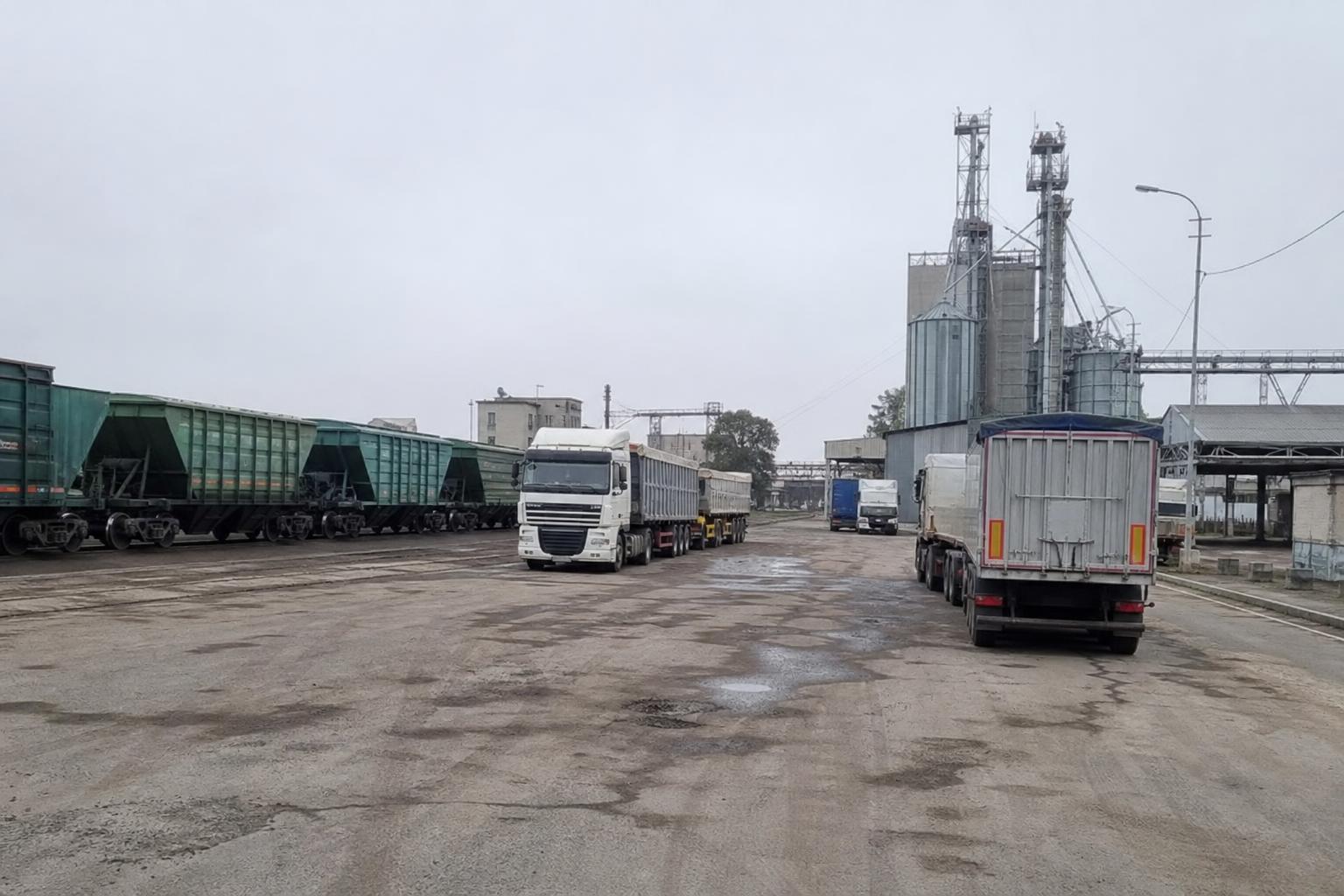
Ukraine's agricultural logistics in early August showed mixed dynamics: road transportation volumes increased, but this was not enough to offset the decline in overall agricultural exports.
For market participants, this signals not a complete change in the logistics model, but rather the need to more flexibly combine delivery channels — automotive, railway, port, and border crossing.
Automotive Channel Increased but Remains Niche in Capacity
In the first six days of August, 59.6 thousand tons of agricultural products were exported through Ukrainian customs points by road. This is an 11.3% increase compared to the same period in July, when the figure was 53.6 thousand tons.
Road transport is more actively used for processed products and cargo with higher value per ton. For such goods, more expensive logistics can be economically justifiable compared to bulk grain shipments.
At the same time, the automotive channel lacks sufficient capacity to replace large-volume sea shipments. Therefore, its strengthening is important for specific deals but does not solve the problem of declining overall export flows.
Overall Agro-Export Significantly Declined at the Start of August
From August 1 to 6, Ukraine exported 312.9 thousand tons of agricultural products. This is 60.1% less than the same period in July.
The largest reduction was observed in grain exports. Wheat shipments decreased to 93.2 thousand tons from 294.9 thousand tons in July. Corn exports fell to 33.5 thousand tons from 293.7 thousand tons.
This ratio indicates that the market is most vulnerable where large batches and stable port and railway corridor operations are required.
Rail and Sea Routes Remain a Key Risk
According to analysts, in the first five days of August, grain flow by rail to sea ports sharply decreased. Meanwhile, land railway crossings and road exports appeared relatively more active.
An additional factor is the situation in the Black Sea. Turkey resumed vessel passage through its straits after temporary delays related to some ships amid regional security risks.
The Turkish side has not publicly explained the reasons for these restrictions. Reports also indicated Turkey's proposal for a moratorium on attacks in the Black Sea, but for Ukrainian exporters, the practical significance lies not in the statement itself but in the stability of vessel passage and the predictability of port logistics.
Key Conclusions for Sellers and Buyers
- Road transport should be considered as a tool for faster and smaller shipments, especially if it involves processed products or higher-value goods per ton.
- Bulk grain volumes remain dependent on ports and railways, so logistics risks should be factored into delivery timelines when concluding agreements.
- Buyers should clarify routes before confirming prices, as the same batch can have different economics depending on the export route.
- Sellers on AgroPost should indicate available shipment options: self-pickup, delivery by road, sending to border crossing or port.
What this means for the market: at the beginning of August, agricultural export logistics became more fragmented. Road transportation supports some operations but does not replace sea exports for grains. Therefore, a competitive advantage for sellers and buyers is not only the product price but also a realistic route, confirmed shipment possibilities, and a contingency time for contract fulfillment.
Comments
No comments yetNo comments yet - be the first.