
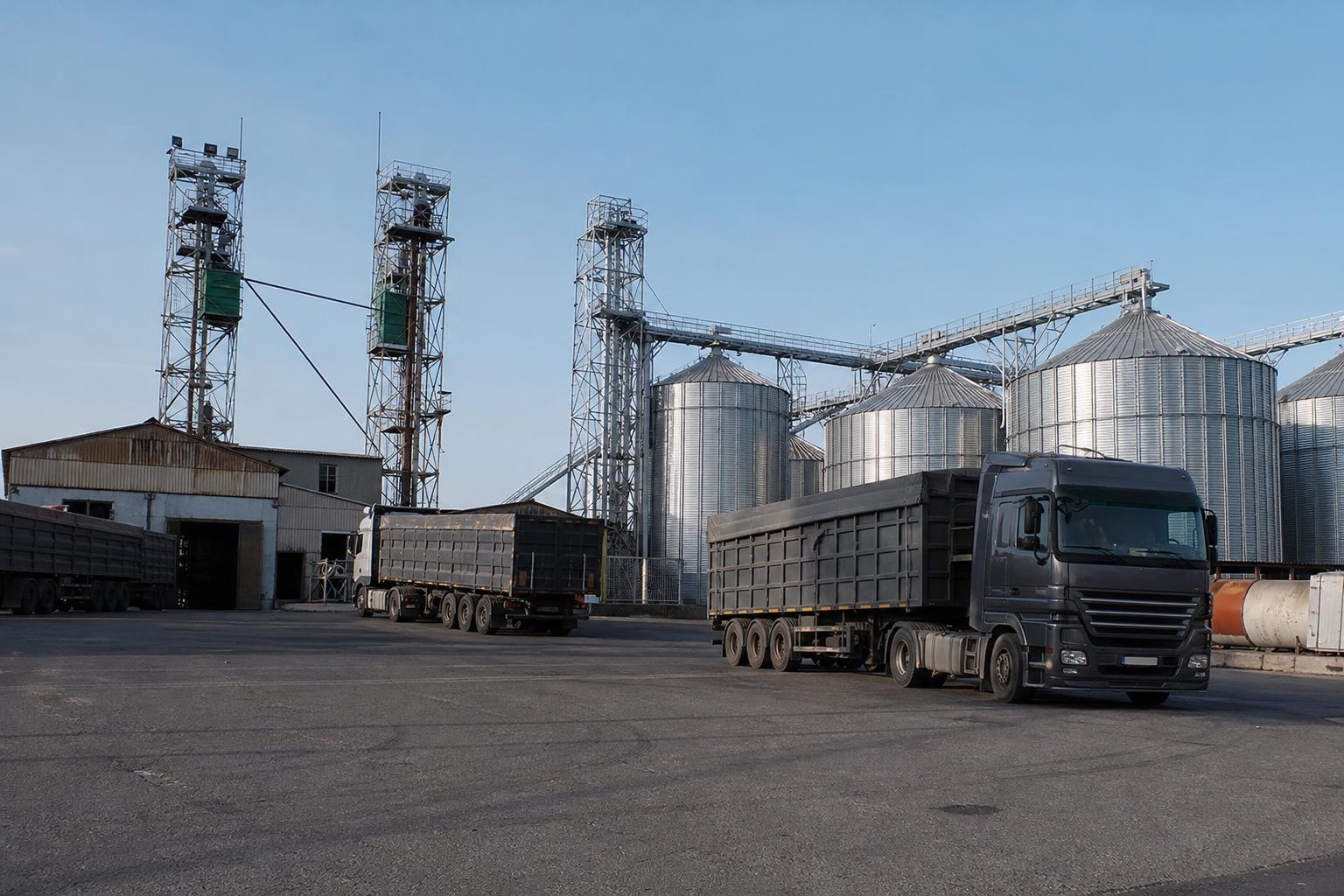
Ukrainian agricultural exports are entering a period when logistics are no longer a supplementary function but an integral part of the cost. For grain or oilseed sellers, it is crucial to consider not only the exchange or tender benchmarks but also the actual cost of delivery to the point of sale.
The international market maintains demand for large wheat consignments with autumn shipment dates. At the same time, for Ukrainian market participants, the main question is whether the route allows fulfilling the contract within the required window without eroding margins.
Global tenders set benchmarks but do not guarantee Ukrainian margins
Algerian state grain operator OAIC purchased approximately 720,000 tons of soft milling wheat at an auction on August 5. Market data indicates the price was around $289–290 per ton C&F, about $25 higher than the previous tender.
For Ukrainian exporters, such procurement is an important indicator of external demand. However, the C&F format means that sellers must precisely calculate maritime or combined logistics, transshipment, insurance of operational risks, and potential delays.
It is also important to note that the tender allowed for wheat of any origin. This increases competition among supplying countries, giving an advantage not only to those with available stock but also to those capable of reliably meeting delivery schedules.
Autumn shipment windows require early route reservations
The wheat purchased by Algeria is scheduled for shipment in three periods: September 15–30, October 1–15, and October 16–31. For the Ukrainian market, this exemplifies how international buyers operate with clear logistics slots.
If an agricultural producer or trader sells a batch for export, it is advisable to agree in advance not only on the price but also on the route: road transport to the border, rail, Danube route, or maritime transshipment. Without confirmed logistics, even a favorable price can turn into risks of penalties and delays.
For domestic buyers, this also signals that a supplier with a transparent delivery schedule and confirmed transportation has higher value than an offer with a lower price but unclear timing.
Border and ports remain operational risk zones
Industry news reported increased queues at borders due to port blockages, with the most challenging situation for trucks heading to Poland. For agribusiness, this means the need for daily monitoring of border crossing points before dispatching vehicles.
Road logistics are most sensitive to delays: driver availability, fuel, vehicle rental, and delivery deadlines quickly impact the final cost. Therefore, sellers should include not only carrier tariffs but also potential time costs in their commercial proposals.
Buyers on AgroPost are advised to clarify delivery conditions with suppliers: who is responsible for transportation, whether delivery is included in the price, loading deadlines, and the documents prepared for shipment.
Key conclusions for AgroPost participants
- For grain sellers, it is essential to calculate offers from a logistics perspective: port, border, or buyer’s warehouse should be part of the price.
- For buyers, it is important to compare not only the price per ton but also delivery reliability and readiness of the batch for shipment.
- For carriers, clearly define conditions for delays, route, and vehicle deployment deadlines to avoid disputes over costs.
- For traders, having alternative routes is crucial in case of queues or changes in port infrastructure availability.
Implication for the market: in upcoming deals, logistics will remain one of the main margin factors. On AgroPost, the most competitive proposals will be those that clearly specify delivery conditions, route, batch readiness, and parties’ responsibilities alongside the product price.
Comments
No comments yetNo comments yet - be the first.