
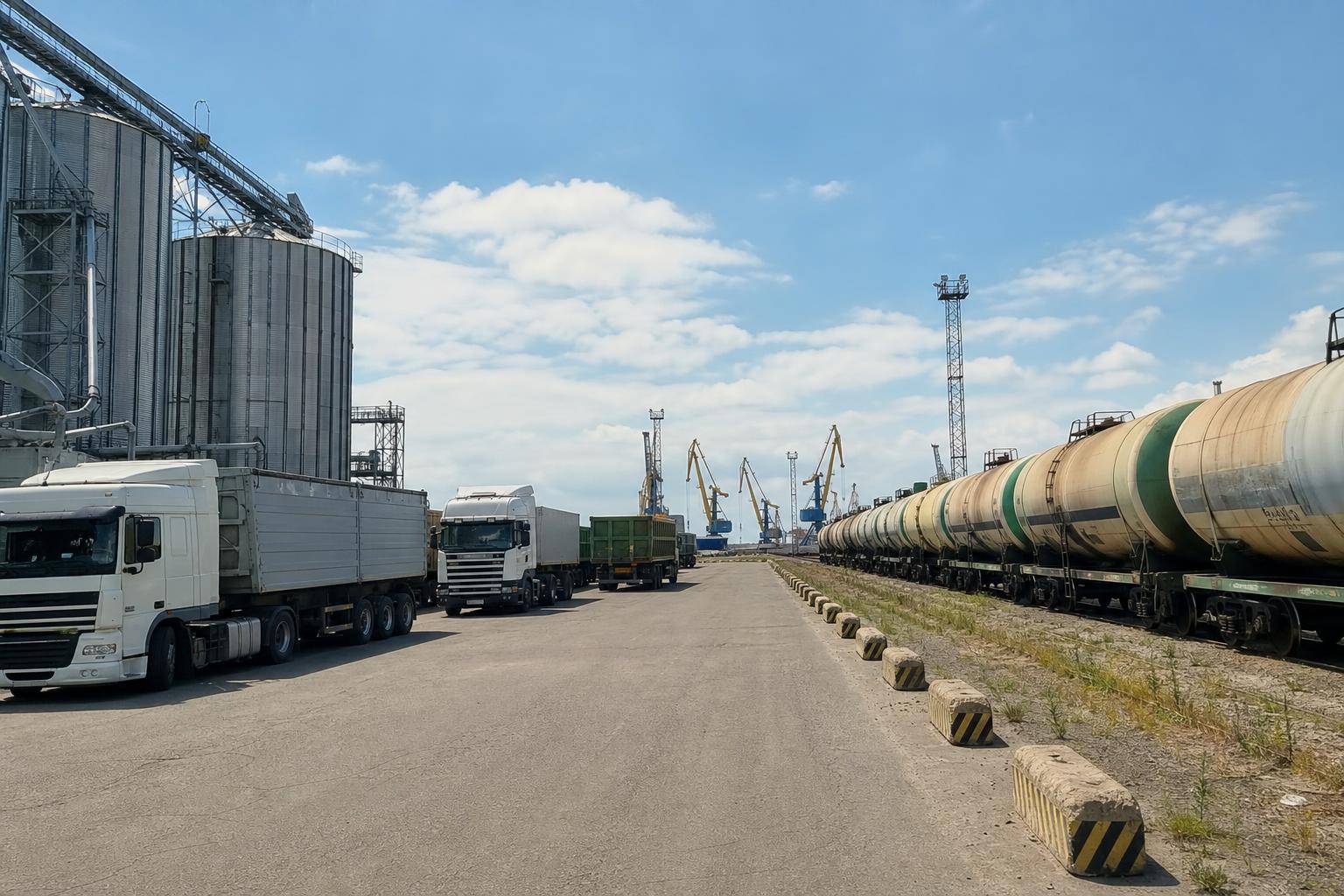
Ukrainian agricultural logistics enters a new week with an increased focus on port security, accessibility of railway routes, and the ability to quickly reorient shipments. For exporters of grains, oils, and meal, this means maintaining multiple delivery scenarios rather than relying on a single channel.
The key signal for the market is the attack on Kiliya in Odessa region, where port infrastructure and a grain warehouse were targeted. Against this backdrop, railways and Western border crossings remain vital insurance routes for agro-products with high export dependence.
Port Infrastructure: Risks Directly Affecting Schedules
On the night of September 27, Kiliya was subjected to a massive attack by strike UAVs. According to sources, over 20 drones targeted the city, damaging port infrastructure and a grain warehouse.
Such incidents not only pose direct risks to storage and transshipment but also complicate planning for traders, elevators, and carriers. Even when no casualties occur, businesses must clarify the condition of sites, acceptance schedules, storage availability, and the ability to meet contractual deadlines.
For grain owners, this underscores the importance of not delaying logistical decisions until large batches are formed. The earlier the route, carrier, and transshipment point are agreed upon, the greater the chances of reducing delays in case of local restrictions.
Railway Remains a Viable Alternative for the Oilseed Segment
Market data shows that in August, 113,000 tons of vegetable oil were exported by rail, representing a 54.7% increase compared to the same period last year.
This is a significant indicator for logistics: oil products actively utilize railway channels, especially when maritime and river infrastructure operate under military risks. At the same time, increased volumes via rail may heighten competition for rolling stock, terminals, and border slots.
Oil, meal, and seed sellers should consider not only transportation tariffs but also the full route cost: delivery to the station, loading, delays, transshipment, and possible border delays.
External Demand Could Increase Load on Export Routes
India has reduced import duties on several vegetable oils, including sunflower oil. The basic rate for crude sunflower oil has been decreased from 10% to 0%, and for refined oil from 32.5% to 22.5%.
Ukraine is among the suppliers of vegetable oils to the Indian market. Therefore, changes in India's customs regime are a factor for exporters and logisticians to monitor, although the actual impact on Ukrainian shipments will depend on prices, contracts, transport availability, and route security.
For AgroPost participants, this is a practical signal: if demand for sunflower oil or processing products increases, buyers will respond more quickly to offers with clear delivery terms, ready documentation, and transparent logistics.
Key Takeaways for Sellers and Buyers
- Do not rely on a single route. Port risks persist, so it’s advisable to have backup options via rail or other transshipment points.
- Calculate the full logistics cost. A cheaper tariff does not always mean a lower final delivery price if delays or additional transshipments occur.
- Verify infrastructure status before shipment. After attacks, prompt confirmation regarding warehouses, terminals, and acceptance schedules is crucial.
- Prepare export documents for oil batches in advance. External market demand can change rapidly, and logistics windows are often limited.
What this means for the market. Ukraine's agricultural logistics remains adaptable but more costly to manage: port security risks increase the value of railway and combined routes. At AgroPost, sellers should immediately specify available delivery options, shipment regions, and batch readiness, while buyers should check not only the product price but also the feasibility of logistics to the required date.
Comments
No comments yetNo comments yet - be the first.