
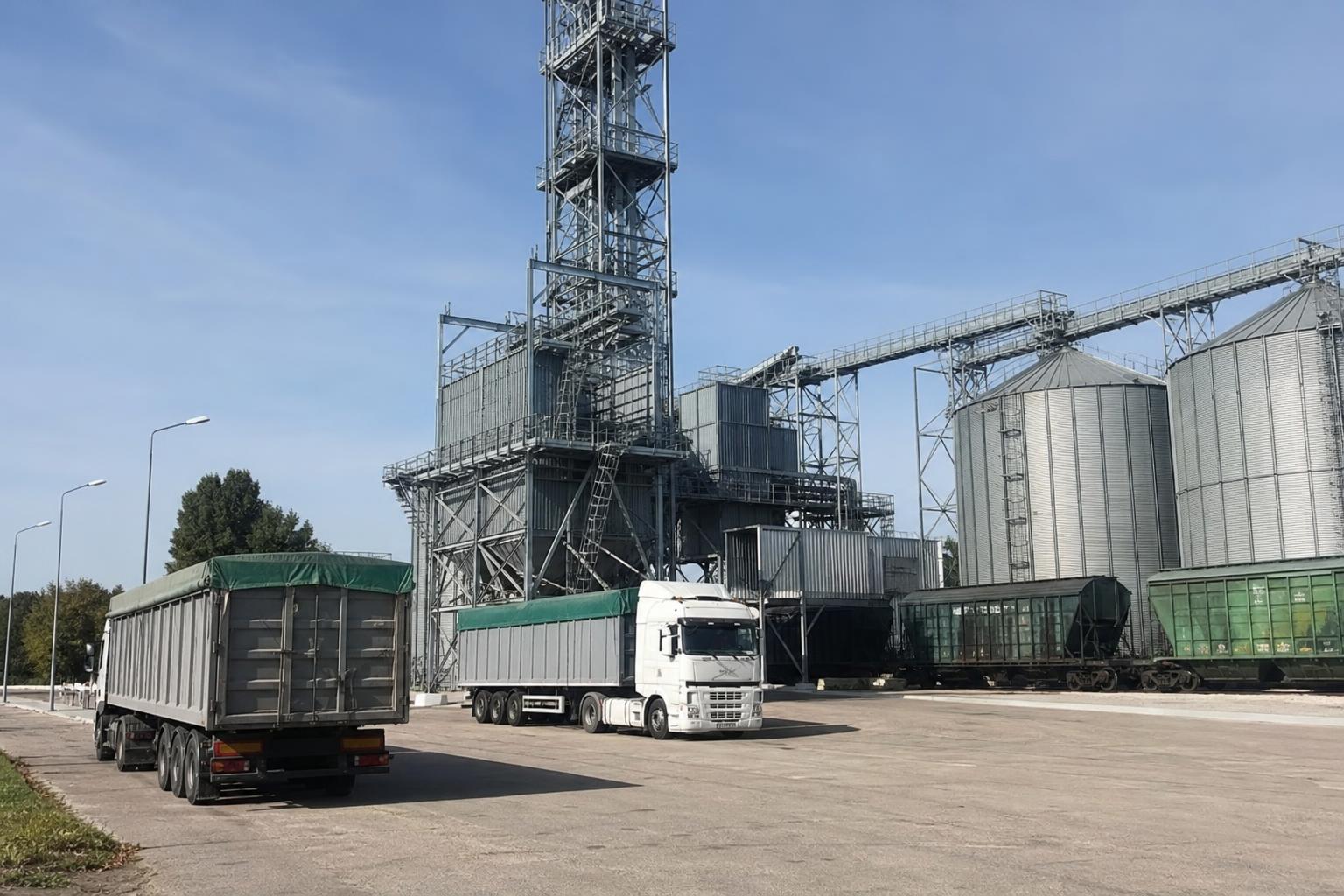
Ukrainian agricultural logistics is entering a period where key factors are no longer limited to transportation tariffs or port infrastructure accessibility. Sales and shipment schedules are increasingly influenced by crop financing, elevator conditions, and the speed of quality verification for batches.
For grain sellers, buyers, freight forwarders, and carriers, this means one thing: the market requires more precise planning. Those with access to working capital and a clear picture of elevator stock levels can more flexibly choose the timing of sales and delivery routes.
Crop-backed loans can reduce chaotic sales
According to industry media reports citing Minister of Agrarian Policy and Food Taras Vysotskyi, the National Bank is set to increase the collateral coefficient for grain from 0.4 to 0.75. This change should enable farmers to obtain larger loan amounts secured by their harvest.
The logistical effect of this change is not in direct cost reduction for transportation but in potential supply balancing. If producers have access to financing, they are less dependent on immediate grain sales to cover current expenses.
This is significant for the transportation sector, as sudden supply surges create pressure on elevators, road transport, rail dispatch, and export channels. More evenly distributed sales can facilitate better transport booking and shipment scheduling.
Elevators become logistics hubs
An emerging trend is digital management of grain storage facilities. "Continentale Farmers Group" is developing its own elevator management system, "Silosna Doska," with full deployment planned by the end of 2026.
According to the company, the system will display what crops are stored, in what quantities, and with what quality parameters at specific silos or warehouses. The analytical report will be updated once daily.
This information is practical for logistics: it allows faster matching of batches with contracts, quality requirements, and available transport. This reduces the time between commercial decision-making and actual loading.
Automation of acceptance impacts throughput
"Continentale" also reports the installation of automatic vehicle sampling systems at elevators in Khorostkiv, Hordynka, and Krasne. At one facility, the company expects to speed up the acceptance of early grains by at least one truck per hour.
This is crucial for carriers, as delays at the elevator entrance directly affect vehicle turnover. For sellers, it means fewer delays during peak acceptance days and better control over shipment windows.
The company also reports investments in elevator infrastructure totaling $52.09 million from 2019 to 2026, including acquisitions, modernization, automation, and equipment. This confirms that storage infrastructure remains a key element of grain logistics.
Key takeaways for AgroPost participants
- Grain sellers should consider not only current prices but also access to credit, storage conditions, and the ability to delay sales without losing liquidity.
- Buyers should clarify not only batch volume but also storage location, quality parameters, and elevator readiness for quick shipment.
- Carriers need to monitor elevators with higher throughput capacity, as acceptance speed and sampling influence the actual profitability of trips.
- Exporters and traders should incorporate potential changes in sales pace into planning, especially if crop-backed loans become more accessible to producers.
Implications for the market. Ukrainian grain logistics is gradually shifting from a reactive model to a more managed approach: financing helps farmers avoid rushing to sell, while digital elevator solutions enable faster batch formation for specific contracts. For AgroPost, this enhances the value of listings with details on location, quality, loading conditions, and available transport.
Comments
No comments yetNo comments yet - be the first.