
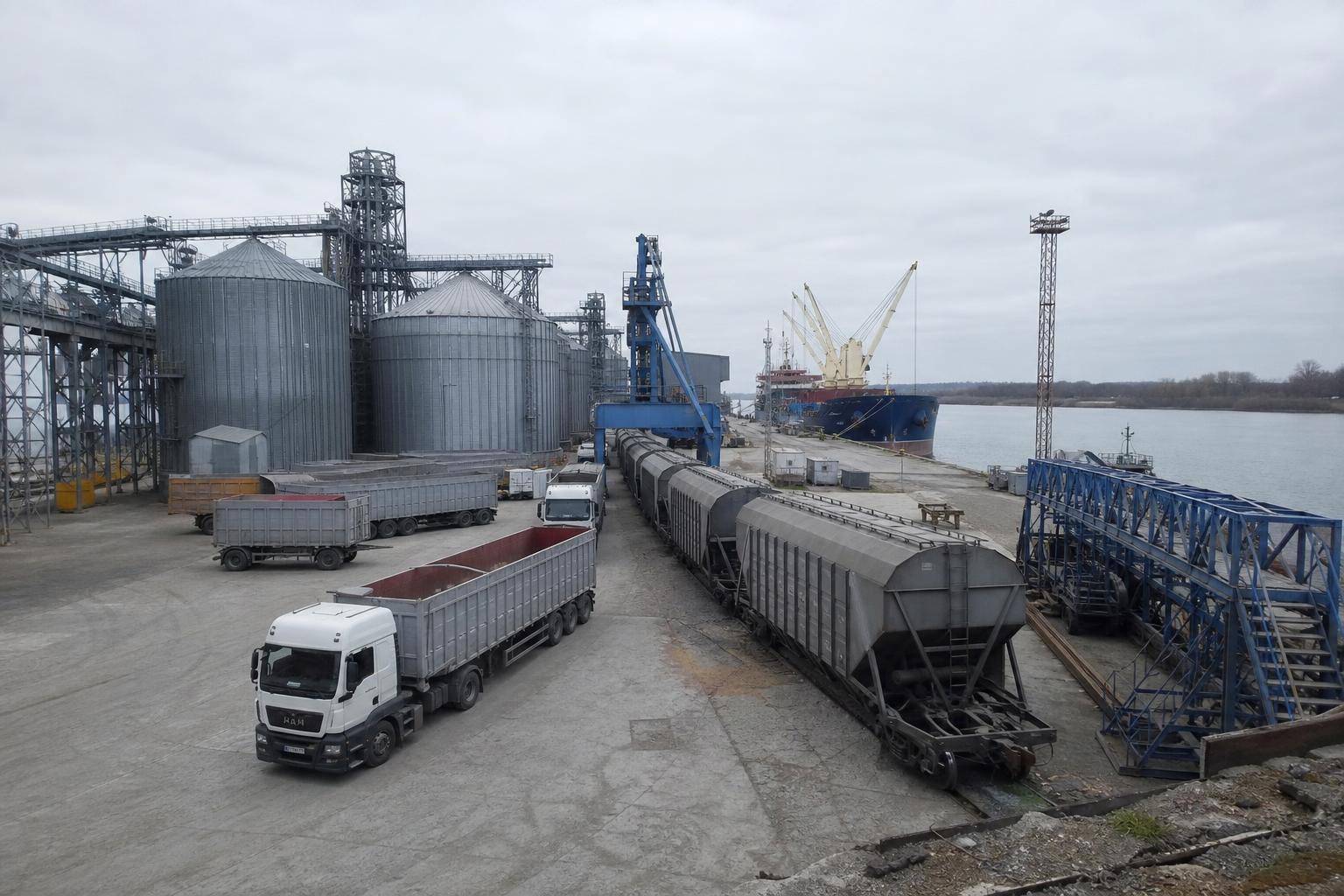
Ukrainian agricultural logistics is once again undergoing rapid route restructuring. Due to the near-complete halt of new agreements towards sea ports, the grain market has lost some liquidity, and port price indicators have become less reflective of actual deals.
For sellers and buyers on AgroPost, this means that the cost of goods increasingly depends not only on grain prices but also on available routes, shipment timelines, transshipment, and transportation risks.
Sea basis losing liquidity
According to Spike Brokers analysts, trading activity for corn and wheat towards deep-water ports has sharply declined. New deals are almost not being concluded, so CPT Odessa levels are mainly indicative.
Over the week, the SPIKE CPT Odessa index for corn decreased to $200/ton, for food wheat — to $198/ton, and for feed wheat — to $188/ton. This correction occurred despite rising risk premiums in the global grain market.
For the domestic market, this creates a situation where sellers are hesitant to fix prices, and buyers are more cautious in submitting bids. Part of the turnover shifts to fulfilling previously concluded contracts rather than actively entering new ones.
Danube and western border taking on more load
Exporters are gradually rerouting logistics through Danube ports, where trading activity is beginning to recover. For wheat, this route is becoming one of the key alternative channels during periods of unstable sea export operations.
The western border also remains an important route for corn. However, its capacity is limited by Ukrainian transshipment infrastructure and repair works on railway routes through the Czech Republic towards Italy and Germany.
The FCA Chop index for corn decreased to $228/ton. Buyers of the new harvest at the western border quote indicative prices of €205–€207/ton with delivery in November–January, but the number of concluded contracts remains small.
Fleet and long-term logistics become strategic issues
Against the backdrop of port crisis, market participants are once again discussing the role of owning or long-term chartered fleet for grain traders. BPG Shipping & Kronos Bulkers Director Gennadiy Ivanov expressed the view that having own vessels could partially mitigate port blockade consequences.
He estimates that a route via the Danube to Constanța with subsequent transportation by own fleet could help optimize logistics and partially hedge freight costs. He also provided a calculation that a Supramax class vessel transporting about 400,000 tons annually could generate approximately $4 million in revenue, corresponding to a freight hedge of about $9–10/ton.
This is not a short-term solution for most agribusinesses, but the market signal is clear: logistics are increasingly shifting from operational costs to strategic advantage.
Key conclusions for sellers and buyers
- Port prices do not always reflect actual liquidity. If deals are few, indicative levels may not represent the real ability to sell or buy a batch.
- Route becomes part of the price. Danube, western border, railway, road transport, and transshipment form different deal economics.
- Delivery timelines are more important than during stable markets. For contracts with delivery in November–January, buyers already indicate benchmarks, but the volume of real deals remains limited.
- Producers are taking a wait-and-see position. Some farmers are reluctant to sell the new harvest under current conditions, awaiting stabilization of sea exports and external markets.
What this means for the market: In the near future, agricultural sellers should consider not only the base price of grain but also the full logistics model of the deal. Buyers and traders on AgroPost should clearly specify desired delivery basis, route, shipment period, and batch requirements — this reduces negotiations and helps find real offers faster amid limited liquidity.
Comments
No comments yetNo comments yet - be the first.