
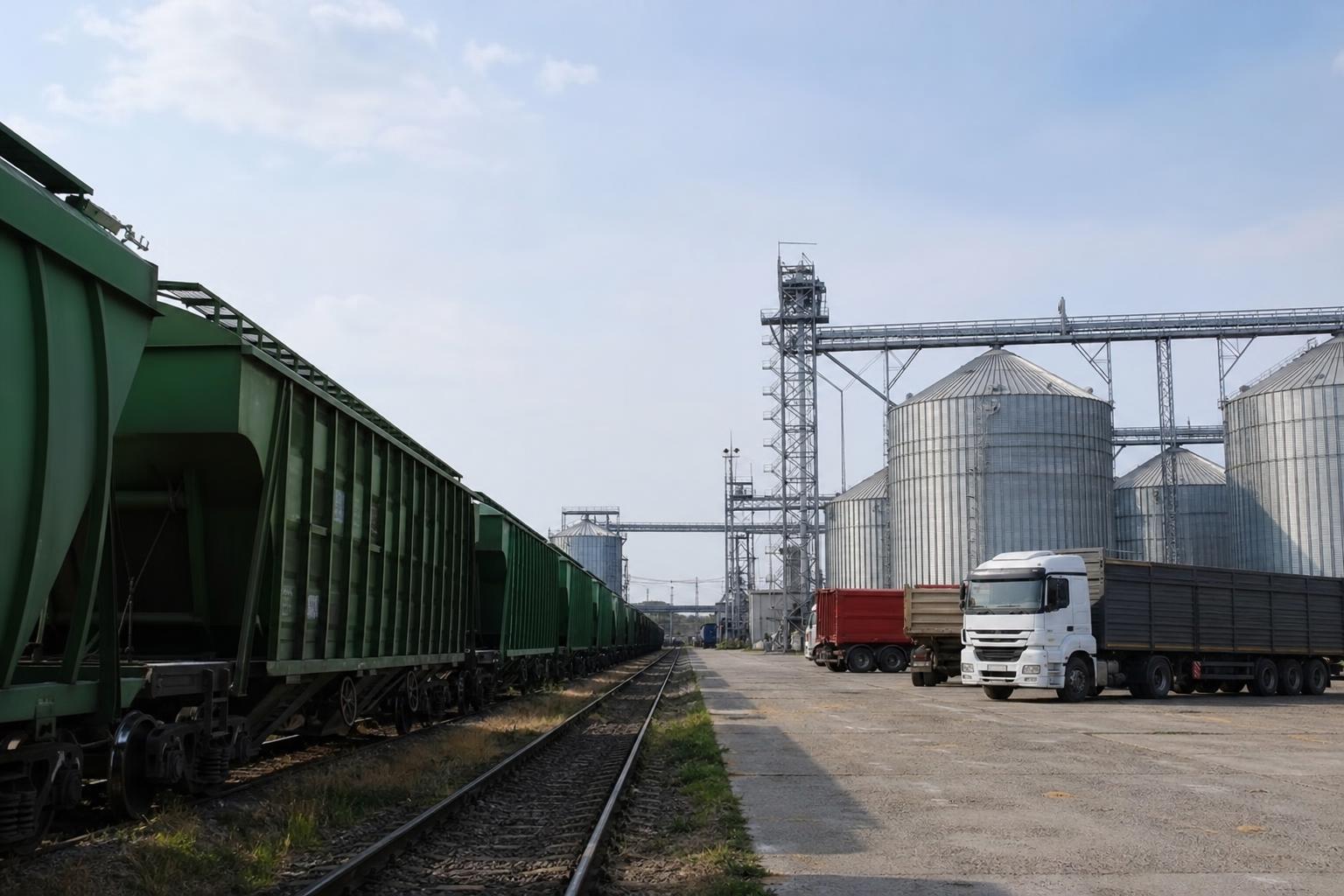
Ukrainian agricultural logistics is entering another period of tension: without stable operation of Black Sea ports, grain flows are rapidly redistributed between rail, Danube ports, and overland transit through neighboring countries.
For grain sellers and buyers, this means that the transaction price increasingly depends not only on demand but also on the available route, loading speed, and transportation costs to the point of receipt.
Rail seeks additional routes for grain
Ukrzaliznytsia is negotiating with neighboring countries to expand transit routes for Ukrainian grain. This step is driven by the need to diversify exports following restrictions on Black Sea port operations due to military risks.
Among the directions already used for some cargoes are Danube ports, the Romanian port of Constanța, as well as transit through Slovakia and Hungary.
For agribusiness, this is not just a change in export geography. Each route has its own capacity, queues, documentation requirements, wagon handling, and tariff models.
Alternatives exist, but their capacity is limited
According to estimates, even with the involvement of international partners, railway logistics can provide transportation of up to 1 million tons of grain per month. In combination with the Danube route, this still significantly lags behind the capabilities of Black Sea ports.
A separate limitation for the Danube route is the record low water level in the Danube, which complicates navigation. This adds risks to loading schedules and may affect logistics costs.
The key takeaway for exporters: alternative channels should be booked and calculated in advance, but not regarded as a full replacement for the ports of Greater Odessa.
Logistics pressure already visible in prices
Last week, prices for feed barley in Ukraine declined. Factors cited include increased grain supply and port shutdowns due to military risks.
Demand prices for feed barley on the domestic market ranged from 5,800 to 8,000 UAH/tonne including VAT. In Ukrainian ports, barley prices decreased by $30-38/tonne — down to $130-150/tonne including VAT port price.
For sellers, this signals the need to carefully consider not only the base price but also the actual netback after delivery. For buyers, it offers the opportunity to monitor local offers where logistics costs are already factored into discounts.
What market participants should consider
- Route becomes part of the price. The same grain batch can have different economics depending on access to the port, elevator, railway station, or Danube route.
- Contracts require flexible terms. During periods of unstable logistics, it is essential to clearly specify deadlines, delivery basis, responsibility for delays, and route changes.
- Local demand matters. If export channels are overloaded, domestic buyers may gain a stronger negotiating position.
- Small batches may be more liquid. Under queues and restrictions, farmers who quickly form transportable volumes have more options for sale.
What this means for the market: Ukraine's grain logistics remains multi-channel but vulnerable. For AgroPost sellers, it is advisable to specify the available basis, station, or region of shipment immediately, and for buyers — to compare offers not only by price per ton but also by the total delivery cost to their route or warehouse.
Comments
No comments yetNo comments yet - be the first.