
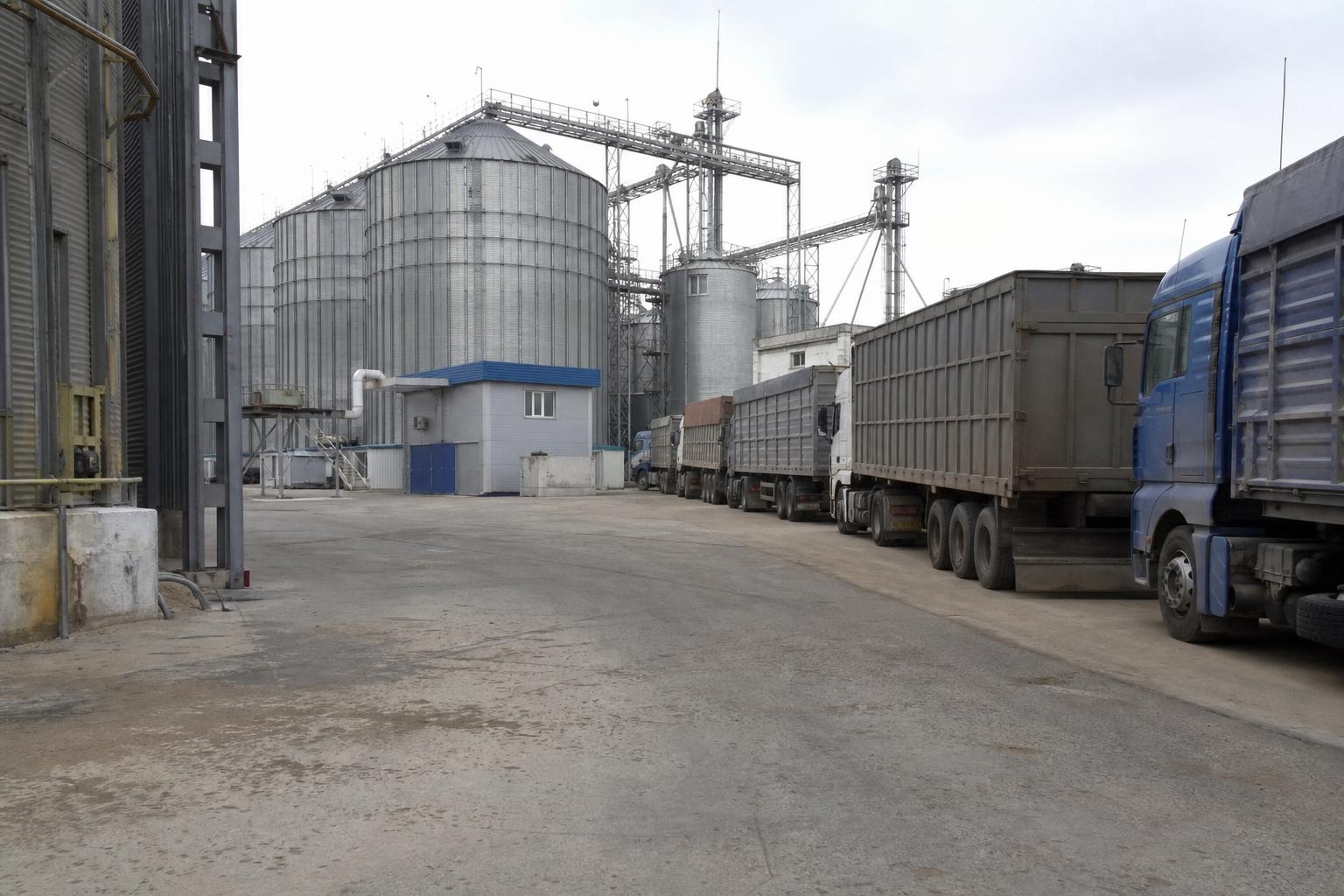
The Ukrainian grain market is entering a period where logistics again determine not only export prices but also the ability of farms to finance current operations. For sellers, this means a more complex search for buyers; for carriers and elevators — the risk of uneven loading; for traders — the need for more careful route planning.
The market signals are indicative: some producers report nearly full grain storage facilities and a shortage of funds due to slow sales. In such a situation, the speed of transaction completion and access to operational routes become just as important as the base grain price.
Where is the main pressure on Ukrainian sellers now
According to market reports, some farmers are unable to sell their harvest at a normal pace due to issues with export channels. Serhiy Rybalko, founder of FГ "Adelaide," stated that the farm's grain storage is nearly full, and there are significantly fewer buyers.
For the farm, this is not only a storage issue. During harvest, funds are needed for loans, salaries, fuel, and preparation for the autumn campaign. If sales are postponed or made at lower prices, producers face a liquidity deficit precisely during peak activity.
Practically, sellers should categorize batches by quality, readiness for shipment, and sales destinations. Under such conditions, buyers tend to prefer lots that can be quickly collected, inspected, and transported through a clear logistics chain.
ELEVATORS AND TRANSPORT: RISK OF STOCKPILE ACCUMULATION
When export channels experience disruptions, the immediate consequence for the domestic market is the accumulation of grain in farms and elevators. This limits maneuverability for new shipments and may force producers to agree to urgent sales to cover operational costs.
For carriers, this means uneven demand: today, a batch may lack a confirmed route, but after a window for shipment opens, demand for wagons or transport sharply increases. Therefore, it is crucial for buyers and sellers to agree not only on price but also on specific delivery times, waiting conditions, and acceptance points.
- Sellers should clearly specify volume, quality, storage location, and shipment availability.
- Buyers should clarify whether quick pickup of the batch is possible and which documents are ready.
- Carriers need to monitor changes in export directions to avoid accumulating equipment on weak routes.
Black Sea factor: not only a Ukrainian issue
Meanwhile, sources report disruptions in Russian grain logistics in the Black Sea. Specifically, there are restrictions on freight deliveries to Novorossiysk following the shutdown of three grain terminals, with an estimated combined export capacity of approximately 26.1 million tons per year.
Such events are significant for the Ukrainian market not as a direct alternative but as part of the broader Black Sea picture. If large grain flows in the region are forced to seek longer or more expensive routes, this can impact freight rates, queues, port handling demand, and importers’ price expectations.
However, competitors’ problems do not resolve Ukrainian logistical constraints. For Ukrainian sellers, key factors remain access to a functioning sales channel, available transport, and prompt payment.
Key conclusions for AgroPost participants
- Logistical readiness of a batch becomes an advantage: buyers respond faster to lots with clear storage location, volume, and shipment deadlines.
- Farmers should avoid dependence on a single buyer or route if it is possible to split sales across multiple destinations.
- Elevators and carriers must promptly update information on available capacities and routes.
- Traders should incorporate logistical risks into agreements: delays, schedule changes, acceptance restrictions, and alternative delivery points.
What this means for the market. In the near future, Ukrainian agricultural logistics will remain a key factor in grain liquidity. For sellers on AgroPost, transparent conditions for shipment will be advantageous, while buyers will benefit from quick batch verification and readiness to organize transport without unnecessary delays.
Comments
No comments yetNo comments yet - be the first.