
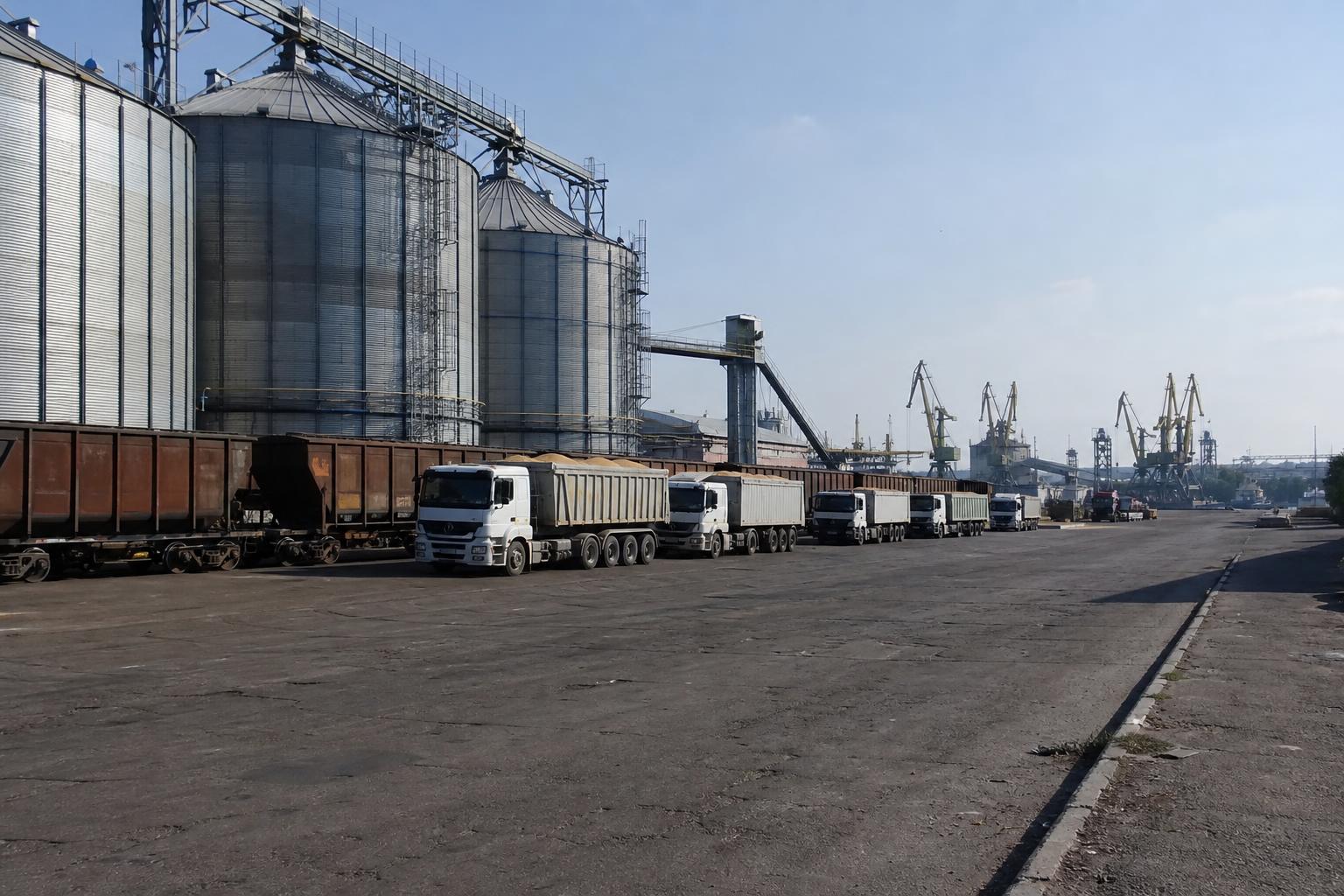
Ukrainian agricultural logistics remains a market of quick decisions: producers need to export grain, traders must confirm route stability, and carriers need to consider safety risks and regional demand disparities.
Recent industry reports highlight several practical guidelines for market participants: export activity continues, frontline areas require separate logistical assessment, and western regions may see new agro-industrial freight flows.
Export Transportation: Demand for Routes Remains
A signal has appeared in the public information space about increased grain exports from one of the major operators: NIBULON, according to industry media, increased grain exports by 32% in the 2025/26 marketing year.
For the logistics market, this does not automatically mean higher rates across all directions but confirms that the export chain continues to operate and requires stable access to elevators, port routes, and road and rail infrastructure.
Grain sellers on AgroPost should clearly specify delivery terms, self-pickup availability, the possibility of loading large-capacity vehicles, and estimated shipment dates. Buyers and traders should compare not only the product price but also the full logistics cost to the point of receipt in advance.
Frontline Areas: Logistics Depends on Safety and Loss Confirmation
The government is working on a compensation mechanism for farmers who lost crops due to hostilities. This concerns farms where crops are destroyed or cannot be harvested due to safety conditions within a 50-kilometer zone from the front line or the state border with the aggressor country.
According to announced data, approximately 3,000 hectares of agricultural land have been officially recorded as lost or unrecoverable. Satellite imagery will be used to confirm losses, and on-site inspections will be conducted where possible.
For logistics companies, this means that part of the potential freight from frontline areas may not reach the market or will require unconventional planning. Producers in such zones should document field accessibility, road conditions, equipment access, and actual constraints for harvesting and transportation.
Port Infrastructure: Risk Factor in Export Planning
Among industry reports, there was also mention of an attack on the port of Greater Odessa in 2026, which caused infrastructure damage and fires. Such events remain a key risk for agricultural exports when planning shipment schedules.
Market participants should have backup scenarios: alternative delivery dates, multiple carriers, additional time for rerouting cargo, and verification of acceptance at specific terminals or warehouses.
For AgroPost, this is especially important for large batches of grain and oilseeds: sellers who specify realistic logistics conditions upfront reduce the risk of deal failure and increase buyer trust.
Western Regions: New Projects May Add Local Transportation
Vitagro Energy plans to build three bio-methane plants in Khmelnytskyi, Ternopil, and Rivne regions. The total capacity of these future facilities is declared at 3 million m³ of biomethane per year, with by-products expected to be 66,000 tons of organic fertilizers.
The projects are at the stage of technical and economic justification; land plots for the facilities are already leased, and each plant’s construction is estimated at about two years. The main market for the biomethane is identified as European countries.
For the transport market, this is not yet a ready freight flow but a potential signal for the western region. Such facilities may require regular raw material deliveries, internal logistics, and the transportation of organic fertilizers to agricultural producers.
Key Conclusions for AgroPost Participants
- Grain sellers should include loading conditions, transport availability, and preferred delivery basis in their announcements.
- Buyers need to calculate the final price considering delivery, delays, rerouting, and regional risks.
- Carriers should monitor demand not only near ports but also in western regions where new agro-industrial projects are emerging.
- Farms in risky zones should document circumstances affecting harvest and transportation.
What this means for the market
Ukrainian agricultural logistics in 2026 remains a combination of export demand, safety restrictions, and regional changes in cargo structure. For sellers and buyers on AgroPost, the main practical advantage is to transparently describe logistics in announcements and make decisions not only based on product price but also on the full cost of delivery to the final point.
Comments
No comments yetNo comments yet - be the first.