
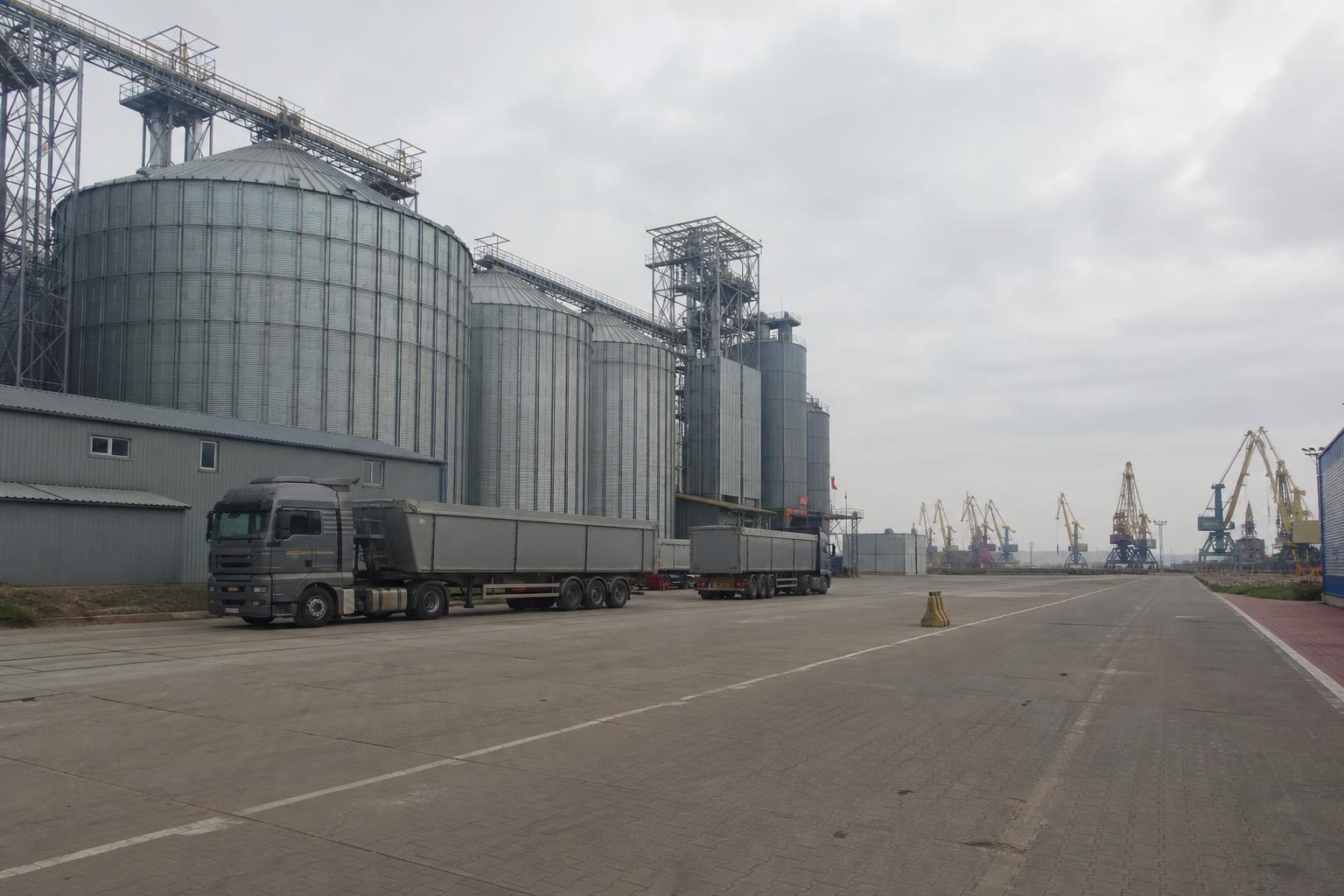
The Ukrainian agrarian market continues to operate in conditions where logistics remain not only a matter of cost but also of safety, route accessibility, and infrastructure resilience.
Recent events around ports, demining of water areas, and elevator operations demonstrate that market participants should evaluate not only transportation costs but also the reliability of the entire chain — from storage facilities to ships or trucks.
Port Logistics: Security Risks Remain a Key Concern
On July 13, Russian forces attacked a civilian vessel flying the flag of Togo during the unloading of mineral fertilizers at a Ukrainian port in Odessa region.
According to official reports, the strike hit the vessel’s superstructure, causing a fire. Three crew members lost their lives, and five others were injured and hospitalized.
There were also reports of damage to port infrastructure and other civilian facilities within Odessa ports. The Ukrainian Sea Ports Authority noted that in just a few days, Russian attacks claimed six lives, including port workers, drivers, and sailors.
For the agricultural market, this is a significant signal not only regarding grain exports but also resource imports, particularly mineral fertilizers. Port logistics remains a critical link for large cargo shipments, but planning requires increased attention to safety procedures and potential delays.
Waterway Demining: Preparing for Water Logistics Recovery
«NIBULON» has received certification in two additional areas of mine action: waterway demining and public risk communication related to mines and unexploded ordnance from the war.
Following certification, the company is authorized to conduct surveys and clearance operations for explosive hazards not only on land but also in rivers, lakes, reservoirs, and coastal zones.
Mine clearance specialists underwent practical certification under the supervision of experts from the DSA (State Emergency Service) Certification Center of Ukraine. The company emphasizes that developing this direction aims to prepare teams for practical work when safety conditions allow for broader demining of Ukrainian water areas.
For agro-sector logistics, this is a long-term factor. Safe water zones are vital for restoring and stabilizing river and coastal routes, but the timeline for scaling such operations depends on the security situation.
Elevators as Part of the Logistics Chain: Automation Becomes a Requirement
Another pressure on agricultural logistics comes from the efficiency of elevator infrastructure. According to Andriy Semenovych, director of «Zernovyi Dim», Ukrainian elevators currently lag significantly behind global practices in automation levels.
He notes that an elevator abroad, particularly in the USA, can operate with a team of about ten people, whereas a similar capacity facility in Ukraine often requires up to a hundred workers.
This is not only about starting or stopping equipment. Modern automation includes control of technological processes, digital record-keeping, data analysis, equipment condition monitoring, and emergency prevention.
For grain sellers, this has practical importance: the speed of acceptance, drying, cleaning, storage, and dispatch directly affects contract fulfillment. For buyers, it relates to predictability of shipments, delivery timelines, and product quality.
Key Conclusions for AgroPost Participants
- Port deliveries require contingency plans. It’s advisable to clarify terminal availability, shipment windows, and possible schedule changes in advance.
- Resource imports also depend on maritime security. The attack on a fertilizer vessel reminds us that risks are not limited to export of agricultural products.
- Waterway demining is a factor for future logistical resilience. Certification of operators creates prerequisites for water route clearance but does not imply immediate large-scale transportation recovery.
- Elevator automation affects transaction speed. Better inventory control and monitoring reduce operational delays between sellers, carriers, and buyers.
Implications for the Market
Ukraine’s agricultural logistics remains operational but increasingly risk-managed. For transactions on AgroPost, this means clearly specifying shipment locations, transport types, batch readiness, possible loading timelines, and alternative routes in listings and negotiations.
In the near future, competitive advantage will not only be determined by product or transportation costs but also by the seller’s or buyer’s ability to confirm real logistical readiness: warehouse facilities, documentation, transport, port or inland dispatch, and communication with all chain participants.
Comments
No comments yetNo comments yet - be the first.