
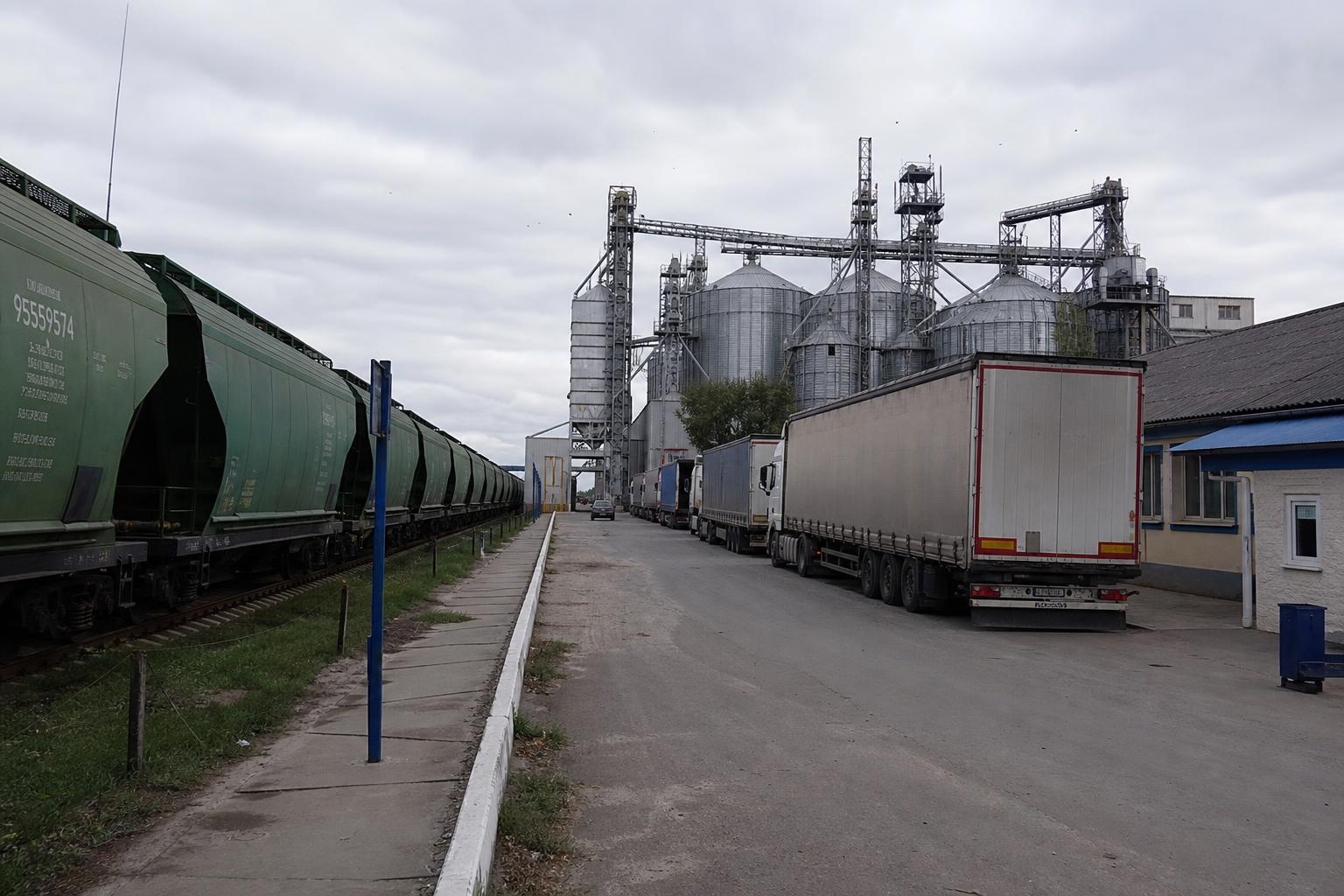
Ukrainian grain exports remain heavily dependent on rail transport: according to Barva Invest, 92–95% of exported grain cargos are transported to ports by this mode. Therefore, any tariff changes by Ukrzaliznytsia quickly impact logistics prices and influence procurement bases in the regions.
The key near-term risk is a possible 30% tariff indexation starting August 1. Analysts estimate that for grain, this could mean an additional $5–6 per ton in transportation costs.
Current Main Pressure Points on Transportation Costs
For farms in central and northwestern regions, the average cost of rail delivery of grain to ports is estimated at approximately 1,500 UAH/t. Meanwhile, route shipments from hub stations may be cheaper — around 1,200 UAH/t.
This difference is significant for sellers planning large batches. If there is an opportunity to consolidate volume per route, savings per ton could partially offset the upcoming tariff increase.
According to Barva Invest, in case of indexation, the share of logistics in the cost of corn could increase by 2.5–3%. For crops with lower margins, this will immediately affect the minimum price at which producers are willing to sell.
Port of Greater Odessa Remains a Key Direction
After stabilization of the Ukrainian Grain Corridor operations, delivery to seaports appears more economically attractive than some land or Danube routes. Analysts estimate that the route via Vadul-Siret to Constanța may be approximately $20/t more expensive than ports in Greater Odessa.
The higher costs on this route are due to double transshipment at a dry port and transit tariffs. For traders, this means that alternative routes do not always serve as a hedge against railway tariff increases within Ukraine.
At the same time, port infrastructure has not yet regained pre-war flexibility. Before the full-scale invasion, Ukraine could accumulate up to 7 million tons of bulk cargoes in ports monthly. Currently, combined capacity for road and grain train transport is estimated at 4–5 million tons, with a lost accumulation potential of about 2.5 million tons per month.
Why Road Transport Cannot Fully Replace Rail
Road delivery remains a practical tool for short-distance shipments, but according to Barva Invest, its competitive zone has narrowed to approximately 200 km from ports. Beyond this, trucks often lose out to rail in terms of cost efficiency.
Market constraints are also evident: driver shortages, military risks, and safety concerns for equipment in accumulation areas near ports. These factors prevent rapid scaling of road transport as a full alternative to rail.
Volumes through other channels are also limited. Estimates suggest that around 100,000 tons of agro-export pass through Danube ports monthly, with similar volumes via road transport, while rail shipments to European markets do not exceed 300–400 thousand tons per month.
What AgroPost Participants Should Consider
- Grain sellers should update their price calculations based on port delivery terms and separately account for the basis from the elevator or loading station.
- Buyers and traders should fix in agreements who bears the risk of tariff changes if shipments occur after possible indexation.
- Elevators and logistics intermediaries should highlight the availability of route shipments, as this can become a competitive advantage for grain batches.
- Carriers should expect more active comparison of rates between rail and road transport over short distances to ports.
For AgroPost listings, this means that the price of goods without specifying logistics basis becomes less informative. During tariff uncertainty, buyers pay attention not only to crop type, grade, and volume but also to the departure station, readiness for route shipment, and the actual distance to the port.
Implications for the market: if tariff indexation is implemented at the announced scale, logistics costs will exert greater pressure on domestic grain prices. The best positions will belong to batches with access to cheaper route shipments, short haul to ports, or pre-agreed delivery conditions.
Comments
No comments yetNo comments yet - be the first.