
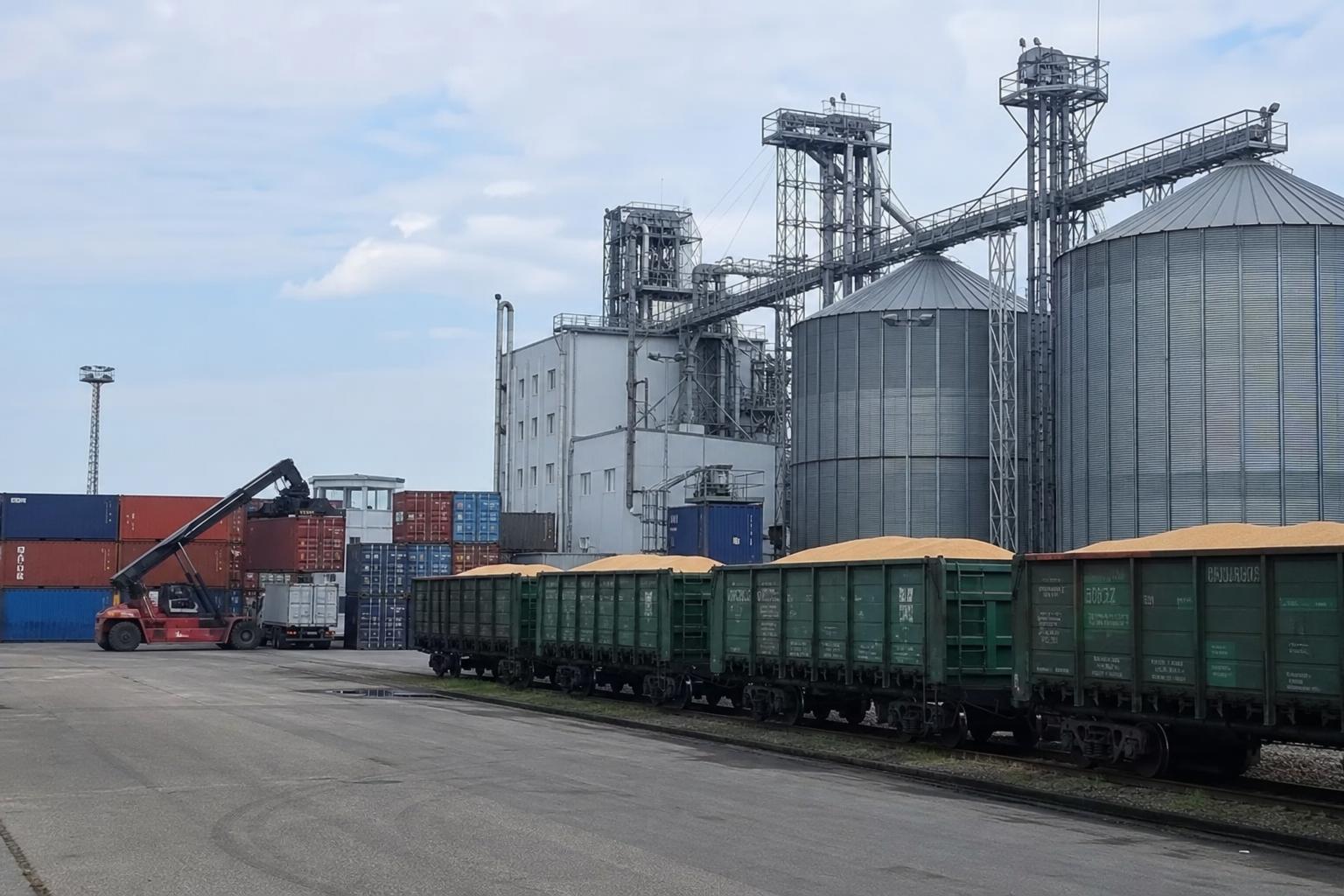
The Ukrainian grain market is entering a season where price increasingly depends not only on demand but also on the ability to quickly and predictably deliver a batch to the buyer. Border terminals, elevator preparation, and route stability to the EU are coming to the forefront.
One illustrative signal is the operation of the container terminal "Mostyska Dry Port," for which Germany remains the main destination for agricultural exports. Simultaneously, the rapeseed market demonstrates that export structures can rapidly change under the influence of domestic processing, tariffs, and harvest yields.
Border terminals strengthen their role in EU sales
"Mostyska Dry Port" reported a record monthly throughput in 2026 — 65 train shipments. This is the best result for the terminal in four years of operation.
According to the company, about 95% of the agricultural products passing through this platform are exported to Germany. This is an important benchmark for Ukrainian sellers: EU buyers remain active but expect stable logistics and clear quality parameters for batches.
The terminal’s technical capabilities allow loading one train in 12 hours or up to two trains per day. At the same time, the full cycle — from acceptance to dispatch — takes about a day due to accompanying logistics operations.
What this means for elevators and grain sellers
For elevators, the importance is growing not only in storage but also in the readiness to form export batches for specific routes. If the goods and documents are prepared in advance, the seller has a better chance to fit into the shipment window and retain the buyer.
Practically, this increases demand for elevators capable of promptly processing grain, ensuring batch uniformity, and working with traders on a clear schedule. For AgroPost, this also means that grain sale announcements should specify volume, quality indicators, storage location, and readiness for shipment in more detail.
- Sellers should clarify the logistics scenario in advance: truck, rail, container, or a combined scheme.
- Buyers should verify not only the price but also the actual availability of the batch at the elevator.
- Elevators need to communicate their capabilities for processing, accumulation, and shipment of batches.
EU demand remains strong, but supply structures are changing
For rapeseed, it is evident that the export model of the Ukrainian agro-sector is becoming less inertial. In the 2025/26 season, Ukraine’s rapeseed export share did not exceed 59–60%, whereas in previous years, about 85% of the offer was sent to foreign markets on average.
Last season, Ukraine exported 1.9 million tons of rapeseed, which is 39% less than the previous year. Factors cited by analysts include export tariffs, increased domestic processing, lower yields due to weather conditions, and increased rapeseed production in the EU.
Despite this, the EU remained the main destination: 91% of Ukrainian rapeseed supplies went there. The largest importer was Germany, with 876 thousand tons.
Key conclusions for the market
- Germany remains one of the most important benchmarks for Ukrainian agro-export via the western border.
- Shipment speed becomes a competitive advantage for elevators, terminals, and sellers.
- Domestic processing may shift the balance between raw material exports and sales on the internal market.
- For transactions on AgroPost, transparent data on quality, location, and logistical readiness of batches are becoming increasingly important.
What this means for the market
Ukrainian grain sellers should evaluate proposals not only by price per ton but also by access to elevators, border terminals, or stable routes to the EU. Buyers, in turn, benefit from quickly finding batches with confirmed quality and a clear shipment schedule.
Comments
No comments yetNo comments yet - be the first.