
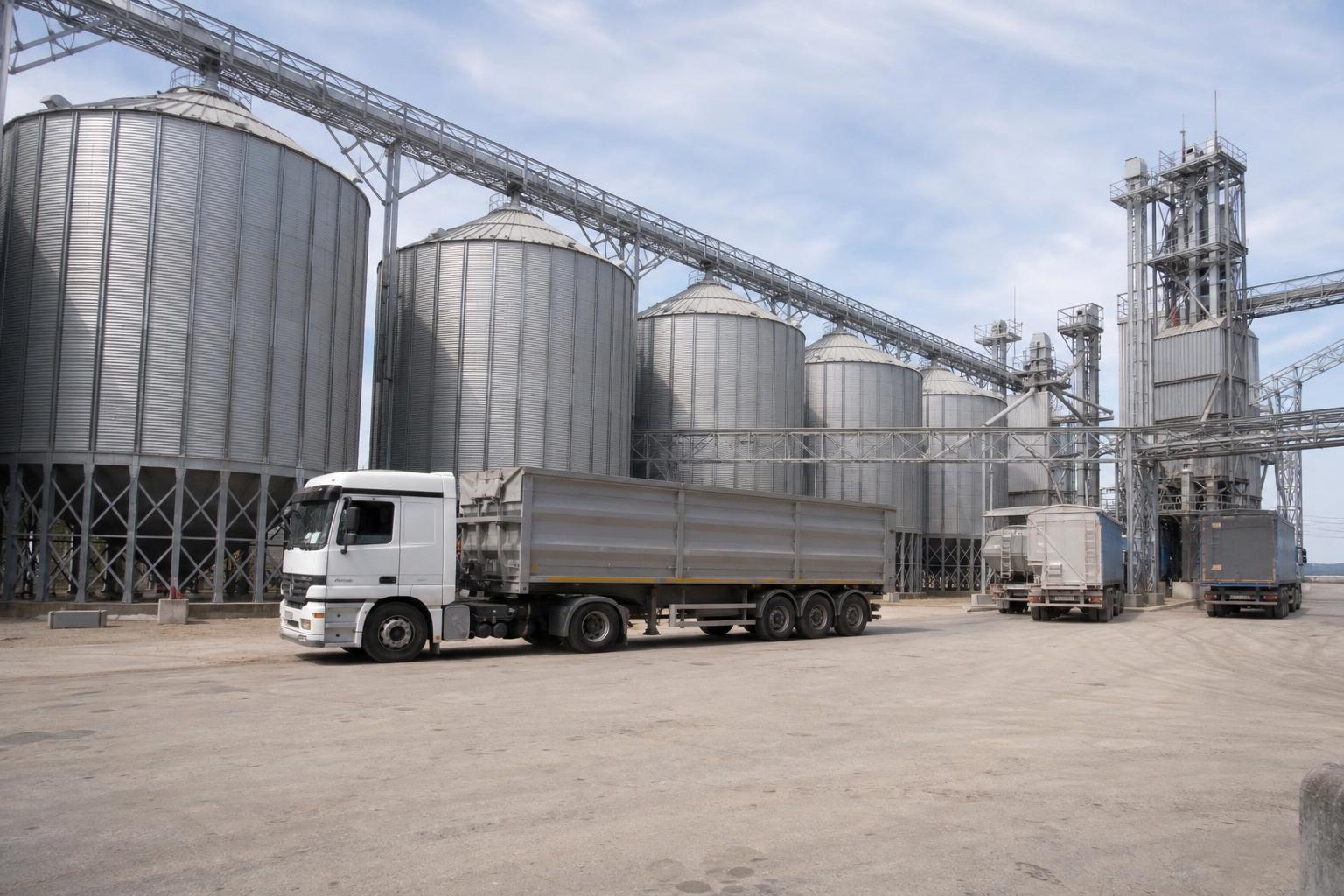
The Ukrainian grain market is entering a period where the price of a shipment depends not only on grain quality and delivery basis. Regulatory signals from the EU, access to export routes, and buyers' willingness to consider logistics risks are coming to the forefront.
For domestic market sellers, this means the need to work more flexibly with delivery timelines, while buyers and traders must more carefully assess origin, documentation, elevator storage, and shipment routes.
The EU may leave grain in a separate agreement zone
According to AgroPortal, citing the Financial Times, the European Commission is considering special conditions for Ukraine regarding the agricultural market and financial support after Ukraine's accession to the EU. An internal EC document specifically mentions products such as wheat and grain.
The market signal is that Ukrainian grain may continue to remain a politically sensitive category in trade with the EU. For producers, this does not mean an immediate change in rules but emphasizes that export strategies cannot rely solely on the European direction.
The materials also mention that the EU proposes to help Ukraine restore exports to traditional markets disrupted by Russian aggression. For the grain sector, this is an important emphasis: diversifying sales channels remains as crucial as the price on a given day.
Price expectations depend on logistics and access to sales channels
The basis of delivery often determines the actual profitability of a deal in grain trading. Even if global prices look attractive, costs for transportation, transshipment, delays, and route risks can significantly alter the economics of sales.
For elevators and traders, this increases the importance of service quality: speed of documentation, transparency of warehouse documents, the ability to accumulate batches, and stable communication with carriers become competitive advantages.
Sellers should consider multiple scenarios in advance: selling from the farm, delivery to an elevator, sales on a self-pickup basis, or with delivery to an export terminal. The differences between these options can be just as significant as the purchase price itself.
Investors cautiously evaluate the agro-sector
Data on Ukrainian agro-companies traded on the Warsaw and London exchanges show mixed dynamics. According to Latifundist, citing Eavex Capital, over the week, some companies' shares increased in value, while others decreased.
While this is not a direct price indicator for the grain market, it provides an important background. When investors cautiously assess companies involved in logistics, export, and processing, the market factors in not only yield but also risks related to access to external buyers.
Special attention remains on large players with their own infrastructure. Their ability to manage exports, financing, and logistics influences the overall market tone, although prices for individual farmers are still formed locally.
Key conclusions for grain sellers and buyers
- Sellers should compare not only the purchase price but also the full cost of the route to the buyer.
- Elevators should strengthen trust through transparent storage conditions, quality analyses, and quick documentation processing.
- Traders need to incorporate risks related to shipment timing and logistical access changes into contracts.
- Buyers should pre-book volumes if specific quality indicators or a stable delivery schedule are required.
What this means for the market: Ukrainian grain remains a product with high demand, but selling conditions are becoming more complex. At AgroPost, market participants should clearly specify the crop, quality, storage location, available volume, and desired delivery basis — this reduces negotiation time and helps find a genuine buyer or seller more quickly.
Comments
No comments yetNo comments yet - be the first.