
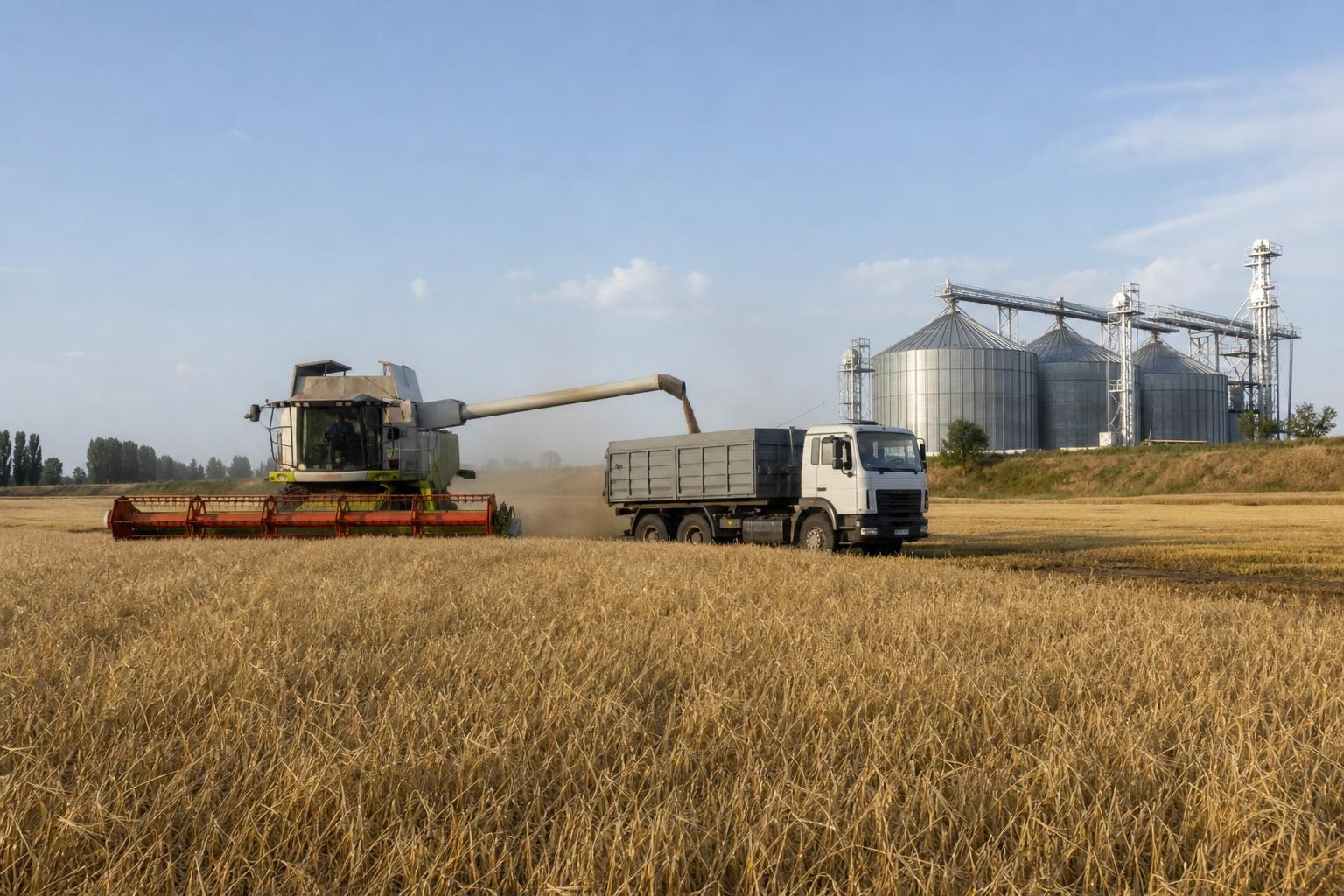
The Ukrainian grain market is entering a seasonal transition period: the old marketing year is concluding with lower export rates, while the southern regions are already beginning to receive the first batches of the new harvest.
For grain sellers, this means a need for more careful planning of sales, logistics, and storage. For buyers, it offers an opportunity to monitor the appearance of the first batches of barley and legumes, while keeping an eye on remaining stocks of corn and wheat from the previous harvest.
Grain Export: 10% Decrease Compared to Last Season
According to customs statistics, as of June 19, Ukraine has exported nearly 36 million tons of grains and legumes in the 2025/26 marketing year. This is 4.1 million tons, or 10%, less than the same date in the previous season.
The largest share in the export structure remains corn — 20.5 million tons. Its shipments to international markets are 5% lower than last year.
Wheat exports reached 13.4 million tons, which is 2.1 million tons, or 14%, less than the previous season. This serves as an important signal for the market: remaining stocks offered for sale may be evaluated by buyers considering quality, delivery basis, and logistics costs.
Barley Shows the Most Significant Decline Among Main Crops
Barley exports amount to approximately 1.5 million tons. Compared to last season, this is a 35% decrease, indicating that this segment demonstrates the most noticeable reduction in shipments among key grain crops.
Rye exports totaled 0.2 thousand tons versus 10.8 thousand tons last year. Flour volumes are also lower: 60.5 thousand tons, down 12% from last year’s figures.
- Corn: 20.5 million tons exported, down 5%.
- Wheat: 13.4 million tons, down 14%.
- Barley: about 1.5 million tons, down 35%.
- Flour: 60.5 thousand tons, down 12%.
South Begins Forming New Harvest Supply
Harvesting of winter barley and peas has already started in the southern districts of Odesa region. This marks the first practical indicator for the start of the new season for the grain market.
This year, nearly 770,000 hectares are designated for grain and legume crops in Odesa region. The largest areas are occupied by winter and spring wheat — over 522,000 hectares. Under barley — nearly 176,000 hectares, and under peas — about 74,400 hectares.
Initial reports from the region indicate positive expectations regarding yield, but actual volumes, grain quality, moisture content, trader demand, and elevator capacity accessibility remain crucial for the market.
What Sellers and Buyers Should Watch for on AgroPost
Sellers should prepare batches for sale with clear descriptions of the crop, class or quality indicators, delivery basis, and available volumes. During the harvest start, buyers quickly compare proposals not only by price but also by logistics and delivery timelines.
It is advisable for grain buyers to monitor the old and new harvest separately. Corn and wheat stocks may have different pricing logic compared to the first batches of barley or peas from southern regions.
What this means for the market: Ukraine’s grain sector is transitioning into a new season with lower export rates and the first batches of the new harvest from the south. In the coming weeks, key factors influencing price expectations will include actual grain quality, buyer activity, elevator loading, and logistics costs.
Comments
No comments yetNo comments yet - be the first.