
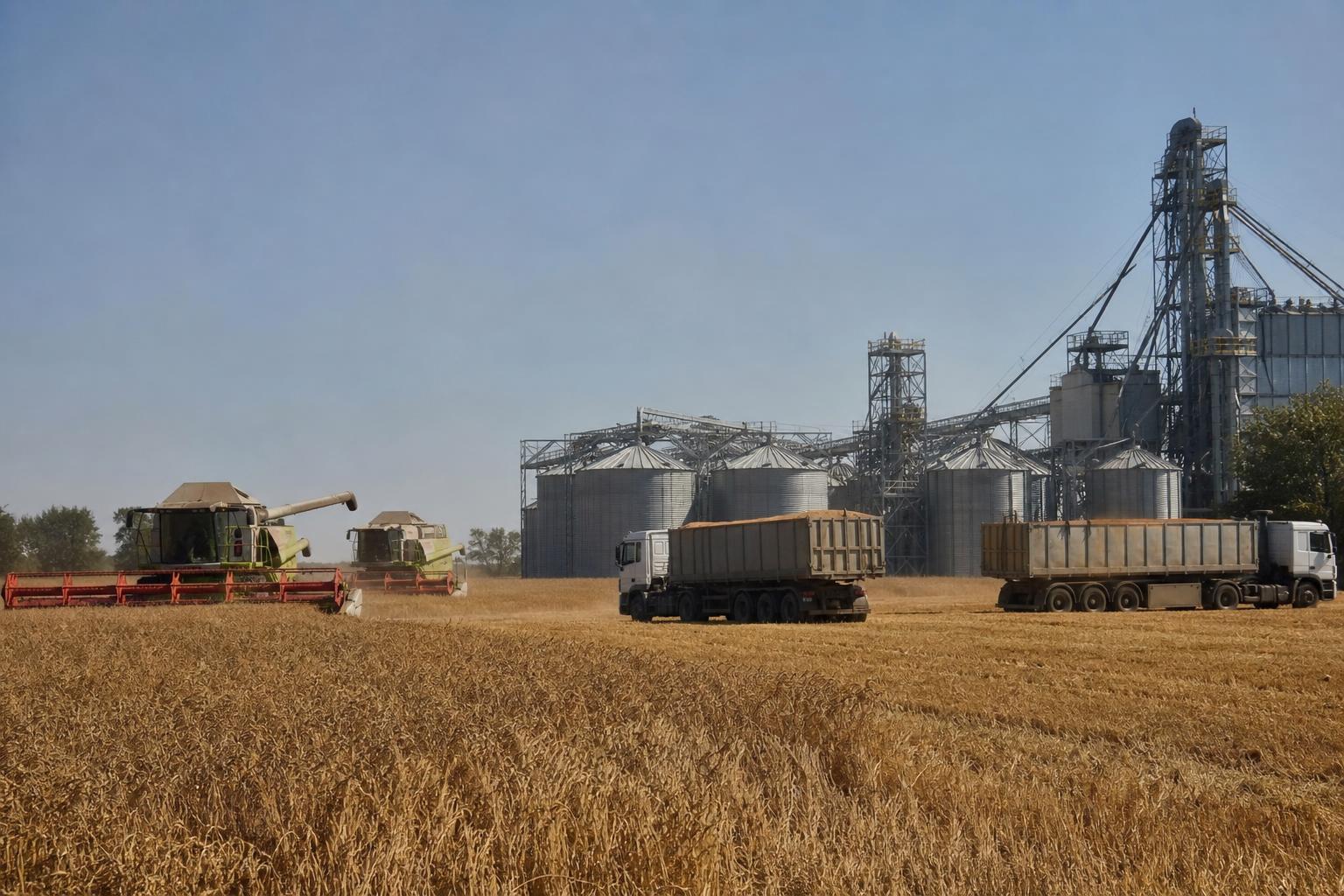
The Ukrainian grain market enters July with two key signals: the export channel remains active, and early harvests are underway in some farms within tight timeframes. For grain sellers, this means the need to quickly plan elevator capacities, transportation, and pricing offers.
According to the Ukrainian Club of Agrarian Business, the total export of agro-industrial products in June 2026 amounted to 4.79 million tons, representing a 7.5% decrease compared to May. At the same time, grains demonstrated the greatest stability among the main export groups.
Grains Maintained Export Volume
In June, Ukraine exported 3,562.7 thousand tons of grain crops. Compared to the previous month, this was a slight decrease of only 0.1%, indicating that the market effectively maintained shipment pace at the end of the marketing period.
In the structure of grain exports, corn dominated with 55.3%. Wheat accounted for 43.9%, and barley for 0.7%. This distribution is important for traders and elevators, which form batches for export contracts and plan for the new harvest intake.
Experts from UACAB also note that a decline in shipments at the end of the marketing period is typical. However, Ukraine still has significant volumes of agricultural products intended for export, primarily grains.
Early Harvests: Moisture Content Allows for Rapid Work
At the beginning of July, KSG Agro announced the start of early grain harvesting on an area of 4,960 hectares. The campaign includes winter barley on 562 hectares, winter wheat on 3,700 hectares, and spring barley on 698 hectares.
The company has engaged nine CLAAS LEXION combine harvesters and 25 trucks for grain transportation. According to the agroholding, the grain group has reached ripeness almost simultaneously, so the campaign is proceeding intensively and is expected to last approximately 10–12 days.
Moisture levels in wheat are reported at 13–16%, which the company considers optimal for the start of harvest. Such conditions reduce the need for prolonged waiting but increase demands on combine, transport, reception, and short-term storage organization.
What Sellers and Buyers of Grain Should Consider
- Sellers: clarify elevator capacities, processing conditions, and reception schedules in advance, especially if harvesting occurs simultaneously for multiple crops.
- Buyers: monitor the appearance of new batches of early wheat and barley, but verify actual quality indicators, moisture content, and documentation before concluding deals.
- Elevators: prepare for uneven grain deliveries, as tight harvest schedules may create peak loads on reception and internal logistics.
- Traders: consider that grain exports in June remained stable, and the new harvest will gradually add supply to the market.
Market Focus for AgroPost
For AgroPost participants, the practical takeaway is simple: during early harvests, announcements should be as specific as possible. Grain sale offers should specify the crop, volume, region, basis of shipment, moisture, contamination, protein, or other quality indicators if already known.
Buyers should respond quickly to batches with confirmed quality and clear logistics. With stable export demand, transactions where the seller can immediately confirm the availability of grain, readiness for shipment, and storage conditions will have an advantage.
What this means for the market. Ukraine's grain sector maintains export activity, and the start of early harvests introduces new supply. In the near future, key factors for deals will be not only price but also logistics speed, elevator availability, and confirmed batch quality.
Comments
No comments yetNo comments yet - be the first.