
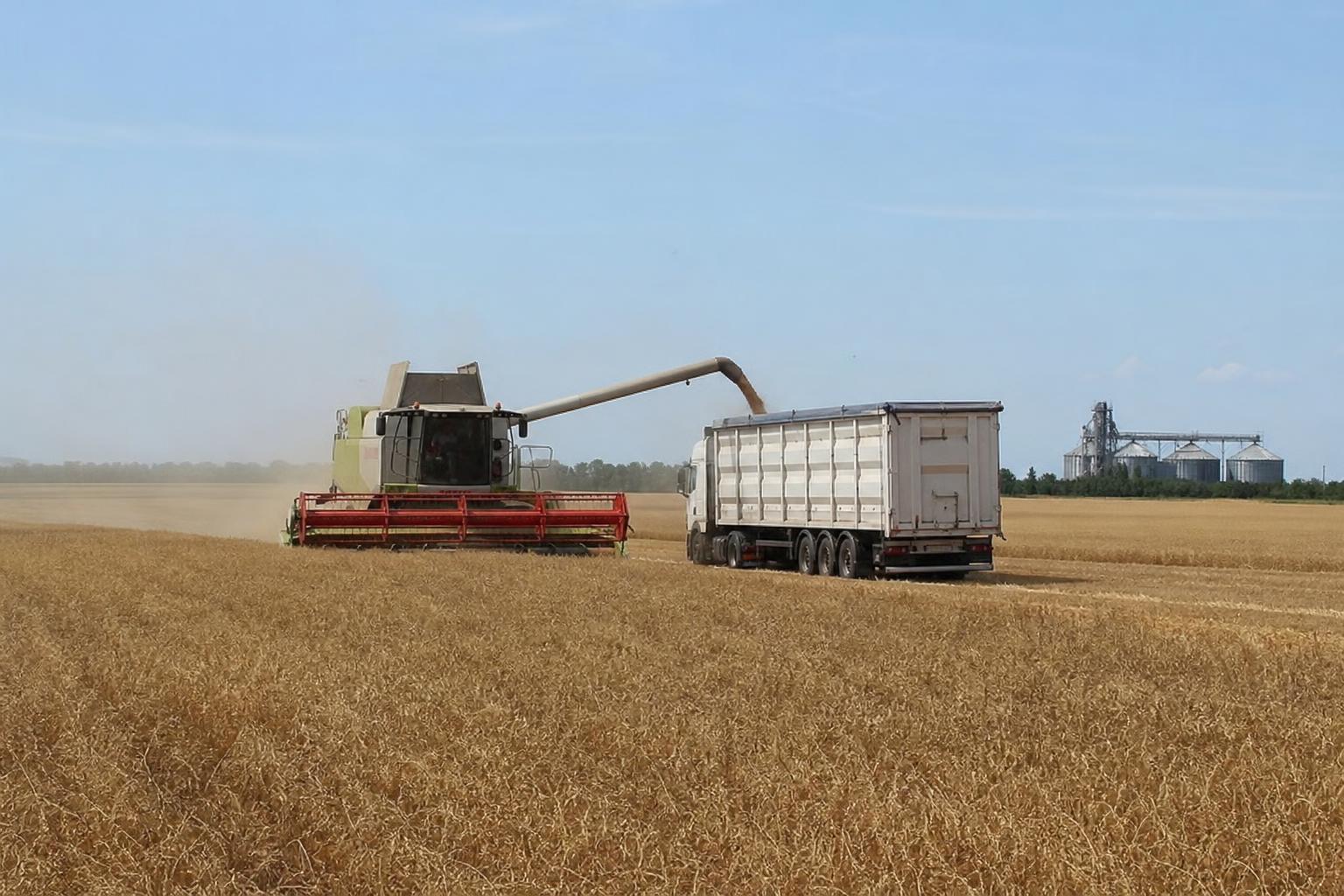
The Ukrainian grain market is entering a more active phase of the season: in Prykarpattia, early crop harvesting has already started, and elevators and traders are gradually shifting from preparation to accepting the new harvest.
At the same time, the market is paying closer attention to export compliance. Public accusations regarding potential supplies of Ukrainian grain to Iran and companies’ reactions demonstrate that for sellers, buyers, and logistics operators, the reputation of the route is becoming as important as price or delivery basis.
Harvest in Prykarpattia: first volumes of the new crop
In Ivano-Frankivsk region, the first to harvest early grains, legumes, and rapeseed were farms in Ivano-Frankivsk and Kolomyia districts.
As of July 2, farmers in the region had threshed 500 hectares of winter barley and 100 hectares of peas. The yield amounted to 2,650 tons of barley and 200 tons of peas.
Simultaneously, rapeseed harvesting began: from 500 hectares, 1,430 tons were obtained. The total area under rapeseed in the region this year is 24,600 hectares, which is 3,000 hectares more than last year.
Sowing structure: what elevators and buyers need to know
The total area sown with grains in Ivano-Frankivsk region remains close to the 2025 level. Winter wheat was sown on 47,000 hectares, spring wheat on 5,100 hectares.
Under winter barley, 9,500 hectares; under spring barley, 11,200 hectares; oats — 3,500 hectares; winter rye — 1,300 hectares; peas — 400 hectares.
For elevators, this means a gradual start to the season with early batches of barley, peas, and rapeseed. Buyers on AgroPost should already clarify quality indicators, moisture content, laboratory analysis availability, and the possibility of prompt shipment from sellers.
Export and compliance: why documents are becoming part of the price
Attention to grain origin, end buyer, and actual delivery route has increased in the market. Moldovan group Trans-Oil publicly dismissed accusations regarding its founder’s involvement in a possible scheme of supplying Ukrainian grain to Iran.
The company stated that it disagrees with such claims and announced the involvement of an international legal firm to investigate the circumstances of the publication. According to Bloomberg, after the publication, investors initiated negotiations with Trans-Oil, and the company’s bonds decreased in value.
The materials also mentioned Ledesma Agro in the context of a criminal case concerning possible grain shipments, which according to documents were headed to Turkey but could have been delivered to Iran. The company’s management denied involvement in such supplies and stated cooperation with law enforcement.
For Ukrainian grain market participants, the practical conclusion is simple: when exporting and reselling domestically, the importance of not only basis, tonnage, and timing but also the package of supporting documents is increasing.
Key takeaways for sellers and buyers of grain
- For sellers of the new harvest: prepare batches for sale with full quality descriptions, storage conditions, and available shipment schedules.
- For buyers: compare not only price but also laboratory indicators, origin documents, and clear logistics.
- For elevators: plan acceptance of early crops considering simultaneous movement of barley, peas, and rapeseed.
- For exporters: verify the end recipient, route, vessel or carrier, and document compliance with the actual cargo movement.
What this means for the market
The start of the harvest forms the first offer of the new crop, but market advantage will not only be with those who sell or buy quickly. In the 2026 season, stronger positions will be held by participants who combine a competitive price, confirmed grain quality, logistics readiness, and transparent documentation throughout the supply chain.
Comments
No comments yetNo comments yet - be the first.