
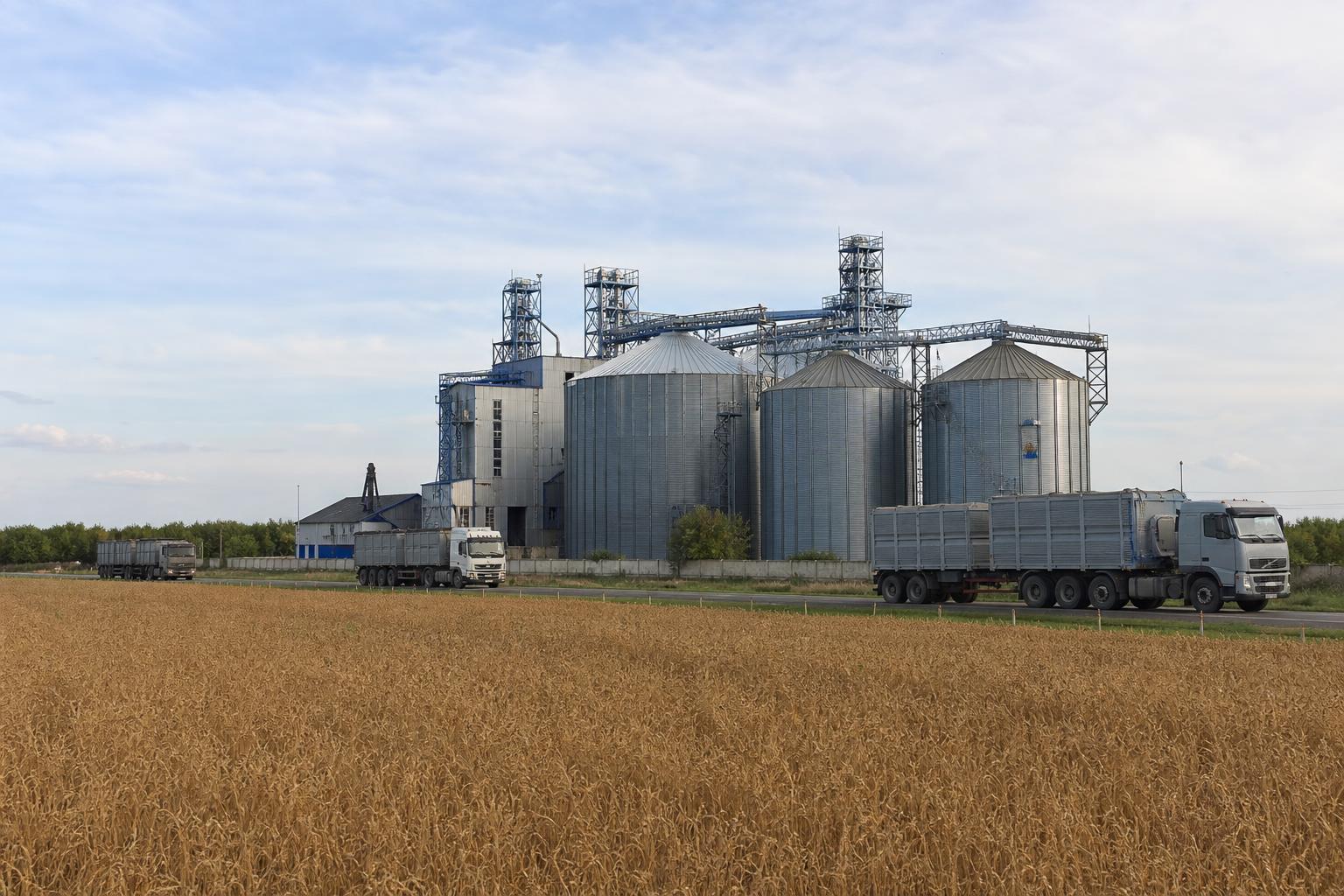
The Ukrainian grain market is entering the autumn season with a noticeable impact from logistics, sowing decisions, and regulatory changes in neighboring countries. For grain sellers, this means the need to more carefully calculate delivery basis, while buyers should pre-book transportation and verify border requirements.
In the coming weeks, key factors for the market will include the cost of road haulage, elevator and trader demand on specific routes, and expectations regarding the upcoming winter wheat harvest.
Logistics: Longer routes are becoming more expensive, shorter hauls are weakening
On routes over 400 km, freight rates for grain transportation by trucks have increased on average by 2–16%. The greatest pressure is observed on long-distance trips, especially where cargo flows are shifting towards western borders.
The reason is not only the distance. Queues at border crossing points worsen the turnover of grain trucks: one trip takes more time, reducing the actual availability of transport for the market.
On short hauls up to 400 km, the situation is different: tariffs have mostly decreased by 5–8% or remained close to previous levels. This is an important signal for farms that can sell grain to nearby elevators, port hubs, or processing facilities without relying on long-distance logistics.
Where the grain is heading: south, west, and Danube directions
The main truck flows of grain are forming from southern and northern regions towards Odessa oblast, including Izmail, Reni, and Orlivka. Transportation to Lviv and Volyn oblasts also continues.
Among active regions for grain dispatch are Dnipropetrovsk, Kharkiv, Mykolaiv, and Chernihiv oblasts. The highest demand for grain trucks is observed in Dnipropetrovsk, Odessa, and Kharkiv regions.
For Ukrainian sellers on AgroPost, this emphasizes the importance of correctly specifying the basis: self-delivery from the farm, delivery to an elevator or port hub, or offers with a pre-calculated route can yield different economics even at the same grain price.
Winter wheat: expected reduction in sown areas without risking the domestic balance
The Ministry of Agrarian Policy expects a decrease in winter wheat sown areas for the 2027 harvest. Exact figures are not yet available; a more realistic estimate is expected at the beginning of October when more data on sowing progress will be available.
According to the ministry, the domestic wheat balance does not appear to be under threat. Domestic consumption is about 6 million tons, while production in recent years has been around 23–25 million tons.
Regarding winter rapeseed, no significant changes in sown areas are currently expected, as sowing is already underway. Slight changes are also forecasted for winter barley.
Moldova reinstates import licensing: what traders should consider
The Moldovan government has temporarily reinstated import licensing for grain and oilseed imports until October 31, 2026. The stated goal of this measure is to protect local agricultural producers and control import flows.
For Ukrainian market participants, this is not an automatic trade ban but an additional regulatory factor for transactions where Moldova is the destination market. Before signing contracts, it is advisable to check whether an import license is required for the buyer and how this affects delivery timelines.
- Grain sellers should compare local prices with costs for long-distance logistics, especially for routes over 400 km.
- Buyers and traders should pre-book transport on routes to the western border and Danube crossings.
- Elevators should clearly communicate acceptance conditions, queues, and loading capacities, as logistics already influence the final basis.
- Farmers planning sowing should consider that the reduction in wheat sown areas is not yet precisely quantified, so market expectations may still change.
What this means for the market: Grain trading in Ukraine is increasingly dependent not on the overall supply level but on specific routes, transport availability, and border requirements. On AgroPost, listings that clearly specify the crop, quality, loading location, basis, and logistics options will have an advantage.
Comments
No comments yetNo comments yet - be the first.