
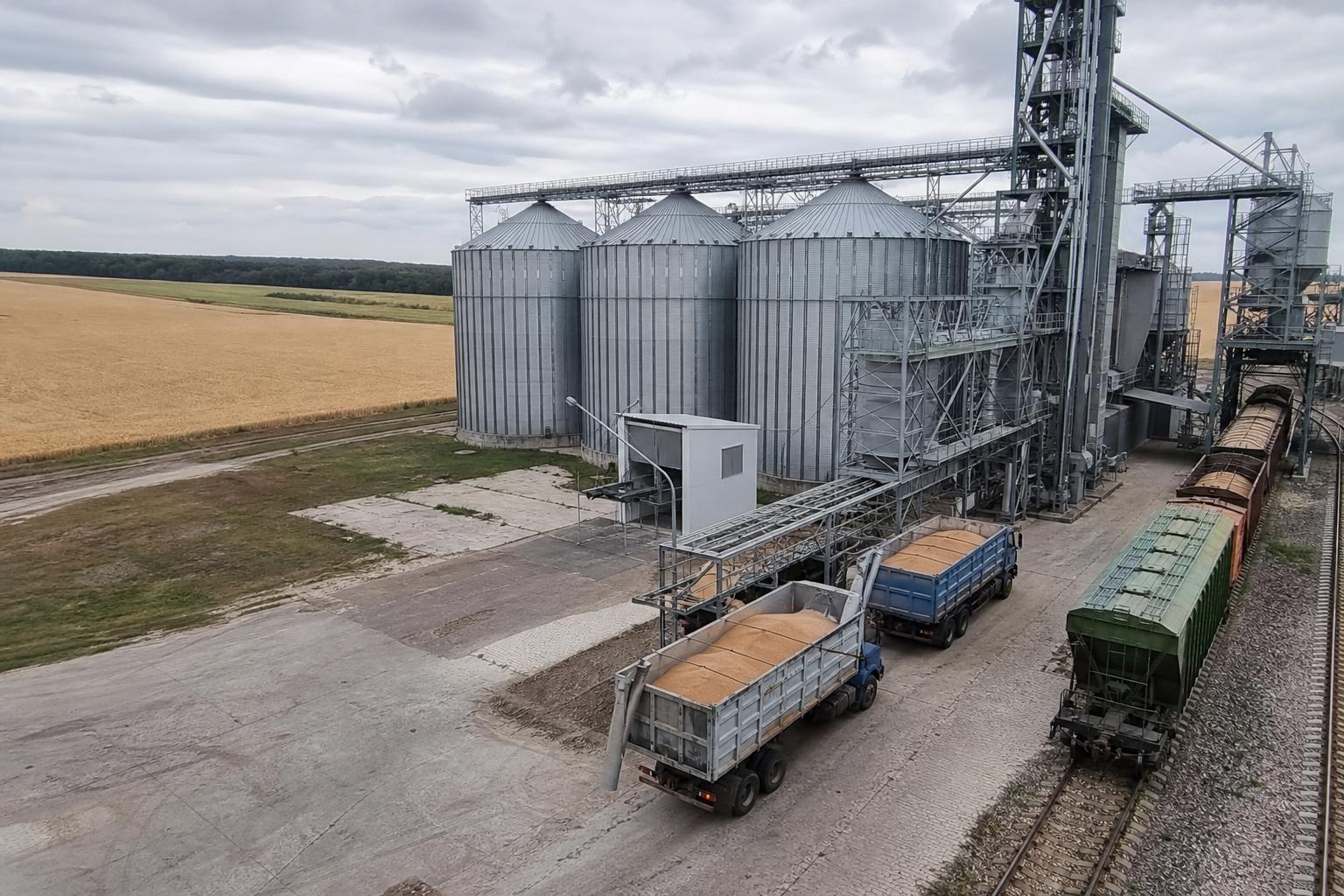
The Ukrainian grain market at the end of August remains dependent not so much on harvest volume but on the capacity of export logistics. Restrictions in the Black Sea corridor, shipping risks, and the search for alternative routes directly impact domestic demand and grain prices.
According to estimates from the Ministry of Agrarian Policy, Ukraine exported about 500,000 tons of grain since the beginning of August, which is approximately one-fifth of the potential shipment volume. Against this backdrop, elevators, transshipment, and inventory management become critical elements of market strategy for agricultural producers.
The maritime route remains primary, but risks have increased
The ports of Greater Odessa account for about 90% of Ukraine’s grain shipments. Therefore, any disruptions in this corridor are quickly felt across the entire chain: from regional purchase prices to elevator loading and railway dispatch planning.
Ukraine is discussing the possibility of involving foreign vessels for exporting agricultural products via the Black Sea. At the same time, open statements indicate that shipping safety issues remain unresolved, and no agreements currently exist that would reliably reduce risks for agricultural exports.
For the market, this means that grain sellers should carefully evaluate not only port prices but also the feasibility of contract fulfillment: queues, transport availability, delivery timelines, and potential delays in documentation processing.
Alternative routes support exports but do not reduce price pressure
Due to shipping disruptions, the relevant ministry is considering alternative export routes. For farmers, this opens additional sales options but usually involves more complex organization and may be more expensive for the shipper.
In a season when logistics become a bottleneck, domestic prices are influenced not only by trader or processor demand. Factors such as wagon availability, crossing capacity, the Danube route operations, transshipment costs, and the buyer’s willingness to assume logistical risks also play a role.
Therefore, the same batch of grain can have different commercial attractiveness depending on the farm’s location, proximity to an elevator, document quality, and the ability to quickly assemble a shipment.
Elevators become tools for price flexibility
With weaker export activity, agricultural producers need to work more actively with storage. In such a situation, elevators serve not only technical functions of processing and accumulation but also provide an opportunity not to sell grain during local price pressures.
Controlling quality is especially important: moisture, contamination, weight, damage, and compliance with buyer requirements. When export windows are limited, traders and processors tend to prefer products that can be shipped promptly without additional costs for conditioning.
For elevator owners, the current situation may mean increased demand for acceptance, drying, cleaning, storage, and forming homogeneous batches. At the same time, clients will more carefully compare tariffs, service speed, and availability of shipments.
Key conclusions for grain sellers and buyers
- Sellers should consider net price. It’s important not only to focus on purchase price but also on costs for transportation, storage, processing, and potential delays.
- Buyers need transparent logistics. Clear announcements with storage location, quality indicators, and readiness for shipment have higher market value.
- Elevator infrastructure becomes a competitive advantage. Confirmed storage volume simplifies negotiations with traders and processors.
- Sales diversification reduces risk. During unstable logistics periods, producers should compare multiple sales channels and avoid tying the entire batch to a single route.
What this means for the market. In the near future, Ukraine’s grain market will remain a logistics-driven market: those with quality products, access to elevators, and multiple shipment scenarios will win. For AgroPost, this emphasizes the importance of precise announcements regarding grain, elevator services, transportation, and transshipment — such offers help quickly find a real buyer or partner amid export instability.
Comments
No comments yetNo comments yet - be the first.