
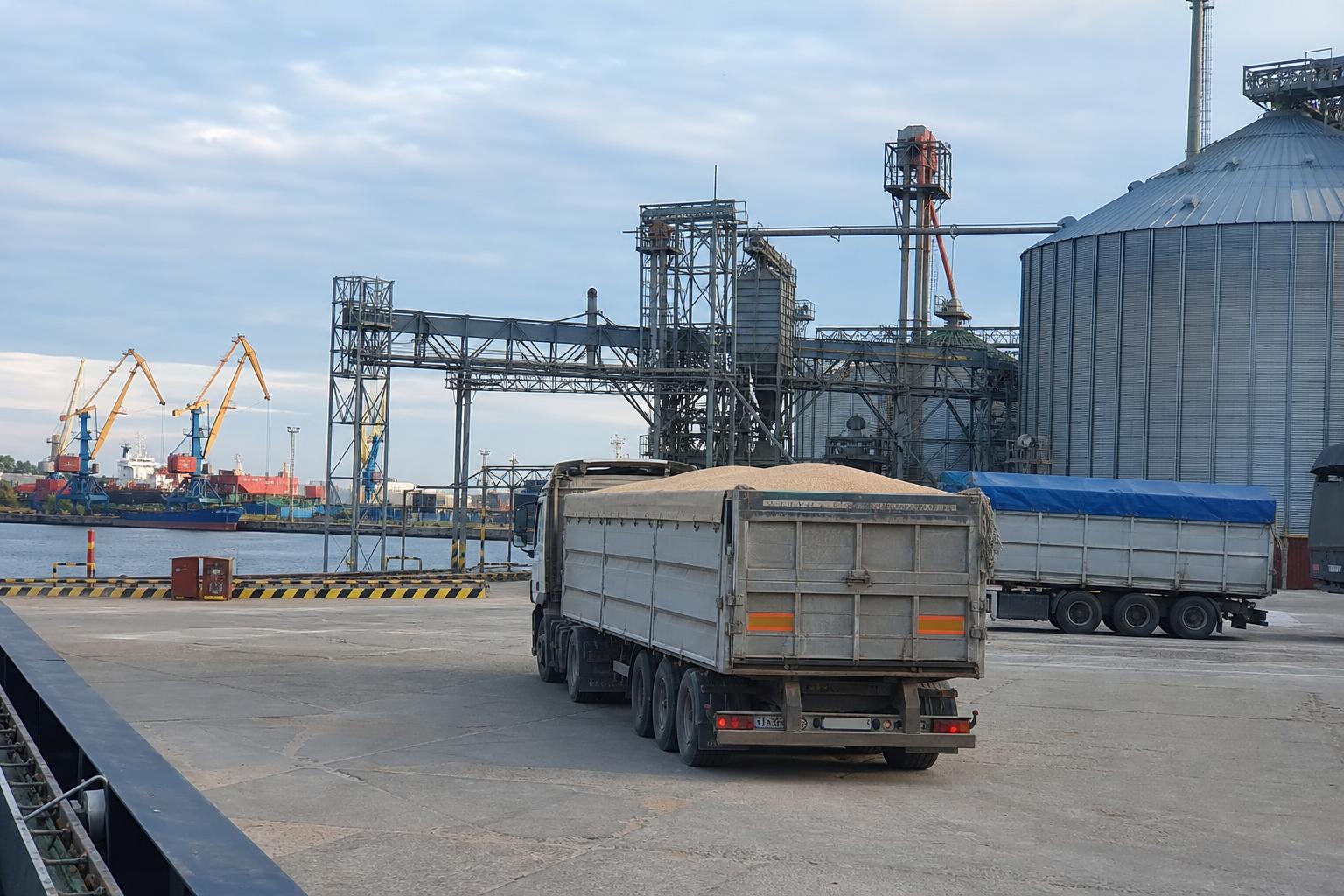
The Ukrainian food wheat market received a stronger price signal from the Constanta direction at the end of August. According to data published by specialized media citing IA «APK-Inform», purchase prices for Ukrainian wheat on a DAP Constanta basis increased this week.
For sellers, this means that export demand has not disappeared but is increasingly dependent on logistics access. For elevators and traders, the key factors are not only the price level but also the ability to quickly assemble a batch of the required quality and deliver it through congested routes.
Price Benchmark: Food Wheat in Constanta
As of August 27, purchase prices for Ukrainian grade 2 food wheat on a DAP Constanta basis mostly ranged from $250–255/t.
For grade 3 wheat, the benchmark was lower — $245–250/t. Compared to the end of the previous week, this is an increase of $7–10/t.
This price movement is significant for the domestic market, as Constanta remains one of the main external indicators for Ukrainian wheat, especially when logistics through other channels face restrictions.
Why Are Prices Increasing Specifically for the Constanta Route?
Several factors are exerting pressure on the market simultaneously. Among them are the exhaustion of EU duty-free quotas for Ukrainian wheat, which has reduced activity at the western land border.
Some export flows are rerouting to Ukrainian Danube ports and the Romanian route. Meanwhile, river logistics are operating under load.
Sources mention a queue of over 50 ships near the Sulina Canal. Other factors include the shallowing of the Danube, risks to port infrastructure, and rising costs due to delays.
External factors also support prices: activity on global exchanges, demand for high-quality food-grade grain, and importers’ willingness to incorporate higher logistics costs into contracts.
What Wheat Sellers Should Consider
- Quality becomes a premium. The market distinctly differentiates between grade 2 and grade 3 food wheat, so quality documentation and rapid laboratory confirmation of batches are practically important.
- Basis is more important than the "average price". The DAP Constanta price does not equal the price at the elevator in the region. Sellers need to account for logistics, transshipment, waiting times, and risks of schedule changes.
- The speed of forming a batch can influence the deal. When routes are congested, buyers often prefer grain that is ready for shipment or stored at a convenient elevator.
- Compare multiple sales channels. If land border operations weaken and Danube and Constanta prices rise, the gap between domestic and export offers can quickly change.
The Role of Elevators in the Current Situation
For the elevator segment, the importance of operational accumulation of homogeneous batches of food wheat is increasing. Buyers need not just volume but predictable quality, documentation, and a clear shipping route.
Elevators should communicate residual stocks, wheat classes, drying capabilities, processing, and shipment options more carefully. During logistical delays, this information can be as crucial as the storage price itself.
What does this mean for the market? The increase in wheat prices on DAP Constanta indicates that demand for Ukrainian food-grade grain persists, but prices are increasingly dependent on logistical factors. For sellers on AgroPost, this is an argument to update wheat offers, clearly specify the class, storage location, available volume, and shipping conditions — these parameters can now accelerate contact with buyers.
Comments
No comments yetNo comments yet - be the first.