
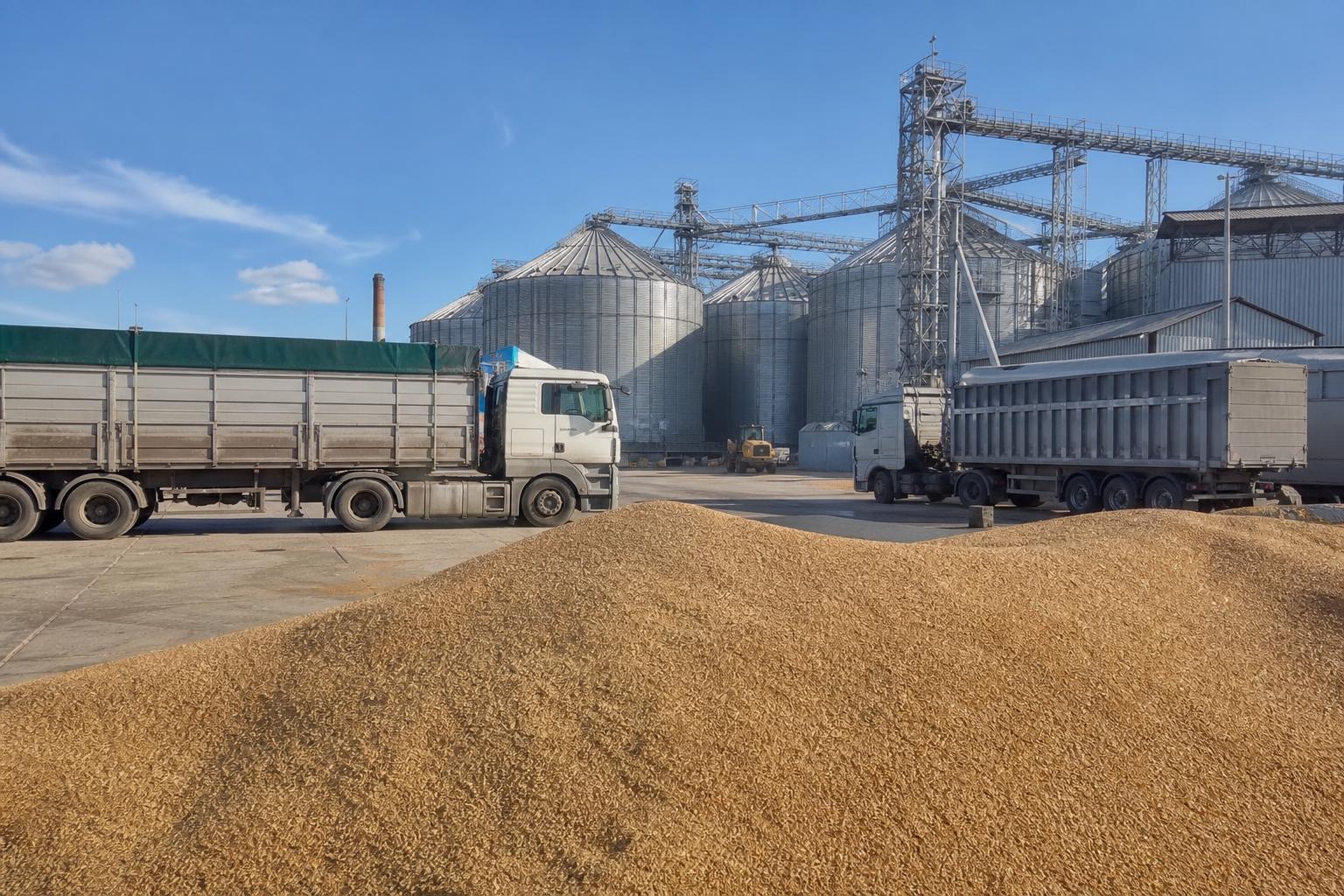
The Ukrainian grain market is entering a period where the price in a deal depends not only on the crop, grade, and delivery basis. For sellers, storage, shipment routes, documentation, and the ability to quickly confirm batch quality are becoming increasingly important.
The focus remains on export channels, elevator infrastructure, transportation cost risks, and payment security. For AgroPost participants, this means: announcements about grain sales or purchases should be as specific as possible to reduce negotiation time and minimize the risk of deal failure.
Logistics Affects the Seller’s Net Price
For export-oriented grain batches, logistics remains one of the main factors influencing profitability. Even with stable purchase prices, changes in transportation costs can significantly alter the actual income of producers.
The market pays particular attention to transportation across the western border. If the availability of specialized rolling stock worsens, it can pressure export margins. In such conditions, sellers need to consider not only the price at the destination point but also the full route cost from the farm or elevator.
- Sellers should specify storage location, self-pickup options, loading type, and desired basis in their ads.
- Buyers should immediately clarify access to railway, road, or combined logistics.
- Elevators should communicate available services: acceptance, processing, drying, storage, and dispatch.
Storage Becomes Part of the Trading Strategy
When the market does not offer a favorable price at harvest or dispatch, the ability to temporarily store grain becomes a competitive advantage. For small and medium producers, this issue is directly related to access to elevators or alternative on-farm solutions.
The market discusses government support for purchasing grain storage bags with partial cost reimbursement. Such tools can be useful for farms needing flexibility in sales, but practical participation conditions should be checked separately before planning expenses.
Grain storage bags do not replace full elevator infrastructure but can help producers avoid selling the entire batch immediately after harvest. However, this solution requires moisture control, prepared sites, protection from damage, and disciplined record-keeping of batches.
Grain Quality Starts in the Field
For cereal crops, batch quality is formed even before harvest. Soil studies in various natural zones of Ukraine show that granulometric composition affects water and nutrient retention, and thus the efficiency of crop nutrition.
According to Ukravit Institute research, over 2,000 soil samples from different regions of Ukraine were analyzed in 2025. Light loamy soils prevailed in Polissya, various clay loam groups were present in Forest-Steppe, and heavy clay loams dominated in Steppe regions.
This provides a practical signal for producers: a universal fertilization scheme does not always work equally across regions. On light soils, higher risks of moisture loss and nutrient depletion exist, while on heavy soils, issues may arise from compaction, poorer air access to roots, and excess moisture.
Deal Security: Counterparty Verification Is Equally Important as Price
Risks of fraud persist in the grain market: from dubious intermediaries to document or cargo issues. For online deals, this is especially sensitive, as quick negotiations should not replace basic verification of parties.
Before concluding a deal, it is advisable to verify company registration data, signatory authority, banking details, payment terms, grain documents, and actual storage location. If a buyer or seller insists on unusual conditions, it is a reason to pause and conduct additional checks.
Practical tip: the larger the grain batch and the more complex the logistics, the more detailed the documents, photo or video confirmation of the product, laboratory results, and responsibility conditions should be.
Key Conclusions for AgroPost Participants
- In grain sales, it is important to consider not the gross price, but the net price after logistics, storage, and processing.
- Elevator or own storage provides sellers with more flexibility in choosing the sale timing.
- Batch quality depends on cultivation technology, soil conditions, moisture, and post-harvest processing.
- In ads, it is advisable to specify crop, volume, quality indicators, storage location, basis, and available logistics immediately.
- Counterparty verification should be a standard procedure, not a reaction to problems.
What this means for the market: Grain deals in Ukraine increasingly depend on operational preparation by the parties. Sellers with confirmed quality, clear logistics, and storage options gain a better negotiating position. Buyers who quickly verify batches and offer transparent conditions have a higher chance of securing quality volume without delays.
Comments
No comments yetNo comments yet - be the first.