
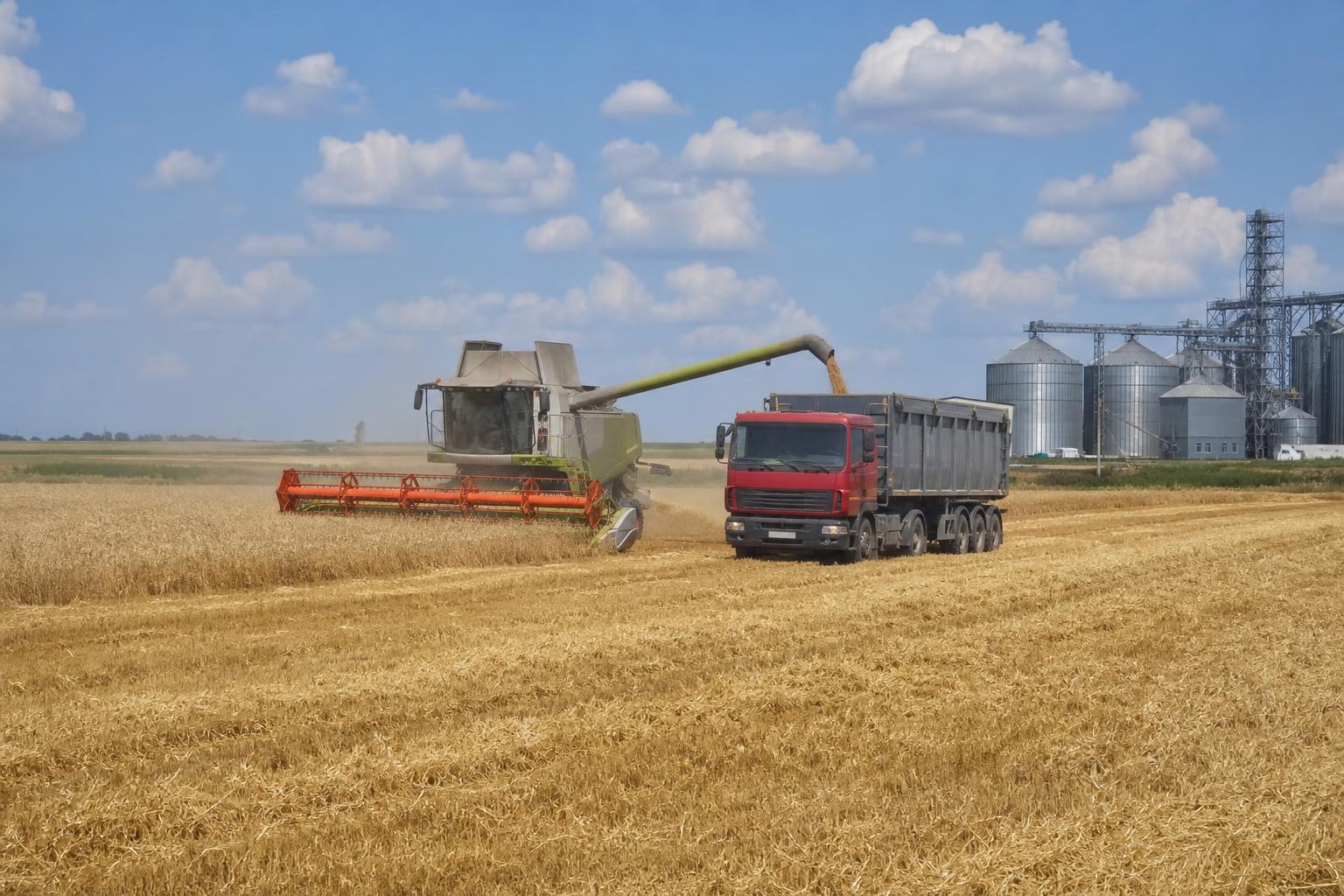
The Ukrainian grain market is entering the phase of new harvest arrivals. Initial reports from Odessa indicate a good start for spring barley: yields on some fields reach 7 t/ha, and grain moisture levels allow for harvesting without additional drying.
For traders and buyers on AgroPost, this means that in the coming weeks, key factors in deals will be the quality of the batches, logistics to elevators or ports, and the ability to store grain until a more favorable selling moment.
Southern Ukraine kicks off the new barley season
The Agrograin Group has begun harvesting early grains in the Bolhrad and Izmail districts of Odessa region. According to the company, about half of the barley fields have already been harvested.
The average yield of the crop is approximately 6 t/ha. Depending on the agro-technical conditions, some fields show yields ranging from 5.5 to 7 t/ha.
An important market factor is grain moisture. The company reports that barley arrives with moisture levels of 12–14%, which does not require drying. This can be advantageous for sellers when pricing, as buyers receive a batch without additional costs for moisture reduction.
Quality of batches takes precedence
The preliminary quality assessment of the barley is positive: the grain is well-filled, with proper weight, and free from significant disease or pest damage. It is expected to meet food-grade parameters, but final confirmation will come from laboratory analyses.
For marketplace trading, this means sellers should prepare a basic set of information about the batch: crop type, harvest year, moisture content, weight, impurities, volume, shipment location, and available logistics options.
Buyers should compare not only the declared price per ton but also post-purchase costs such as drying, handling, transshipment, transportation, and transit time.
Own grain storage as a negotiation tool
Alongside the start of the season, producers continue investing in storage facilities. Sown farm “Super Elite” in Rivne region has installed a flat-bottom silo SUKUP with a capacity of 1,400 m³.
The silo is equipped with a fully ventilated floor, allowing for uniform air distribution within the storage volume and maintaining stable conditions for the grain.
The farm explains that the investment is driven by expanding sowing areas and a desire to reduce dependence on external elevators. The projected payback period is 3–5 years.
For producers, owning storage provides not only physical space for the harvest but also greater flexibility in negotiations: they can choose not to sell immediately after harvest if market conditions are unfavorable.
Key conclusions for sellers and buyers
- New barley is already entering the market. Initial batches from Odessa show acceptable yield and moisture levels.
- Moisture content of 12–14% is a significant advantage. The absence of drying needs simplifies deals and can reduce additional expenses.
- Quality must be confirmed with documentation. Preliminary assessments are positive, but laboratory results remain decisive for contracts.
- Elevator capacities are becoming part of pricing strategies. Own silos help producers choose the timing of sales rather than relying entirely on third-party elevators.
Implications for the market. The start of harvest in the south shapes the first supply of new barley, and the quality and moisture levels of batches are already becoming points of competition among sellers. Meanwhile, investments in own storage facilities indicate that farmers are increasingly focusing on flexible sales rather than quick removal of grain from the field. For AgroPost, this creates demand for transparent listings with quality indicators, clear logistics, and realistic shipment conditions.
Comments
No comments yetNo comments yet - be the first.