
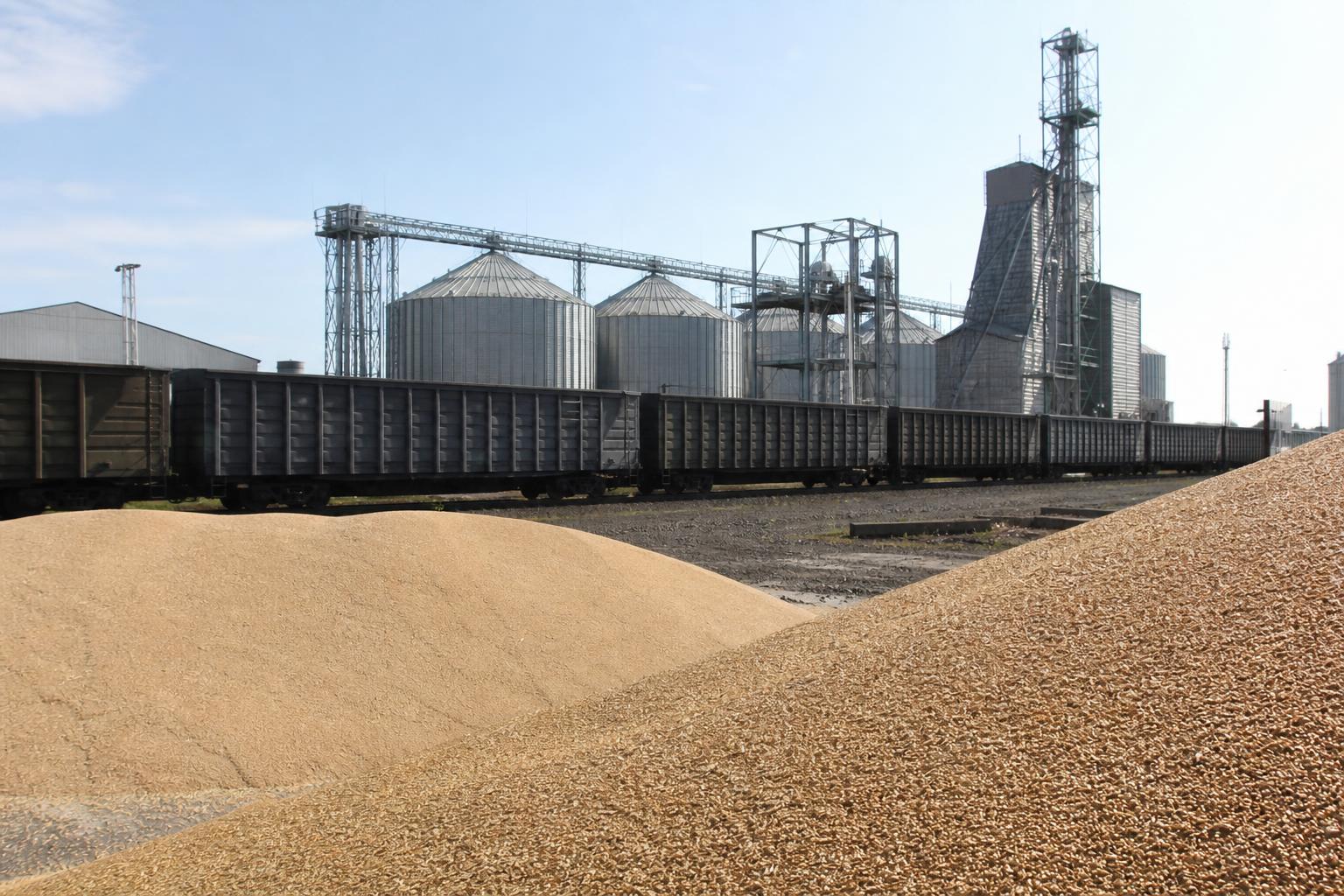
The Ukrainian grain market is entering a period where port prices or external tenders no longer provide a complete picture of profitability. For sellers, key factors become the route, transportation costs, throughput capacity of crossings, and the readiness of the batch to meet the specific buyer’s requirements.
Recent market reports highlight three practical signals for agribusiness: increased focus on alternative logistics, port export risks, and the importance of phytosanitary preparation of grain at the production site.
Logistics to Constanța Could Significantly Change Wheat Economics
Agrarian associations warn that after the planned 30% increase in railway freight tariffs, the cost of transporting grain to Romania’s Constanța could reach $60–70 per ton. The appeal also mentions a possible 60% increase in empty wagon mileage costs.
According to estimates by associations, with wheat prices at port around $210 per ton, the farmer might retain only $140–150 per ton after logistics. This makes the basis of delivery and sale points critical even before concluding a deal.
An additional risk is the limited capacity of western border crossings. The report estimates they can handle about 1 million tons of agricultural products per month, against a need of 5.6 million tons, while the average monthly export in 2025/26 MY was 4.1 million tons.
Ports Remain an Uncertain Factor for Grain Exports
Ukraine has reported significant losses of port infrastructure during the full-scale war: 1,054 destroyed objects and 232 attacked vessels. In summer 2026 alone, over 30 ships were attacked, according to data.
For the grain market, this means the risk of disruptions in shipments, insurance, and vessel planning remains part of commercial negotiations. Buyers and sellers increasingly evaluate not only the grain price but also the route reliability, transport submission deadlines, and the possibility of rerouting the shipment.
Elevator operators and traders should clarify in advance whether there are actual shipment windows, what conditions apply during transport delays, and who bears additional costs in case of route changes.
Barley for China: Phytosanitary Preparation Becomes Part of the Price
In Sumy region, state phytosanitary inspectors completed inspections of barley crops planned for export to China. Nearly 2,100 hectares were checked for compliance with Chinese market requirements.
Special attention was paid to the absence of Tilletia controversa, or dwarf bunt. As a result of inspections, 42 plots received official status as production sites free from this regulated pest.
For barley sellers, this is a practical signal: export directions should be prepared not at the moment of grain loading but in advance — through confirmation of origin, site status, quality, and compliance with the phytosanitary protocols of the importer.
What Sellers and Buyers Should Consider on AgroPost
- Wheat sellers should separately calculate prices at the elevator, border, port, and alternative route, rather than relying solely on port indicators.
- Barley owners should specify in proposals the region of origin, available documents, inspection results, and potential export directions.
- Buyers should clarify whether logistics are included in the quoted price, who is responsible for wagons, delays, phytosanitary documents, and route changes.
- Elevator operators should communicate available capacities for reception, drying, storage, and shipment, as logistical flexibility becomes a competitive advantage.
What this means for the market: in Ukraine’s grain sector, the winners in the near future will not only be those with high-quality grain but also those who can confirm documents, quickly calculate logistics, and offer buyers clear delivery conditions. For listings on AgroPost, this translates into greater value for detailed proposals indicating basis, location, documents, and readiness for export.
Comments
No comments yetNo comments yet - be the first.