
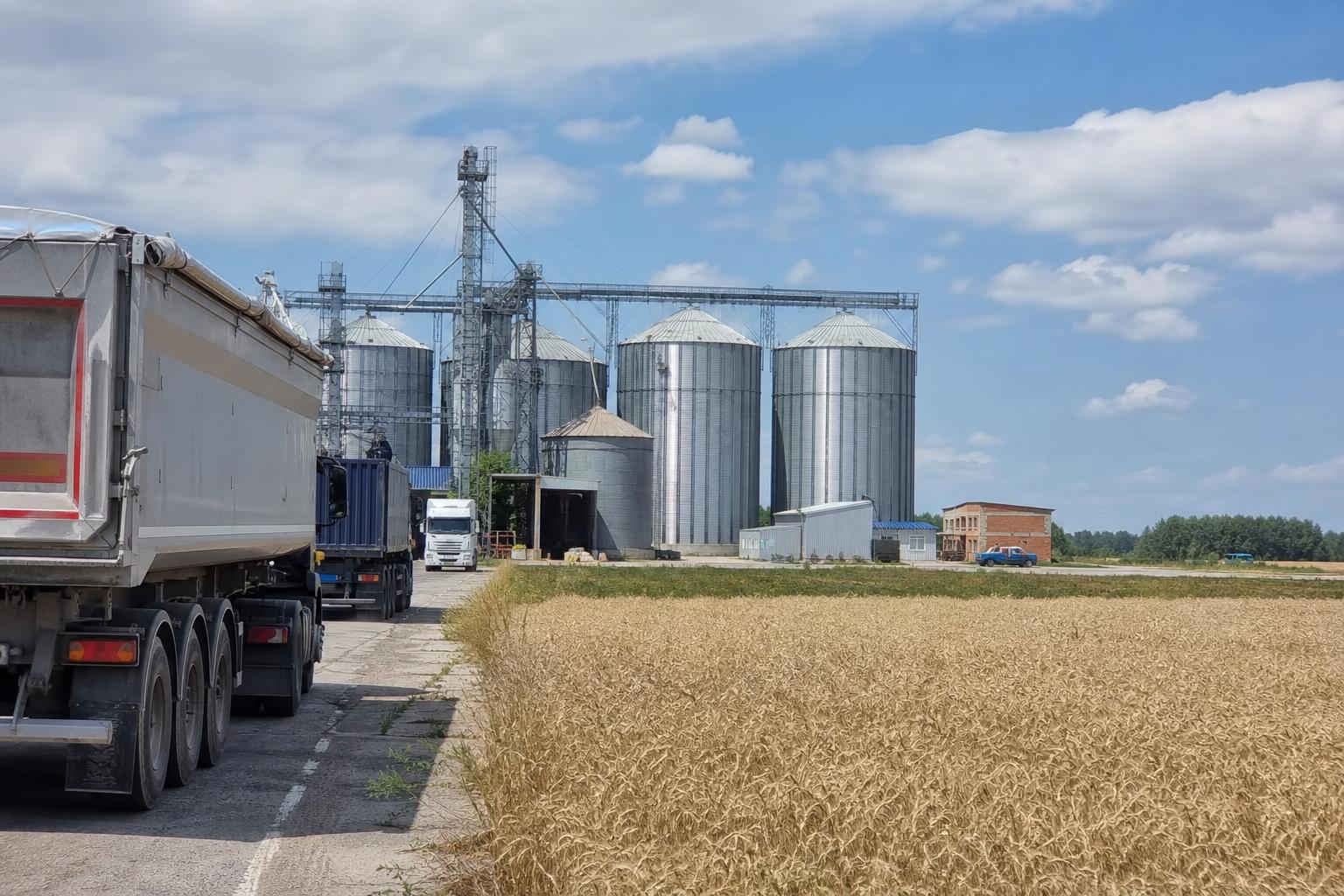
The Ukrainian wheat market remains sensitive to logistics. Any prolonged restrictions on the operation of deep-water ports in the Black Sea region could impact not only domestic prices but also global trade directions.
At the same time, producers are already observing differences in yields across regions. This is important for elevators, traders, and grain buyers, as supply may vary not only in volume but also geographically.
Export Risk: Asia Seeks Stable Routes
According to ASAP Agri scenarios, in the event of prolonged blockage of Ukrainian and Russian deep-water ports, wheat trade flows in Asia could change significantly. The most vulnerable are importers traditionally dependent on supplies from the Black Sea region.
Bangladesh is highlighted separately. If access to Black Sea wheat remains unstable, the country may increasingly turn to Indian grain. India’s advantages in such a scenario include geographical proximity, a large harvest, and the opening of export quotas.
In a scenario of significant port restrictions, ASAP Agri estimates Ukrainian wheat exports at 5–10 million tons for the 2026/27 marketing year. Under similar conditions, Russian wheat exports could potentially reach around 25 million tons.
What This Means for Ukrainian Sellers
For agricultural producers and grain owners, the key factors are not only price levels but also the actual ability to fulfill deliveries. Buyers will pay closer attention to the basis, shipment deadlines, document status, and the availability of a clear route to the elevator, port, Danube, or land crossing.
During periods of logistical uncertainty, batches with confirmed quality and readiness for quick shipment may have better bargaining positions. For AgroPost listings, it is advisable to clearly specify the crop, class or quality indicators, volume, storage location, and conditions for self-pickup or delivery.
Yield Variability: Regional Factors Already Evident
For example, the company Volyn-Zerno-Produkt shows that wheat yields this season vary significantly depending on the cultivation zone. The company harvested winter wheat from 9,800 hectares, with a gross yield of 66,700 tons and an average yield of 6.8 t/ha.
In the Forest-Steppe zone, 6,200 hectares yielded 46,500 tons of wheat, with an average yield of 7.5 t/ha. In Polissya, from 3,600 hectares, they obtained 20,200 tons, with an average yield of 5.5 t/ha.
This signals to the market that local supply may be uneven. Elevators and buyers should assess in advance which regions are forming larger volumes of marketable grain and where competition for quality batches might be higher.
Key Takeaways for AgroPost
- Logistics remains a price factor. Sellers should indicate not only the price but also the actual shipment point in their listings.
- Quality must be documented immediately. For wheat, important indicators include class, moisture, protein, and other parameters affecting trader or processor interest.
- Regional yields influence supply. Data from the Forest-Steppe and Polissya regions show that available grain volumes can differ significantly between zones.
- Export scenarios remain conditional. Port risks can quickly change domestic demand and interest in alternative routes.
Implications for the market: Ukrainian wheat remains dependent on a combination of yield, quality, and logistics. For sellers, it is time to prepare transparent offers with clear delivery conditions; for buyers, to quickly reserve batches with confirmed origin and convenient shipment routes.
Comments
No comments yetNo comments yet - be the first.