
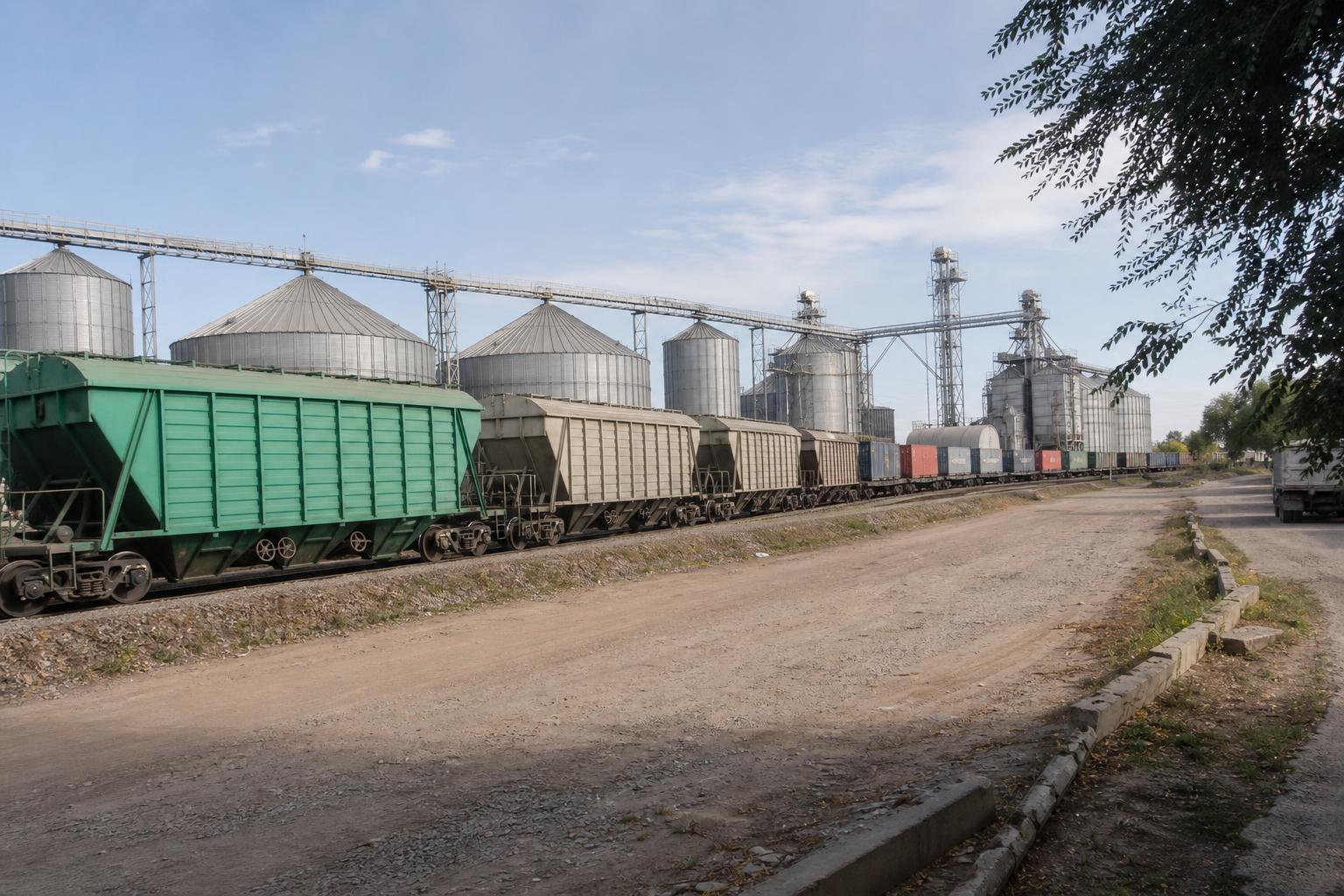
The Ukrainian grain market is entering a period when the price of a batch is increasingly influenced not only by quality and volume but also by access to elevators, shipping routes, and logistics formats.
Recent data on container railway shipments show that grain remains the largest commodity in containers, but its share in the overall structure has declined. Meanwhile, elevator companies are preparing infrastructure for the upcoming harvest.
Container shipments are growing, but grain's share is decreasing
From January to May 2026, railway container freight in Ukraine totaled 128,325 TEU, representing a 43% increase compared to the same period in the previous year.
Grain cargoes remained the largest category in container logistics, accounting for 35,260 TEU or 27% of the total volume. However, their share has decreased compared to the same period in 2025.
Against this backdrop, the role of processed oilseed products has increased. Meal and shrotings over five months accounted for 18,999 TEU or 15% of container shipments.
Export remains the dominant direction in container logistics
The largest share of container shipments is export — 74,836 TEU or 58.32%. Imports amounted to 39,019 TEU, and domestic shipments totaled 14,470 TEU.
For grain exporters, it is important that most container exports went through land border crossings, accounting for 47,605 TEU or 64% of export container shipments. Seaports handled 27,231 TEU or 36%.
This does not mean the grain market is abandoning ports, but indicates that land routes remain a vital part of export logistics for certain batches and destinations.
Elevators are entering the season of preparation for the new harvest
At the Zhmerynka elevator operated by Agroprosperis, preparations are underway to accept the new season’s grain. The enterprise is conducting repairs and maintenance of equipment and transport vehicles.
Additionally, the elevator is reviewing grain transportation routes, cleaning storage facilities, and preparing production capacities for the upcoming harvest.
For agricultural producers, such activities are practically significant: during peak harvest time, elevator readiness often determines the speed of acceptance, the possibility of finishing, storage, and further shipment of batches.
Key conclusions for grain sellers and buyers
- Grain remains the main cargo in containers, but competition from other agro-commodities for container logistics is increasing.
- The export focus in container shipments persists, so sellers should clarify route availability and shipment deadlines in advance.
- Land border crossings play a significant role in container exports, which is important for contracts with deliveries to European destinations.
- Elevator preparation for the season affects grain liquidity: a batch with a predictable receiving and shipping point has better negotiation positions.
What this means for the market: in the near future, grain sellers should not delay coordinating elevator capacities and logistics, while buyers should pay closer attention not only to price but also to the actual readiness of the batch for shipment. For AgroPost listings, it is advisable to specify crop type, volume, basis, available elevator or station, and possible transportation formats.
Comments
No comments yetNo comments yet - be the first.