
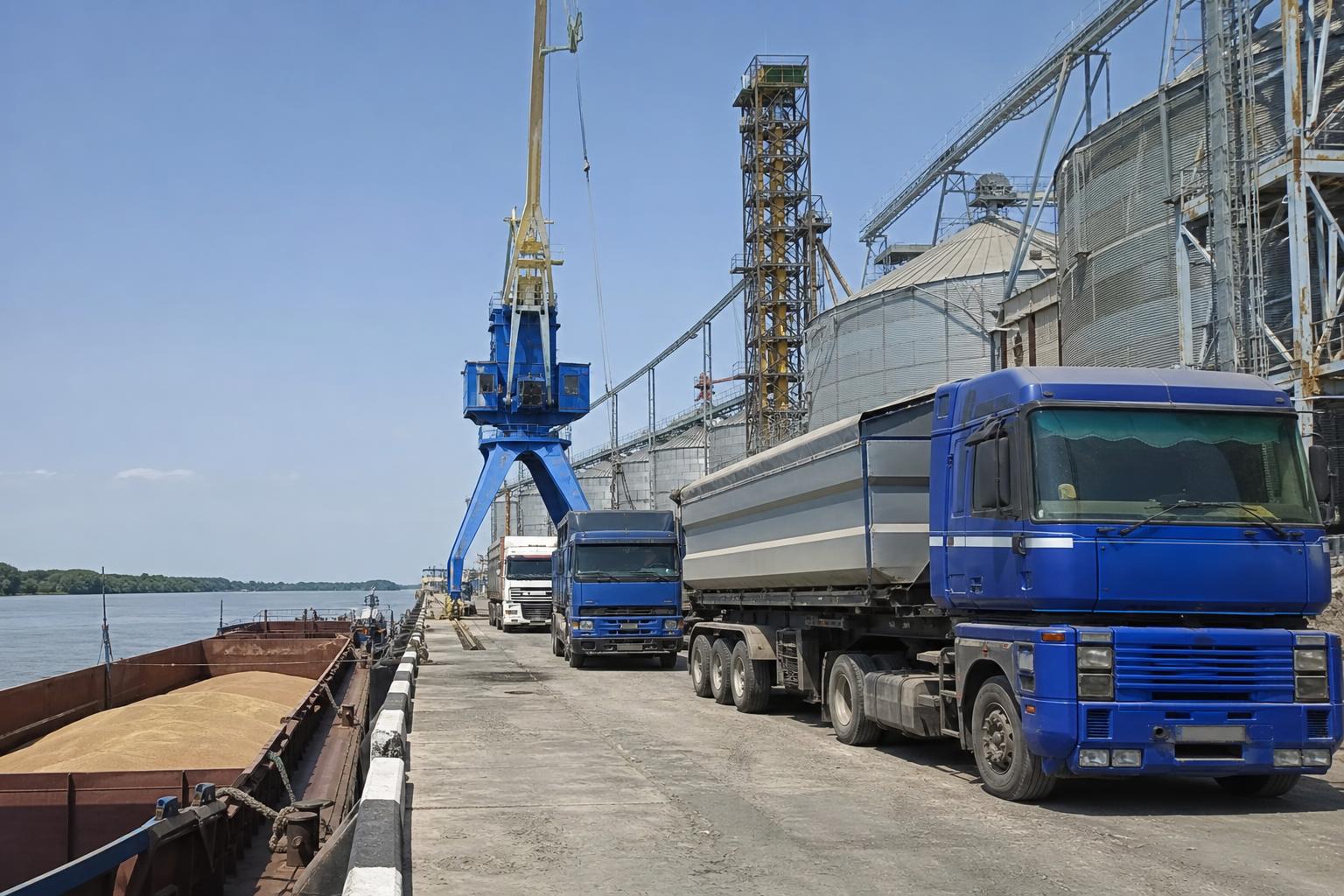
Ukrainian agricultural logistics once again became a key factor in pricing at the end of August. This is evident in the grain market through rising purchase prices for Ukrainian food-grade wheat in Constanța, Romania, and in the resource market through buyers' cautious approach regarding delivery times and reliability.
For AgroPost participants, this serves as a practical signal: proposals should separately account for not only the product price but also the delivery basis, delay risks, transportation availability, and potential idle costs.
Constanța Gains an Additional Role in Grain Export
As of August 27, food-grade wheat of Ukrainian origin in the Constanța port was purchased at higher prices than a week earlier. According to market analysts, Class 2 wheat was mainly valued at $250–255/ton, and Class 3 at $245–250/ton. The increase was $7–10/ton.
One of the factors cited is the exhaustion of the EU duty-free quotas for Ukrainian wheat. This has weakened activity at the western land border and pushed part of the export flows toward Ukrainian Danube ports and Constanța.
For sellers, this means that the DAP basis in Constanța may appear more attractive than domestic or border options, but only with a clear calculation of the logistics margin. For buyers, it is important to verify whether risks of delays and additional costs are embedded in the price.
Danube Route Remains in Demand but Becomes More Expensive Due to Risks
The rerouting of flows to Izmail, Reni, and Constanța occurs amid challenging conditions for Danube logistics. Factors mentioned by market participants include Russian shelling, Danube siltation, and a queue of over 50 ships near the Sulina Canal.
This congestion emphasizes the importance of simple logistical elements: transportation booking, document readiness, coordination of shipment windows, and vessel approach times. If these elements are not synchronized, even a competitive product price can lose its advantage due to delays.
In practical negotiations, sellers should separately specify who bears the costs of delays, transshipment, waiting times, and route changes. Buyers should clarify the actual readiness of the batch for shipment, not just the declared volume.
Logistics Affect Not Only Grain but Also Resource Procurement
On the global fertilizer market, price conditions at the end of August appear uneven: the nitrogen segment is gradually recovering after correction, phosphate fertilizers remain under pressure due to raw material costs and limited supply, and the potash market is stable with weak demand.
However, for Ukrainian agribusiness, the key concerns are not only price tags. Market reviews indicate that the main risks for the autumn period include product availability, delivery times, and logistics reliability. Buyers of ammonium sulfate, in particular, are more cautious due to uncertainties regarding delivery schedules, documentation, and transportation.
This directly impacts planning of field works: if fertilizers or other resources are purchased for specific technological windows, savings on price can be offset by delivery delays.
Key Conclusions for Agreements on AgroPost
- Delivery basis becomes part of the price. The same grain batch can have different economics depending on the route: domestic elevator, western border, Danube, or Constanța.
- Premium for Constanța is related to logistical accessibility. Higher purchase prices do not guarantee higher margins without precise calculation of delivery and idle costs.
- The Danube route requires time buffers. Queues, weather, and security factors can influence actual export speed.
- Confirmed delivery is important in resources. For fertilizers and related goods, it is necessary to verify not only availability but also actual delivery times and conditions.
What this means for the market. The Ukrainian agrarian market is entering a period when logistics can quickly change the profitability of deals. Sellers should display not only price and volume in their listings but also the ready route, loading conditions, and basis. Buyers should compare proposals based on total delivery cost, not just price per ton.
Comments
No comments yetNo comments yet - be the first.