
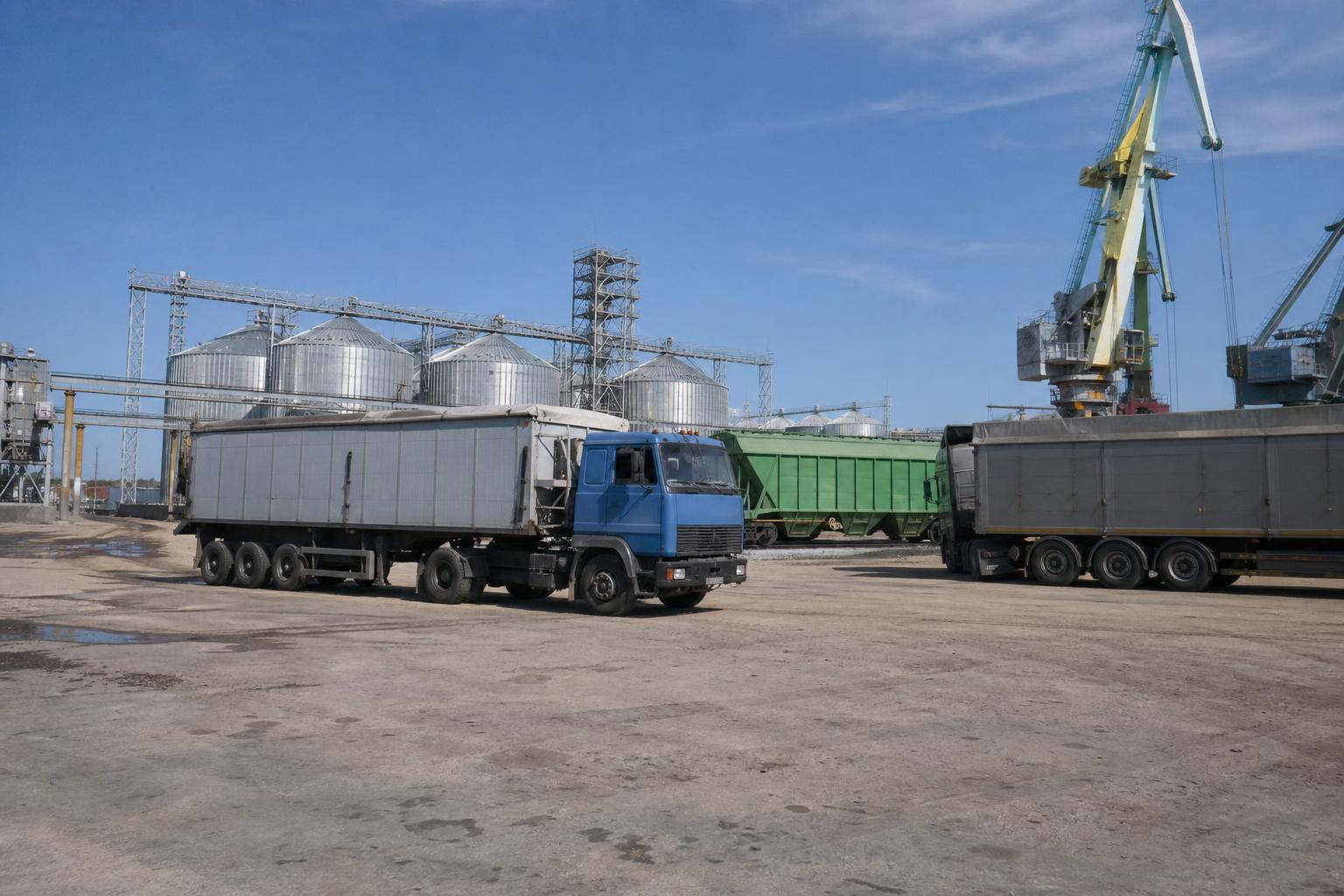
The global grain logistics are undergoing another restructuring. According to Reuters reports, Russian companies are adapting some Baltic and Arctic port capacities for grain transshipment following increased transportation difficulties through the Black Sea.
For Ukrainian grain sellers and buyers, this is not an immediate reason to rush into contract changes but serves as an important signal for daily monitoring of routes, freight rates, and delivery conditions. On AgroPost, such changes should be considered when forming prices in advertisements, especially if the product is aimed at export demand.
What is Changing in Russian Port Logistics
According to sources from Reuters in the shipping and grain industries, Russian companies have begun using terminals previously handling other cargoes for grain transshipment. This includes ports Ust-Luga, Saint Petersburg, and Murmansk.
In the Baltic port of Ust-Luga, the private terminal Ultramar, which previously specialized in mineral fertilizers, started accepting grain in August. The declared capacity of the terminal is 37 million tons per year, and last year it exported 16 million tons of fertilizers.
In September, applications for railway deliveries of grain to Ultramar amounted to approximately 260,000 tons. It was noted that the cargoes are destined for Egypt and Saudi Arabia.
Baltic Route: More Options but Not Without Limitations
Reprofiling terminals may increase Russia’s export capabilities via the Baltic Sea. Analysts estimate that the existing capacity of Baltic grain transshipment facilities previously ranged from 2 to 7 million tons, whereas in southern Russian ports, this figure exceeded 60 million tons.
In Saint Petersburg, the Modul and BSMZ terminals, which previously did not handle grain cargoes, have also begun accepting grain. Modul, according to reports, can transship up to 70,000 tons of grain in containers per month, although container logistics for grain are generally more expensive.
Sources also indicate that Russian railways prioritize freight transportation of grain to Baltic and Arctic ports. These routes already receive government support.
Murmansk as an Arctic Alternative
The Murmansk Commercial Seaport announced preparations to start grain exports in October. The port has an annual capacity of up to 24 million tons and traditionally handles coal, ore, and metals.
According to Reuters sources, the first batch of 40,000 tons of grain from the Stavropol region has already been agreed upon with the railway operator to Murmansk. The distance from the southern export hub of Novorossiysk to Murmansk is approximately 2,700 km.
Arguments in favor of this route include the ability to accommodate Panamax-class vessels and year-round operation of the ice-free Arctic port. However, the route is longer and requires separate calculations for the railway component.
What Ukrainian Sellers and Buyers Should Watch
- Freight rates and vessel availability. If part of Russia’s grain flows move through the Baltic and Arctic routes, the market should monitor demand for ships in adjacent basins.
- Competition on import routes. Reports mention supplies to Egypt and Saudi Arabia — markets important for Black Sea grain.
- Delivery basis. For AgroPost advertisements, it is advisable to clearly specify conditions for self-pickup, delivery to elevator, port, or border, so buyers can quickly compare actual logistics costs.
- Container solutions. Examples of grain transshipment in containers show that the market is seeking alternatives, but such schemes require careful cost calculations.
According to Sovecon, in July-August, Russia exported 4.4 million tons of grain, approximately 31% less than in the same period last year. In September, exports are estimated to decrease to 2.45 million tons — about half of last year’s level.
What does this mean for the market
Ukrainian participants in agro-logistics should perceive these changes as a monitoring factor rather than a definitive price forecast. For sellers on AgroPost, a practical conclusion is simple: the current grain price should consider not only quality and batch volume but also the route, transportation costs, and shipment speed. Buyers should compare proposals not only by price per ton in the field but by the full logistical cost to the required point.
Comments
No comments yetNo comments yet - be the first.