
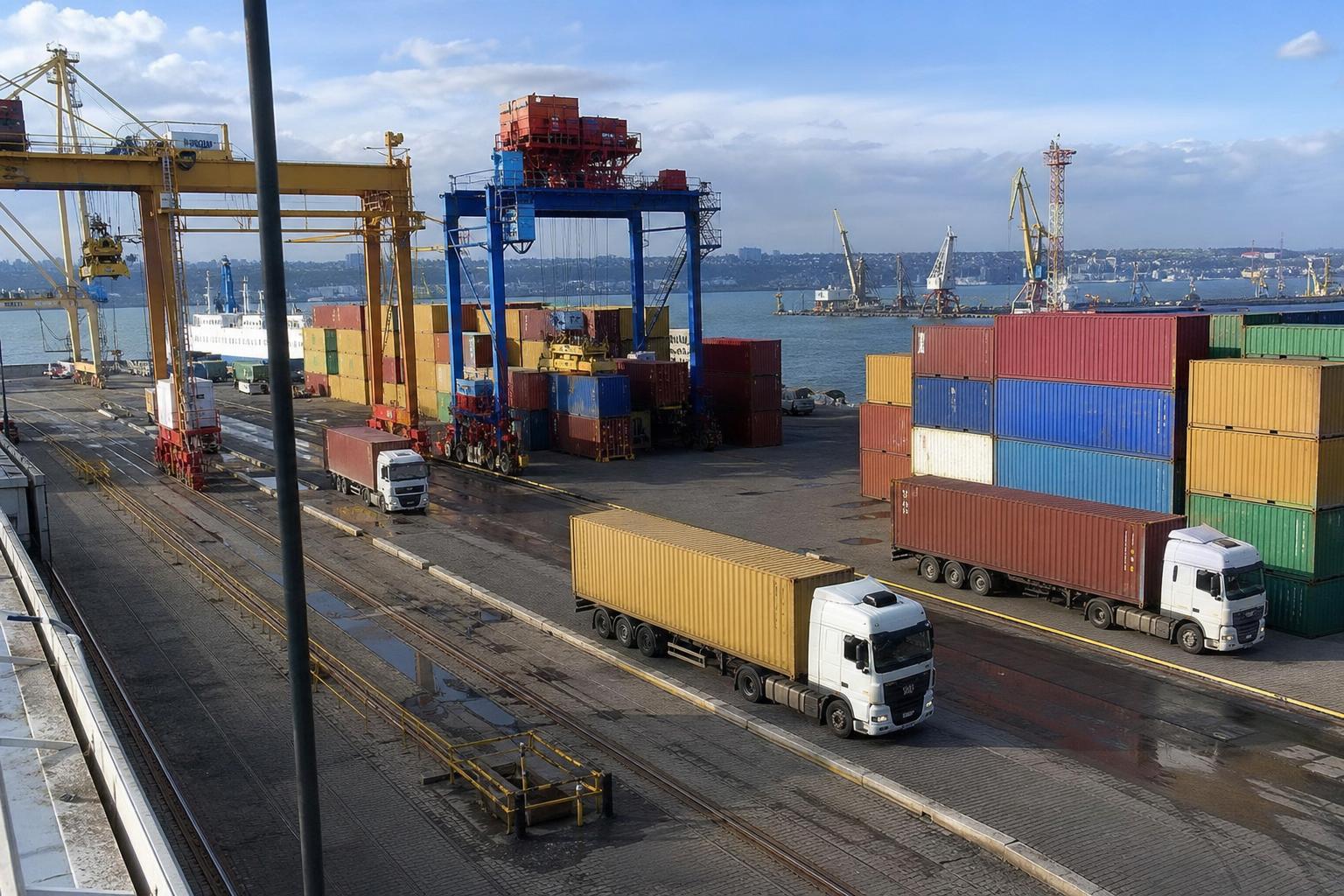
The container terminal at Chornomorsk port is entering a critical phase of the concession competition. According to government officials, several major port operators and consortia have been admitted to the competitive dialogue stage.
For Ukrainian agribusiness, this news is significant not as an immediate change in tariffs but as a signal of potential upgrades to port infrastructure. Container logistics remains crucial for cargo with higher added value, smaller export batches, imported materials and goods that require predictable delivery.
Who is vying for the container terminal
APM Terminals, Yilport, the Mariner–TAS consortium, as well as the Abu Dhabi Ports and SKF Holdings UK consortium have been admitted to the competitive dialogue regarding the concession of the container terminal at Chornomorsk port.
This was announced by Vice Prime Minister for Recovery — Minister of Communities and Territories Development of Ukraine Oleksii Kuleba during the Ukraine Recovery Conference 2026 in Gdańsk.
The government considers this project as part of a broader portfolio of public-private partnerships in transport, port, road, municipal, and water management sectors.
Why this matters for agricultural logistics
For exporters of agricultural products, port infrastructure directly influences route selection, shipment timing, and transportation costs. Even if the main volumes of grains and oilseeds are shipped in bulk, the container segment remains important for niche crops, processed products, packaged goods, seeds, food ingredients, and some imports for the agro-sector.
The entry of international operators among the contenders could increase market attention to service standards, operational transparency, and long-term port capacity planning. However, specific changes in tariffs, cargo processing speed, or slot availability will depend on the conditions of the competition and subsequent project implementation.
Indicators for business monitoring
- Concession terms. Cargo owners need to understand investment commitments, modernization timelines, and operational requirements for the future concessionaire.
- Tariff policy. While there are no immediate indications of rate changes, businesses should consider scenario planning for future costs.
- Container service availability. For agro-processing exporters and material importers, key factors will include regularity of lines, processing times, and shipment predictability.
- Adjacent land logistics. The impact of port modernization will also depend on road and rail approaches to the port.
Context for sellers and buyers on AgroPost
Companies selling or purchasing agricultural products for export should already clarify delivery basis, permissible logistics windows, and responsibility for delays in their agreements. This is especially relevant for goods shipped in containers or requiring precise delivery schedules.
On AgroPost, sellers should specify not only the product price but also available shipping regions, packaging types, readiness for containerization, and possible routes. Buyers should request confirmation of logistics conditions before fixing the price, as transportation costs can significantly impact final margins.
What this means for the market: The concession process in Chornomorsk does not provide immediate answers regarding tariffs or delivery times but sends an important infrastructure signal. For agro-business, it is an incentive to more carefully evaluate container logistics, explore alternative routes, and prepare commercial offers with clearer transportation conditions.
Comments
No comments yetNo comments yet - be the first.