
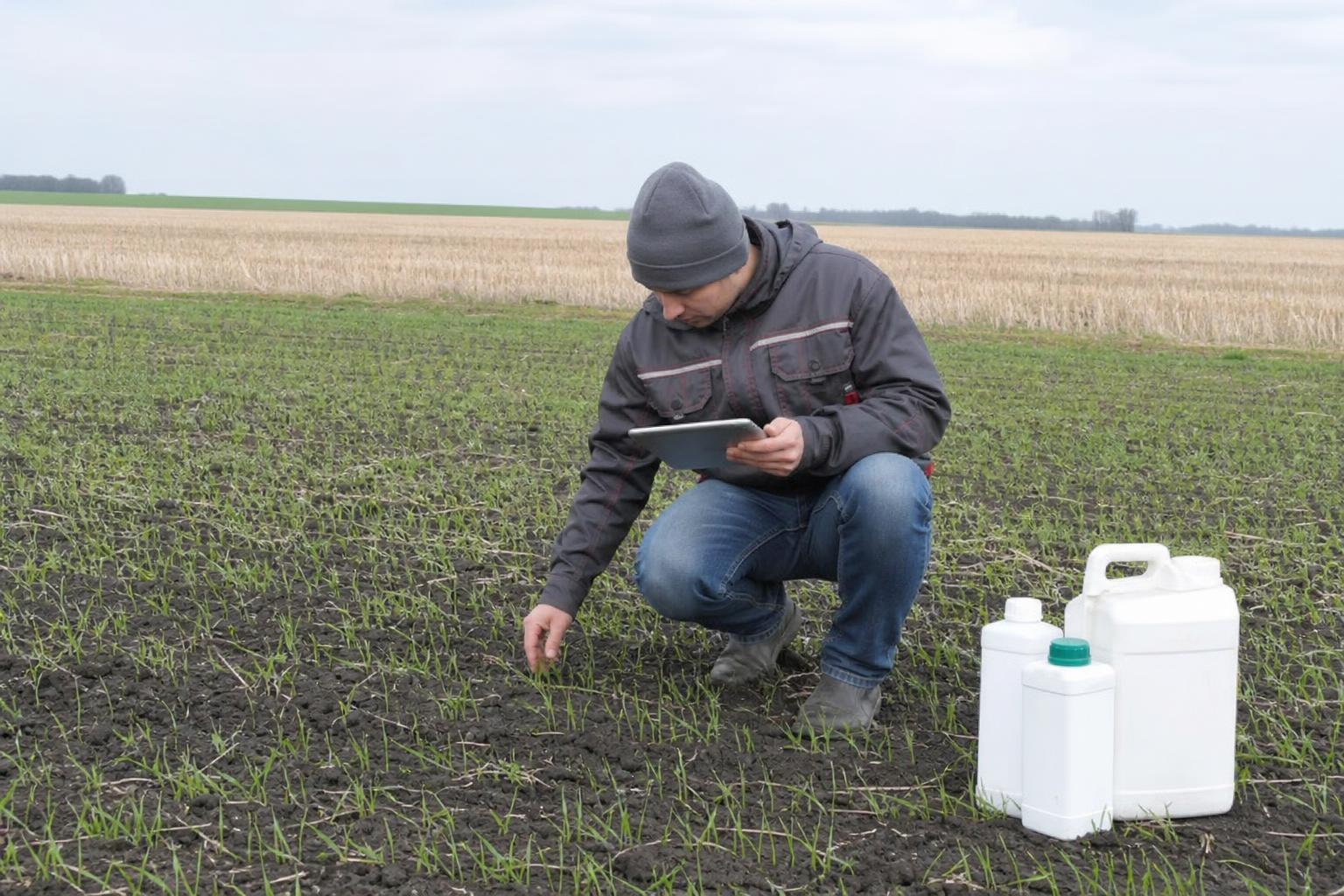
After harvesting early grains and oilseeds, farmers are already planning winter crop protection measures. For the crop protection market, this period involves buyers assessing their needs for seed treatments, herbicides, fungicides, and insecticide control, while sellers develop seasonal offers.
Recent results for wheat and rapeseed confirm that even within a single company’s fields, yields vary considerably across agro-climatic zones. Therefore, a universal protection scheme that does not consider regional and field conditions becomes increasingly impractical.
Early harvest highlights differences between zones
"Volyn-Zerno-Produkt" announced the completion of harvesting early grains and oilseeds on an area of 19.2 thousand hectares. Winter rapeseed was harvested from 9.4 thousand hectares, yielding 36.6 thousand tons with an average yield of 3.9 t/ha.
In the Forest-Steppe zone, rapeseed yields averaged 4.2 t/ha, whereas in Polissya — 3.3 t/ha. Winter wheat was harvested from 9.8 thousand hectares, with a total yield of 66.7 thousand tons and an average yield of 6.8 t/ha.
The yield difference for wheat between zones is also notable: 7.5 t/ha in the Forest-Steppe and 5.5 t/ha in Polissya. The company noted that these results were achieved despite challenging weather conditions in certain regions.
Implications for protection planning
For farmers, such data do not serve as a ready-made guide for selecting products. However, they clearly demonstrate that crop protection strategies should start with field diagnostics, including the history of previous crops, crop residue status, weeds, and disease risks specific to each zone.
For winter rapeseed, buyers typically focus on high-quality seed treatment, early weed control, pest protection during early growth stages, and fungicide-regulator solutions in autumn. For wheat, key considerations include seed treatments, autumn herbicide control, and early planning for spring fungicide treatments.
Producers of crop protection products should develop offers that go beyond price per liter or kilogram. For buyers, important factors include crop type, application timing, active ingredients, tank-mix compatibility, packaging, documentation, and clear delivery conditions.
How crop protection sellers can prepare ads on AgroPost
- Specify the crop: separately for winter rapeseed, winter wheat, barley, or other crops.
- Add active ingredient: buyers often search not only by trade name but also by specific mode of action.
- Indicate current stock: stock levels and minimum order quantities are crucial for quick decision-making.
- Specify delivery region: logistics and delivery times are often more critical than small price differences.
- Confirm product legality: documentation, expiration date, and storage conditions increase trust in the offer.
What buyers should pay attention to
Buyers should compare not only the product price but also the total cost of crop protection technology per hectare. A cheaper product with unclear origin or an inappropriate spectrum of action can pose additional risks to crops.
Before purchasing, it is advisable to verify the registration of the product for the intended crop, check the expiration date, packaging integrity, storage conditions, and application recommendations. If tank-mixing is planned, compatibility of components should be confirmed prior to purchase.
Key conclusions
- The yield difference between the Forest-Steppe and Polissya confirms the need for region-specific protection approaches.
- For winter rapeseed and wheat, seed treatments, herbicides, and early fungicide planning remain most relevant.
- Crop protection sellers should make their ads as specific as possible: crop, active ingredient, packaging, stock, and documentation.
- Buyers should evaluate not only the price but also the suitability of the product for their specific field.
Implication for the market: the value of precise and transparent offers in the crop protection segment will increase. On AgroPost, the best positions will be held by sellers offering clear solutions tailored to crop, region, and seasonal farm needs.
Comments
No comments yetNo comments yet - be the first.