
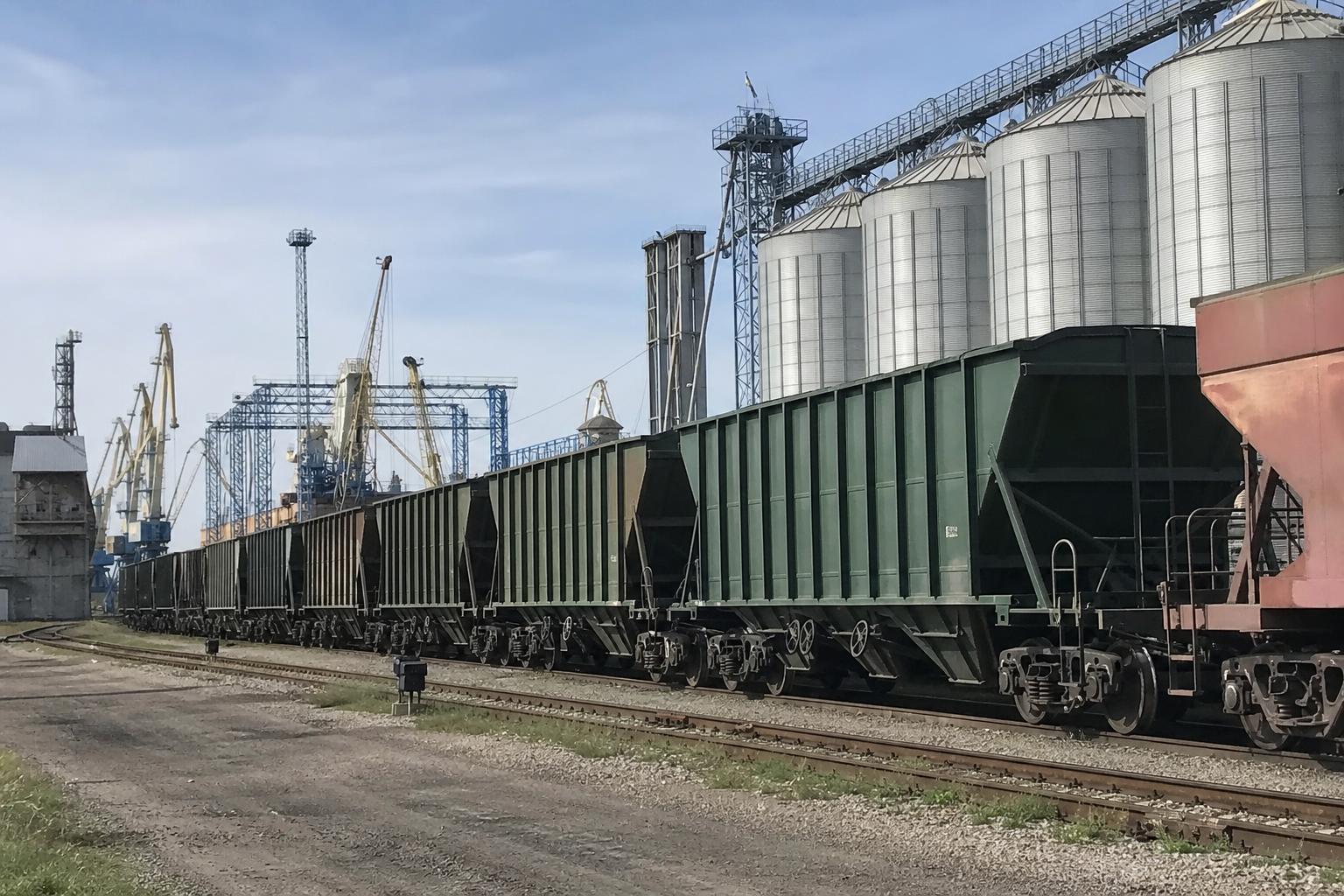
Ukrainian agricultural logistics is entering a period of heightened infrastructure competition. At the end of July, wagon accumulation near western border crossings increased more than threefold — from 58 to 201 wagons.
For grain sellers and buyers, this signals the need for more careful planning of routes, shipment deadlines, and delivery conditions. Especially if the agreement is tied to a specific crossing, port terminal, or a short logistics window.
Western Border: Less Transfers, More Accumulation
According to Spike Brokers, in July, the average daily transfer of grains and meal through border crossings was 135 wagons per day. This is 20% less than at the end of June.
The largest average daily volume of grain wagon transfers was on the Hungarian route — 37.6 wagons per day. Transfers through Slovakia amounted to 17.3 wagons, through Poland — 14.9 wagons, and through Romania — 1.1 wagons per day.
The increase in accumulation amid lower transfer volumes indicates limited capacity of land channels for agricultural cargoes. For traders, this underscores the importance of backup routes and verifying the actual situation at the crossing before finalizing delivery.
Rail Transportation of Grain: Lower than June but Higher than Last Year
Over 28 days in July, 1.89 million tons of grain cargoes were transported by rail. This is 30.2% less than in June but 82.3% more than during the same period last year.
During this period, 1.564 million tons of grain and milling products were exported by rail. Additionally, 90.5 thousand tons of vegetable oil and 165.4 thousand tons of meal and meal by-products were transported.
For the market, this means that rail remains an active export channel, but its efficiency varies by direction. In commercial negotiations, it is essential to clarify not only the price but also the readiness of the route for actual shipment.
Ports: Main Channel for Grain, but Dynamics Vary
Sea ports remain the primary route for railway export of grain cargoes: 88% of grain was shipped through them. Land border crossings accounted for 12% of grain exports.
At the same time, for vegetable oil and meal, the western border remains the main logistics channel. This is important for processing market participants planning to ship not only grain but also value-added products.
At the end of July, the Great Odesa ports' direction slowed down. The number of grain wagons moving to these ports decreased to 1,356 wagons, with an average daily unloading of 690 wagons and loading of 580 wagons per day.
Conversely, the Danube cluster showed growth: the number of wagons in transit increased to 1,141 wagons, with an average daily unloading of 51 wagons.
What Sellers and Buyers Should Consider on AgroPost
- Specify the route in detail. Indicate the shipment station, preferred direction, readiness for port or crossing.
- Check the logistics window. Availability of the cargo does not guarantee quick movement if there are wagon accumulations or acceptance restrictions along the route.
- Compare port and land options. For grain, sea ports remain the main channel, but some directions may temporarily slow down.
- For oil and meal, do not ignore the western border. For these cargoes, it remains a key channel, so access to crossings should be part of the commercial plan.
What this means for the market: logistics is becoming as crucial as the grain price in a deal. Sellers should clearly describe available routes and shipment deadlines, while buyers should factor in risks of delays at borders or ports before signing contracts.
Comments
No comments yetNo comments yet - be the first.