
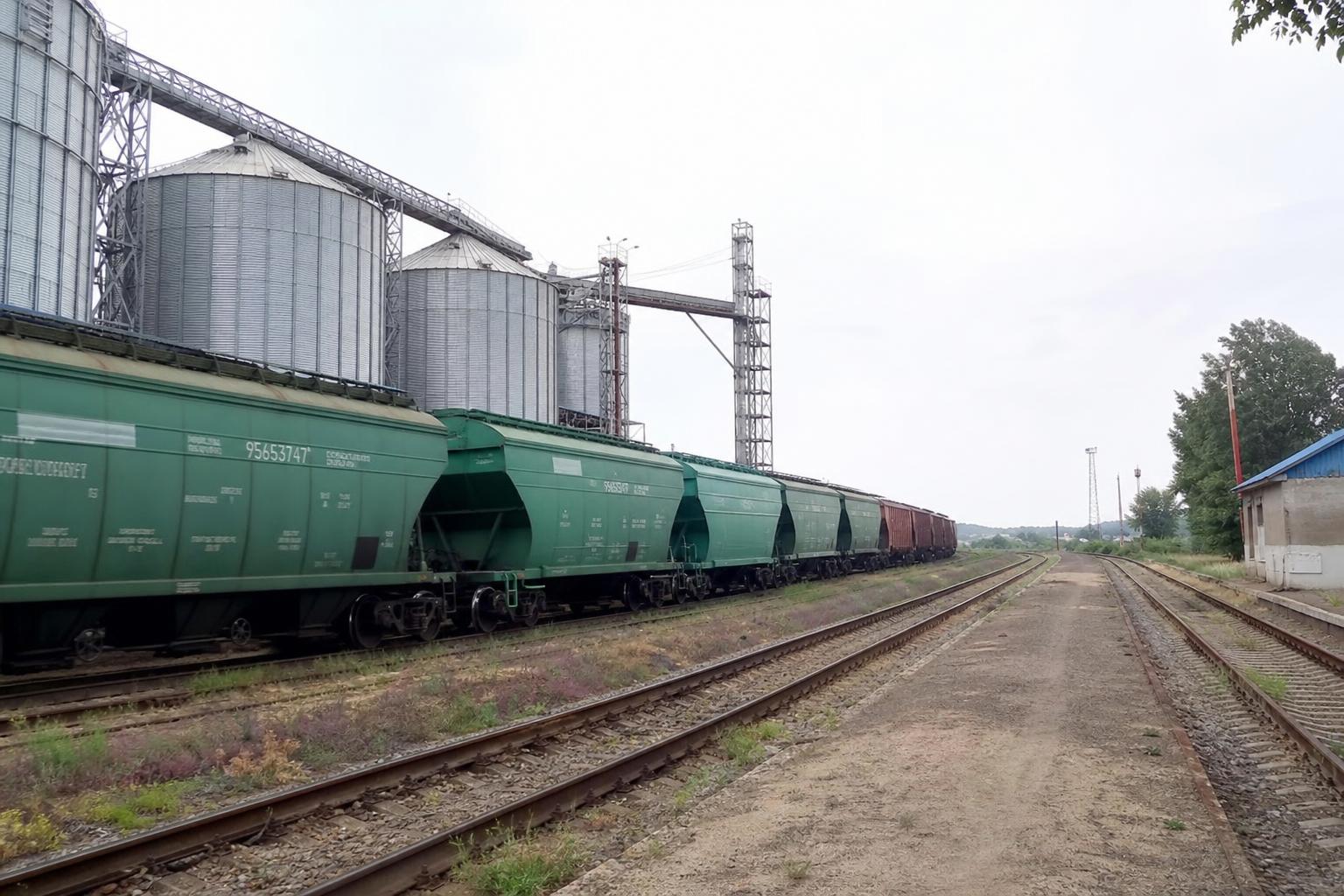
The grain railway logistics in August entered a period of sharp decline in export shipments. In the first 11 days of the month, PJSC "Ukrzaliznytsia" dispatched 201.7 thousand tons of grain for export, which is 72% less compared to July and 76% less than during the same period in 2025.
For grain sellers, elevators, and traders, this signals the need to carefully plan routes, shipment schedules, and contractual terms. The market has not stopped, but the structure of directions has noticeably changed.
Where Grain Cargo is Reorienting
Over the 11 days of August, 126 thousand tons of grain were transported by rail to western border crossings. This is 81%, or 56 thousand tons, more than the previous month.
Another direction that saw a sharp increase in volumes is Izmail. During the first 11 days of August, 91.1 thousand tons of grain were sent there, which is 11.5 times more than in all of July.
Meanwhile, the port direction of Greater Odessa experienced the most significant decline. In the first 11 days of August, 75.2 thousand tons of grain were transported there — nearly 89% less than in July.
Overall Volumes Also Lower Than the Previous Month and Last Year
In total, during the first 11 days of August, Ukrzaliznytsia transported 435.8 thousand tons of grain. This is 47% less than in July and 52% below the same period in 2025.
The average daily grain load on the Ukrzaliznytsia network in August was 31.3 thousand tons. This figure is 38% lower than in July and 49% less than in August last year.
At the same time, towards the end of this period, the railway recorded some activity: 50 thousand tons of grain were loaded in one day, and the day before — 46 thousand tons. For comparison, during peak season, daily loads typically ranged from 80 to 100 thousand tons.
What Agro-Market Participants Should Consider
- Grain sellers should coordinate in advance the availability of wagons, departure stations, and alternative routes.
- Elevators need to monitor the schedule of batch accumulation to avoid congestion during periods of uneven loading.
- Buyers and traders should incorporate risks of route and delivery time changes into negotiations.
- Carriers should track demand for western crossings and the Danube route, where volumes increased in August.
Logistics Becomes Part of the Deal Price
In the grain market, the transportation factor is once again taking center stage. When one export route loses volumes and others quickly ramp up, the difference between warehouse price and delivered price can change faster than parties expect.
For AgroPost announcements, this means sellers should clearly specify the delivery basis, availability of rail dispatch, and the possibility of delivery to the border or Danube route. Buyers, in turn, should clarify not only the grain price but also the actual logistical readiness of the batch.
What This Means for the Market
The August statistics from Ukrzaliznytsia show not just a decline in volumes but a redistribution of export logistics. For Ukrainian agribusiness, it becomes crucial not only to find buyers or sellers but also to confirm routes, timing, and costs of delivery before finalizing agreements.
Comments
No comments yetNo comments yet - be the first.