
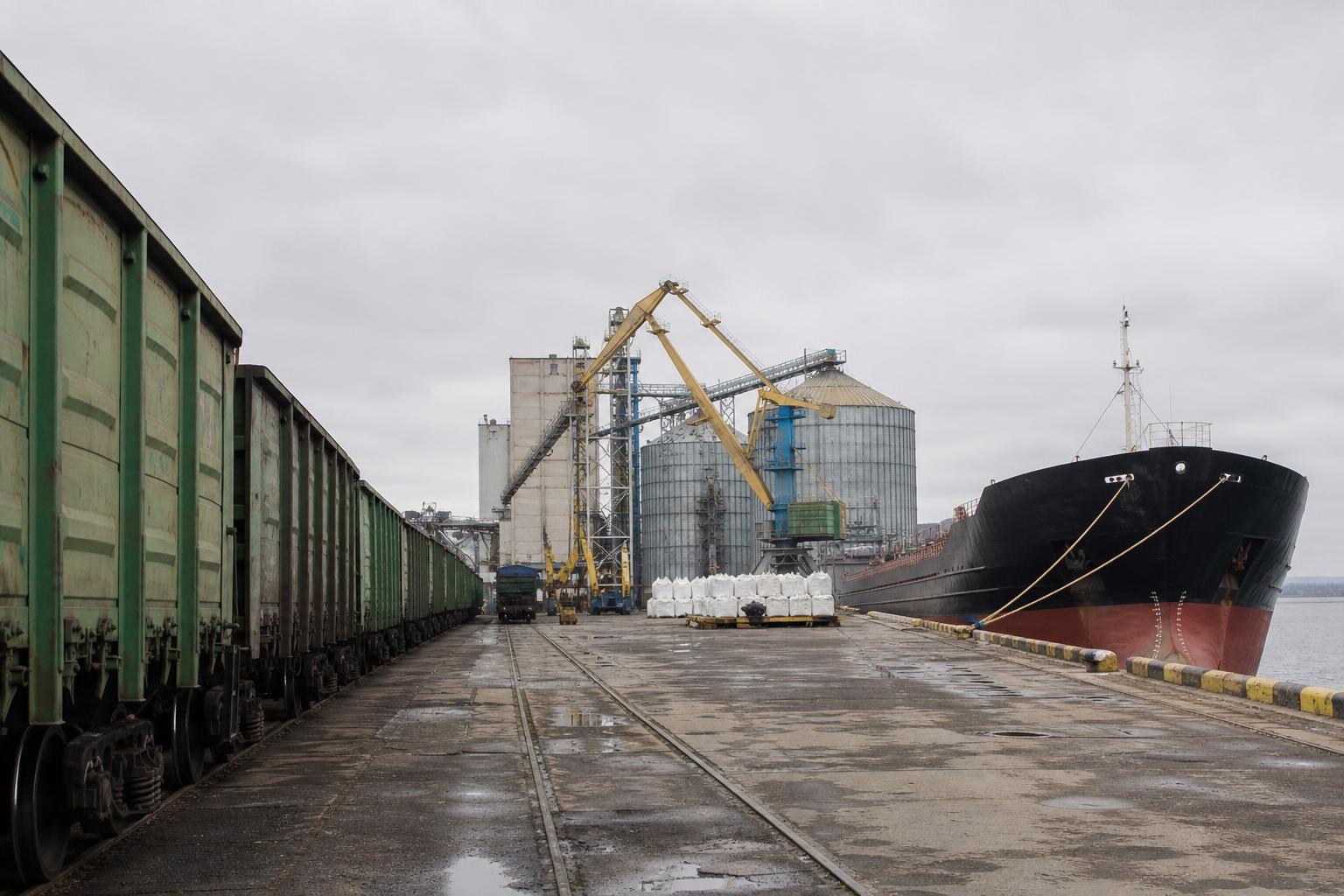
Logistics routes and their costs remain key variables for Ukraine’s agricultural exports. Under ASAP Agri’s scenarios, agricultural exports in the 2026/27 marketing year could range from 29 million tonnes if sea transport is significantly restricted to 47 million tonnes if ports in Greater Odesa resume operations.
While the outlook for sea transport remains uncertain, rail and the Danube route remain important for sales planning. However, available spare capacity cannot be used without additional wagons and faster transit along these routes.
Seaports could shift the export balance
In the most optimistic scenario, up to 17 million tonnes of agricultural products could be shipped through deep-water ports. In the two scenarios involving greater restrictions, the estimate is 5.3–5.4 million tonnes. Analysts estimate rail exports at around 14 million tonnes.
There have been isolated signs of preparations for a possible resumption of seaborne shipments, including offers of vessels for voyages from ports in Greater Odesa. However, these signals do not confirm that the ports will resume operations: export estimates remain scenario-based.
Rail capacity is constrained by wagons and turnaround times
Rail’s grain export capacity is estimated at 1.4–1.5 million tonnes per month: around 1.1 million tonnes through western border crossings and a further 400,000 tonnes via the Danube ports.
In October, 854,300 tonnes of grain were transported through western crossings, while 215,000 tonnes were delivered by rail to the Danube ports. According to ASAP Agri, additional capacity amounts to around 250,000 tonnes per month on the western route and 185,000 tonnes on the Danube route.
Using this capacity will require 1,435 mm-gauge grain wagons, more efficient wagon turnaround and faster border crossings. The average grain wagon turnaround time rose to 22.8 days in October, up from 18.8 days in September. Analysts estimate that western crossings could handle up to eight additional trains per day.
Route costs affect offer prices
According to the estimates cited, delivering grain to the Danube ports costs $20–25 per tonne more than delivering it to the ports of Odesa. The freight rate for a coaster shipment to Egypt rose by $100 per tonne between July 10 and November 6, while the rate for shipments to Constanța increased from $20 to $92 per tonne between mid-July and October 31.
These figures matter to sellers when comparing delivery terms and calculating the net price after logistics costs. Buyers should compare not only the commodity price but also the delivery point, transport availability and shipment timing. Offers using different routes can have different overall economics even when grain prices are similar.
What this means for the market: export volumes will depend on how quickly sea routes operate and whether rail and the Danube route can use their available capacity. When posting or searching for offers on AgroPost, market participants should clearly specify delivery terms and check transport costs for the specific route in advance.
Comments
No comments yetNo comments yet - be the first.