
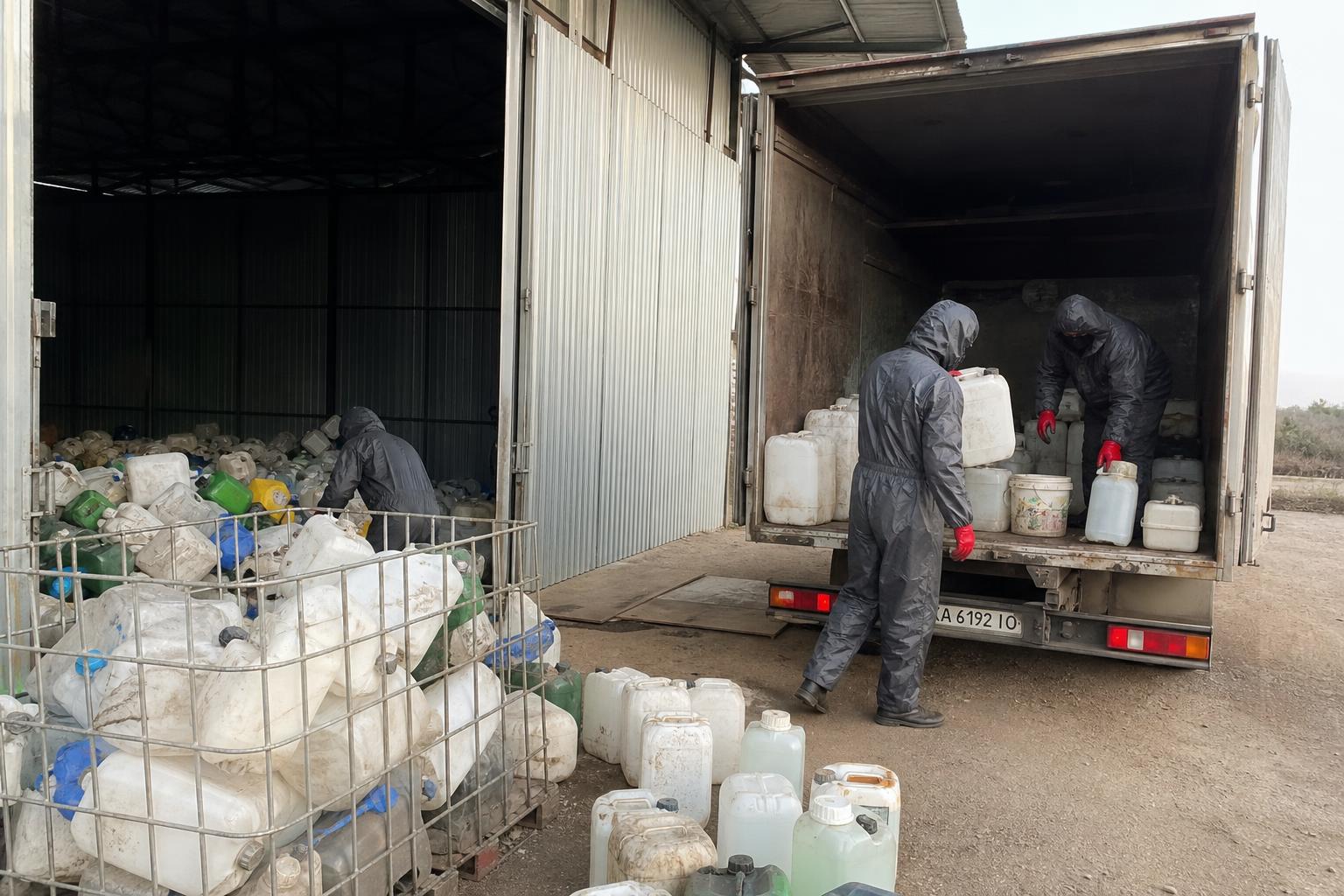
In agricultural logistics, the focus is increasingly on not only delivering seeds, fertilizers, or pesticides to farms but also on organized reverse logistics for used containers. This is especially relevant for plastic containers from plant protection products, which may contain chemical residues.
Ukraine continues to operate the "Agro Varta" project — a system for free collection, transportation, and recycling of such containers. For agricultural producers, this offers an opportunity to resolve disposal issues without independently seeking hazardous routes and unreliable contractors.
How the container collection logistics work
The project model is built as a reverse supply chain: farms accumulate empty containers, submit a request, agree on transportation, and hand over the containers to a licensed operator during organized collection.
- The farmer prepares the pesticide containers in proper condition;
- The request is registered via the project's online platform;
- The parties coordinate the logistics of collection;
- The containers are transferred to an operator authorized to handle hazardous waste;
- They are then directed for safe processing.
The key advantage for farms is the coordination of the process through a single channel: from application to transportation and recycling. This reduces chaos related to storage on warehouses, workshops, or field edges.
Why this is important for agricultural safety
Empty pesticide containers are classified as potentially hazardous waste. Their incineration, reuse, or uncontrolled storage pose risks to soils, water resources, animals, and humans.
Therefore, in such transportation, the operator's license status is critically important. According to project organizers, operations are carried out by licensed companies authorized to work with hazardous waste.
For farmers, this also involves proof: who collected the containers, when, in what volume, and where they were transferred. As Ukrainian regulations align more closely with European environmental standards, such transparency will become increasingly vital for responsible business practices.
Market signals for carriers and service companies
The segment of agricultural waste management is gradually creating demand for specialized logistics services. This involves not just transporting cargo but organizing collection, proper documentation, and transfer of waste to authorized operators.
For carriers and service providers, this signals the need to pay closer attention to licensing, routes, container acceptance conditions, and communication with farms. For farmers, it’s an incentive to plan container accumulation sites in advance and avoid waiting until storage becomes problematic.
On the AgroPost marketplace, such requests should be formulated as specifically as possible: region, container type, approximate volume, need for a licensed operator, and preferred transportation period. This helps quickly find a relevant partner in transportation and logistics categories.
Key conclusions
- Pesticide containers require controlled collection and transfer for recycling;
- The free "Agro Varta" model lowers barriers for farm participation;
- Logistics must be carried out by operators authorized to handle hazardous waste;
- This is part of the agro-business’s preparation for stricter environmental regulations;
- For the transportation market, this niche involves specialized services rather than mass general freight services.
What this means for the market: reverse logistics of pesticide containers is becoming a practical element of farm management. Logistics providers should clearly demonstrate permits and experience with such cargo, while farmers should plan container disposal as systematically as they do the delivery of production resources.
Comments
No comments yetNo comments yet - be the first.