
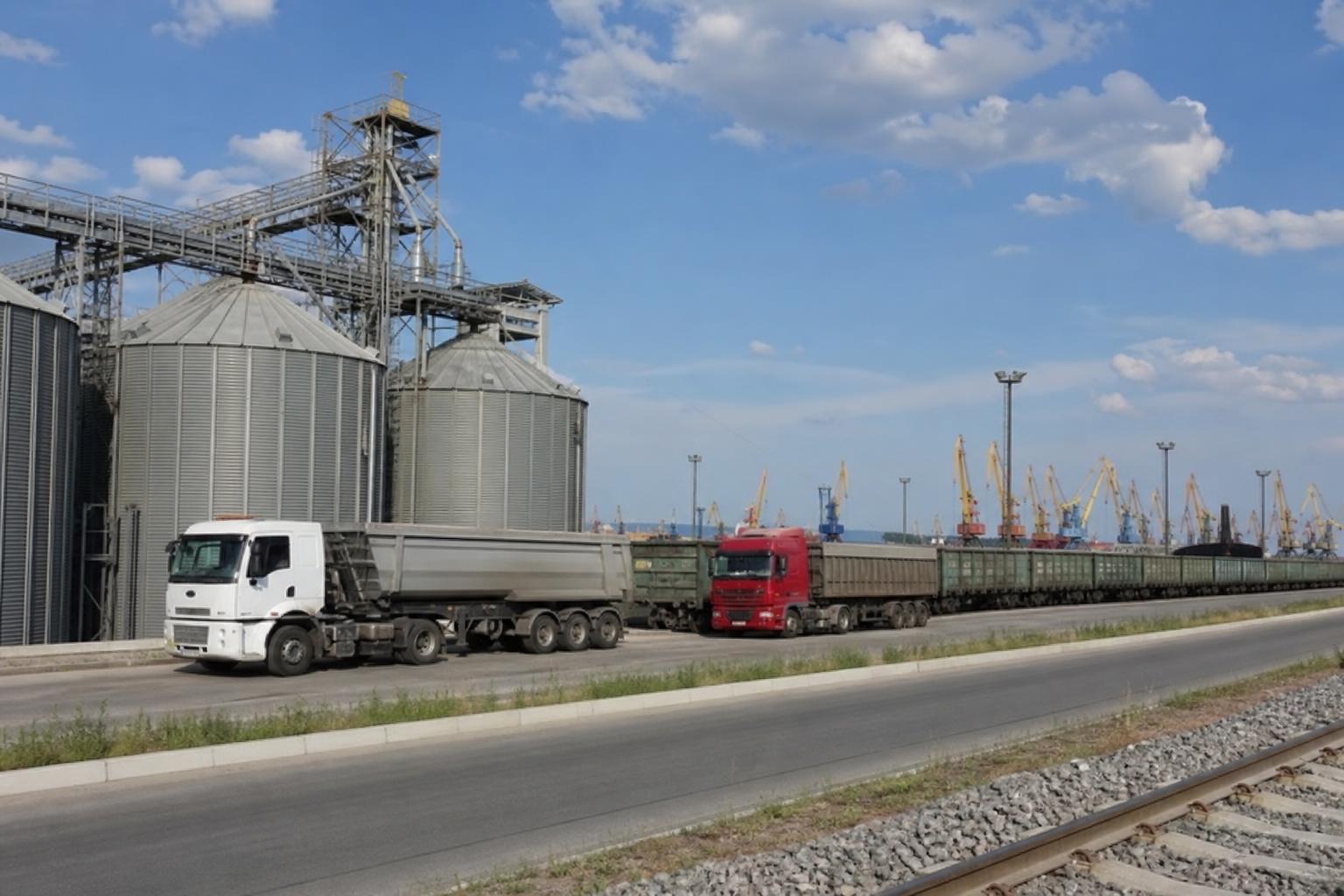
Ukrainian agricultural logistics will operate this summer under the influence of two distinct but important factors: the access regime to the EU market and the activation of sea shipments of barley to China.
For market participants, this is not only a matter of export prices. The direction of cargo movement and the access conditions in that route influence demand for road transportation, rail supplies, elevator services, transshipment, and the speed of document processing.
EU Route: Quotas Already Impact Cargo Planning
As of early June 2026, Ukraine actively utilizes tariff quotas within the framework of the DCFTA with the EU. According to UCAEB, the annual wheat quota has already been fully used.
Quarterly quotas for fresh poultry meat, eggs, and egg products are also fully exhausted. It is important to note that these are periodic volumes, not the entire annual possibilities for the respective categories.
Some quotas remain partially used. Specifically, partial utilization has been recorded for frozen poultry meat, grain flour, milk and condensed milk, dry skimmed milk and cream, butter, and other dairy fats.
For logistics, this means that shippers should check not only the transportation rate but also the commercial feasibility of delivery after quota utilization. If preferential access for a specific category is already limited, routes, delivery basis, or buyers may need to be reconsidered.
Barley: Chinese Demand May Fill Ports with Cargo
According to PUSK analysts, in July-August about 70-80% of Ukrainian barley exports could be directed to China. Approximately 600-700 thousand tons are already contracted, but forward purchases cover only about 200 thousand tons.
This creates a potential demand for the purchase of around half a million tons of barley on the spot market. For carriers and elevators, this scenario could lead to a short-term increase in delivery requests to ports, especially if ships under Chinese contracts start arriving in early July.
Analysts also note that producers' sales restraint due to low prices could create supply tensions. Market quotes for the new harvest are around $220-223 FOB, while actual offers at CPT port are at $203-206 per ton. According to PUSK estimates, CPT port prices should theoretically be closer to $210-212 per ton, with a recovery to $210-215 per ton possible in the first half of July.
What Sellers, Buyers, and Carriers Should Consider
- Barley producers: before selling, it is advisable to clarify not only the price but also delivery conditions, acceptance schedule at the elevator or port, and quality requirements.
- Traders: with incomplete contract coverage, procurement of critical quantities makes the speed of batch formation and transport availability on required dates crucial.
- Carriers: port directions may experience increased demand in case of active barley procurement for vessel shipments.
- Exporters to the EU: before booking transportation, it is necessary to verify the quota status, administration mechanism, and possible tariff implications for the specific product.
Key Logistics Conclusions
The summer export season may be uneven: some cargoes will be redirected depending on the EU quota regime, and barley may concentrate in maritime routes due to Chinese contracts.
The greatest risk for participants in the supply chain is a mismatch between sales timing, transport availability, and vessel schedules. Therefore, pre-agreed applications for transportation, elevator storage, and port transshipment may have higher practical value than reactive logistics searches during peak moments.
What this means for the market: Ukrainian sellers and buyers on AgroPost should actively synchronize announcements about grain, transport, and logistics services. In the coming weeks, a competitive advantage will not only be the price but also the ability to quickly confirm volume, route, quality, and actual delivery timeframe.
Comments
No comments yetNo comments yet - be the first.