
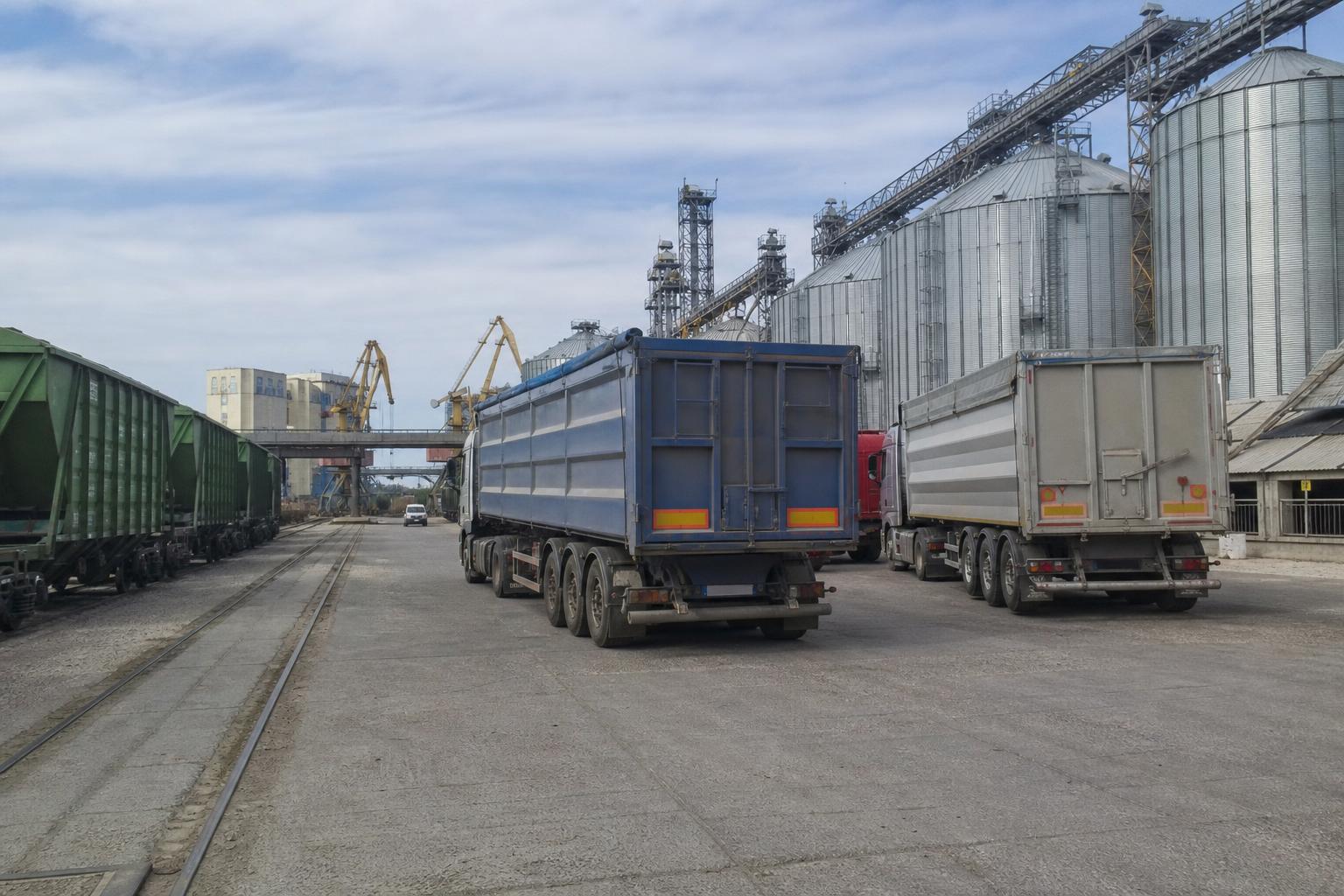
Ukrainian agricultural exports are entering a new season with active contract signing, but the key issue for sellers and buyers remains not only the product price. The availability of fleet, stability of Black Sea shipments, and clear transit rules through neighboring countries are becoming increasingly important.
For AgroPost participants, this means that grain or oilseed offers must be accompanied immediately by a logistics plan: port, type of transport, shipment schedule, delivery conditions, and risks of contract fulfillment.
Black Sea Logistics: Demand Exists, but Ships Become a Bottleneck
According to brokerage market estimates, sunflower exports of the new harvest could intensify as early as September-November. In just one week, traders contracted about 30,000 tons of seeds for delivery to Turkey and Bulgaria.
The announced potential for the first three months of the season is around 200,000 tons of sunflower. Of this volume, approximately 120,000 tons may go to Turkey, with another 80,000 tons destined for Bulgaria and Romania.
However, the market signals that selling a batch is easier than guaranteeing its delivery. In the Black Sea region, there is a withdrawal of some relatively new coaster vessels to Northern European ports. Shipowners are focusing on safer routes, and in the Black Sea, older fleets are expected to remain more frequently, according to market estimates.
For cargo owners, this means increased attention to freight rates, vessel deployment timelines, and insurance and war risks. Even with attractive product prices, unresolved maritime logistics can derail the execution of export contracts.
Moldova: Ukrainian Grain Transit Does Not Override Local Farmers’ Priorities
The Moldovan railway company reported that Moldovan producers and companies have priority in grain transportation. At the same time, transit of Ukrainian cargo is carried out using Ukrainian wagons and, according to CFM, does not reduce available opportunities for Moldovan farmers.
According to Moldovan authorities, the country’s railway network is currently utilized at about 20%. CFM states that this is sufficient for Moldova’s internal/export needs and transit flows.
The tariff difference is also important for route calculation. The rate for Moldovan exports is set at 15.30 CHF/ton, while transit of Ukrainian cargo costs 20.64 CHF/ton. CFM clarified that the previously mentioned rate of 11.72 CHF/ton is not the full cost, as it does not include the use and return of Ukrainian wagons.
What Sellers and Buyers Should Consider
- Do not lock in a price without a route. For export batches of grain and oilseeds, immediately specify the port, railway crossing, or transit country.
- Check the availability of wagons and vessels. A contract for the product does not guarantee physical transportation within the required window.
- Account for tariff differences. Transit through neighboring countries may have a different rate than local exports of those countries.
- Define responsibility conditions clearly. Contracts should explicitly specify who is responsible for freight, delays, schedule changes, and additional costs.
Implications for the Market
What does this mean for the market? In the 2026/27 season, competitive advantage will depend not only on product availability but also on ready logistics. Sellers on AgroPost should include actual shipment conditions in their listings, and buyers should verify not only the price per ton but also the full delivery cost to the destination point.
Comments
No comments yetNo comments yet - be the first.