
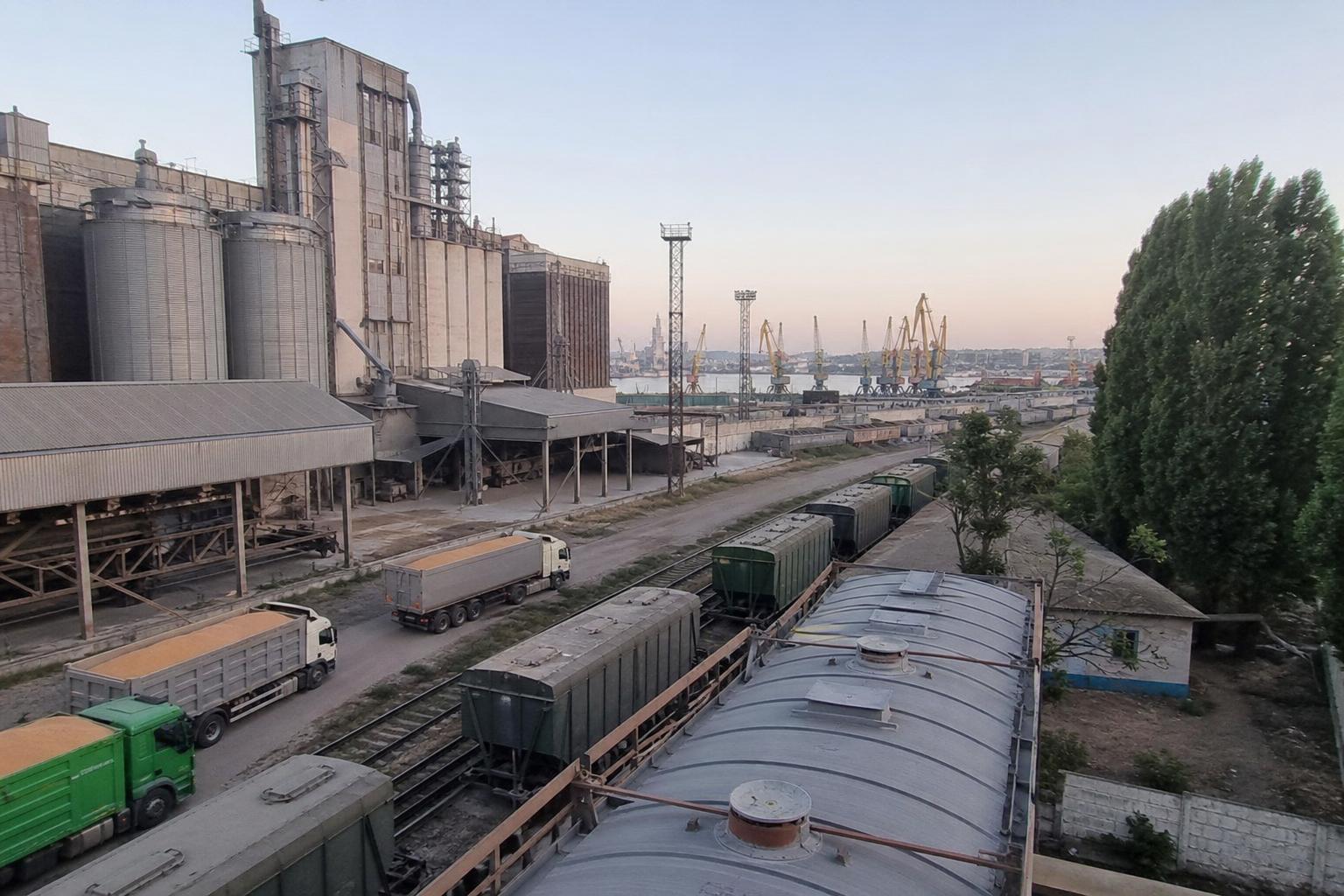
Ukrainian agricultural logistics remains a focal point for exporters, traders, elevators, and carriers. The Danube-Romanian route is gaining importance, alongside increased emphasis on risk management at infrastructure facilities.
For AgroPost participants, this is a practical signal: when selling grain, booking transport, or choosing a storage facility, factors such as route, storage conditions, insurance coverage, and partner readiness to handle export logistics are becoming increasingly critical.
The Romanian route remains vital for grain transit
Romania has announced support for increasing Ukrainian grain transit through the Constanța port to Middle Eastern and African markets. This route is considered part of broader logistical options for Ukrainian agro-products.
According to the Romanian side, Ukrainian grain transit is significant not only for Ukraine but also for importing countries of food. It was also noted that the global grain price index is approximately 6–7% higher than the same period last year.
Logistical opportunities to boost Ukrainian agro-export transit were discussed with representatives from Ukraine, Romania, and Moldova. This confirms that the route via Constanța remains one of the key external corridors, which exporters and carriers should monitor.
Implications for grain sellers
For agricultural producers and traders, the Romanian route can be crucial when planning export batches, especially if buyers target Middle Eastern or African markets. At the same time, political support for transit does not eliminate the need to verify tariffs, queues, wagon availability, road transport, and port infrastructure.
On AgroPost, sellers should specify delivery conditions, available volume, storage location, and shipment readiness more precisely. This helps buyers and logistics partners quickly assess whether a batch suits routes through Danube or Romanian corridors.
- For sellers: it is important to understand in advance whether there is access to elevators, road or rail links, and export operators.
- For buyers: key considerations include verifying the actual location of the goods and coordinating the shipment schedule.
- For carriers: there is growing demand for transparent rates, confirmed routes, and readiness to work with border logistics.
Elevator and warehouse insurance becomes a separate risk
Alongside route issues, the market faces challenges in insuring large agricultural facilities. According to a financial sector representative, Ukrainian enterprises find it more difficult to obtain coverage for war risks for elevators and logistics warehouses.
The reason is that large stationary facilities have a different risk profile compared to vehicles, trucks, or individual agricultural machinery. Insurers may refuse coverage or offer it at prices that seem prohibitively high for businesses.
It was also noted that reinsurance options for war risks in Ukraine are limited. As of June 1, the total insurance coverage limit for Ukraine was estimated at $1–1.5 billion, but it is now practically exhausted.
Key conclusions for agro-logistics
- The Romanian transit via Constanța remains an important channel for Ukrainian grain to distant markets.
- Export planning should include not only product price but also route verification, schedule, and delivery costs.
- Elevators and logistics warehouses may have limited war risk insurance options, affecting counterparty assessments.
- Small and mobile assets, such as transport and equipment, are generally easier to insure than large stationary facilities.
- Trade listings should clearly specify shipment conditions, storage location, and readiness to work with specific logistics routes.
Implications for the market: Ukrainian agro-logistics is entering a period where competitive advantage depends not only on access to grain but also on the ability to safely and predictably deliver it to buyers. For sellers, buyers, and carriers on AgroPost, this means a need for more detailed proposals, infrastructure checks, and careful consideration of insurance and route risks.
Comments
No comments yetNo comments yet - be the first.