
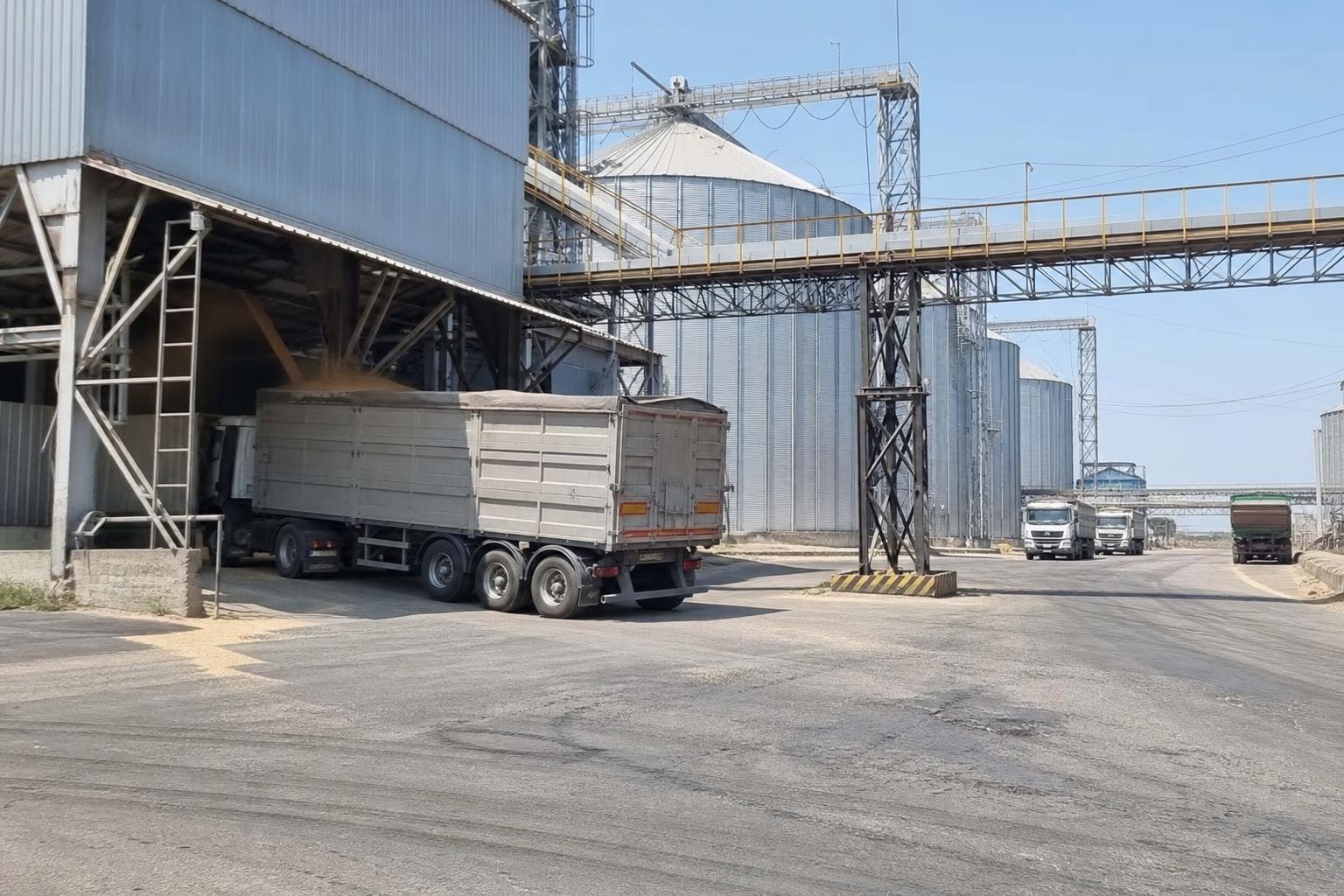
Ukrainian agricultural logistics is entering a period of increased activity: early grains have almost formed the main commodity flow, and rapeseed is nearly harvested. For sellers and buyers, this is not only a matter of product prices but also the availability of transport, elevator queues, and delivery costs.
According to the Ministry of Agrarian Policy, as of August 17, farmers have harvested approximately 6.6 million hectares of grains and legumes, which accounts for 57% of the forecasted area. The total harvest is 30.83 million tons, with an average yield of 4.62 tons/ha.
What has already created a freight base for transportation
The largest volume in the current harvest structure is wheat. It has been harvested from 4.86 million hectares, yielding 23.82 million tons, or 94% of the area, with an average yield of 4.91 tons/ha.
Barley has been harvested from 1.52 million hectares, totaling 6.22 million tons. Peas have yielded 779,020 tons from 295,660 hectares. Millet harvest is ongoing, but its share in the overall freight flow remains insignificant.
An additional factor for logistics is rapeseed. It has been harvested from 1.32 million hectares, or 99% of the forecasted area, with a gross yield of 3.76 million tons. This crop has high export orientation, making the speed of unloading, storage quality, and access to transshipment critical.
Regions with the highest transportation load
Odessa region leads in harvesting pace: 1.19 million hectares harvested, with a grain yield of 4.82 million tons. Next are Mykolaiv region with 653,800 hectares and 2.33 million tons, and Kirovohrad region with 555,700 hectares and 2.42 million tons.
For logistics companies, these regions remain key points for forming shipments. At the same time, farmers should not rely solely on proximity to ports or elevators: during peak periods, transportation costs and availability can quickly change the economics of deals.
The highest average yield of grains and legumes is recorded in Khmelnytskyi region — 6.99 tons/ha. Also, high yields are observed in Sumy, Vinnytsia, Kyiv, Ternopil, and Ivano-Frankivsk regions. This indicates that domestic transportation from central and western regions will also remain active.
Danube direction: stable rates for barges and rising costs for vessels
In the Danube freight market, rates for carriers are stabilizing, while barge transportation continues to become more expensive. For exporters, this signals the need to carefully consider not only the base product price but also the entire logistics chain: delivery to the port, transshipment, waiting times, and freight costs.
If the shipment is small or requires quick unloading, differences between transportation modes can significantly impact margins. For large shipments, schedule coordination, available tonnage, and document approval before the transport arrives become more critical.
What sellers and buyers should consider on AgroPost
- Grain and rapeseed sellers should immediately specify storage location, available volume, self-pickup options, and preferred shipment dates.
- Buyers should compare proposals not only by price per ton but also by logistical accessibility of the shipment.
- Carriers should monitor regions with active harvesting, as these are where short-term demand for trips forms.
- Elevators and transshipment points should communicate available capacities and acceptance conditions to reduce transport downtime.
During peak harvest periods, market participants who coordinate logistics in advance gain an advantage. Even a competitive grain price can lose attractiveness if the buyer does not see a clear route, loading timelines, or confirmed transport.
What this means for the market: logistics is once again a key profitability factor in the grain sector. The large volume of wheat, barley, and rapeseed already harvested will support demand for road transport, elevator services, and Danube routes. On AgroPost, this increases the value of listings that clearly specify conditions for unloading and transport readiness alongside the product price.
Comments
No comments yetNo comments yet - be the first.